Chinese lumbago
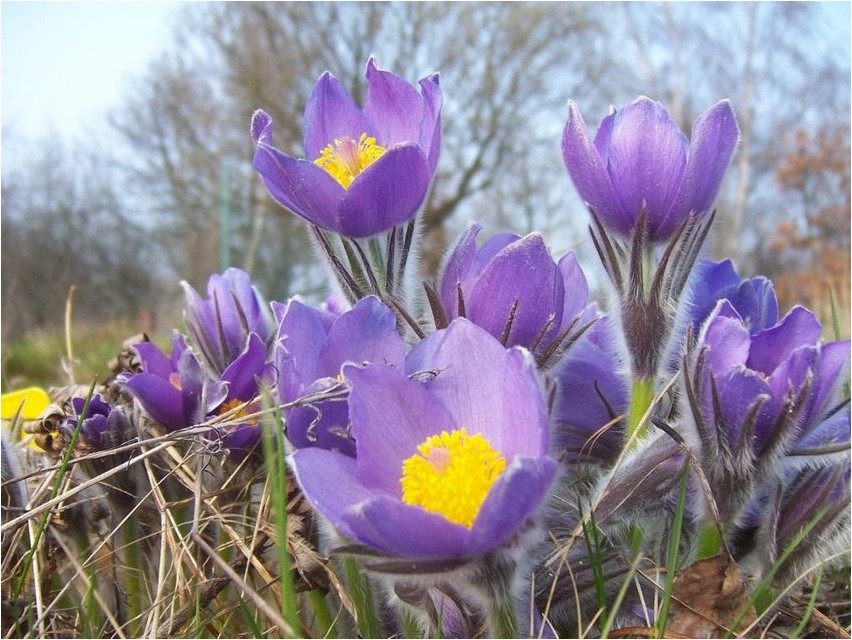
Chinese lumbago is one of the plants of the family called Ranunculaceae; in Latin the name of this plant will be as follows: Pulsatilla chinensis (Bunge) Regeb.
As for the name of the Chinese lumbago family itself, in Latin it will be: Ranunculaceae Juss.
Description of the Chinese lumbago
Chinese lumbago is a perennial herbaceous plant, the height of which will vary between seven and twenty-five centimeters. The leaves of this plant are trifoliate, and their segments will be more or less deeply cut into fairly wide lobes, but they are not cut to the very base, and the width of the lobes can reach up to two centimeters. The flowers of the Chinese lumbago are quite large in size and erect; the length of such flowers will reach about four centimeters. The flowers of this plant are painted in violet-purple or dark purple tones.
For growth, this plant prefers rocky and meadow slopes, as well as dry meadows. Under natural conditions, Chinese lumbago is found in the Amur and Primorye territories.
Description of the medicinal properties of Chinese lumbago
Chinese lumbago is endowed with very valuable healing properties, and it is recommended to use the roots, grass and flowers of this plant for medicinal purposes. The concept of grass includes inflorescences, leaves and stems. The presence of such valuable healing properties is recommended to be explained by the content of triterpene saponins in the composition of this plant, while the gamma-lactone protoaneponin will be present in the aerial part of the Chinese lumbago. The roots of this plant also contain the gamma-lactone protoanemonin and saponins.
As for traditional medicine, here this plant is quite widespread. Traditional medicine recommends using a decoction prepared from the roots of Chinese lumbago for amoebic dysentery. It is noteworthy that this property of this healing agent has been clinically confirmed for diarrhea. In addition, a decoction based on the roots of this plant can be used for bronchitis, and is also successfully used as a diuretic.

For amoebic dysentery, the following highly effective remedy based on this plant is recommended: To prepare this remedy, take one teaspoon of crushed Chinese pasqueflower roots per approximately one glass of water. The resulting medicinal mixture should first be boiled for about five minutes, then left to steep for about one hour, after which the Chinese pasqueflower remedy should be thoroughly strained. Take one tablespoon of this remedy three times daily before meals for amoebic dysentery.
In addition, Chinese pasqueflower is indicated for use as an anti-inflammatory, antispasmodic, analgesic, and antibacterial agent. The plant has quite effective antipyretic, astringent, diaphoretic, sedative, and antiparasitic properties. It’s worth noting that Chinese pasqueflower is a well-known cardiotonic, and this plant is also sometimes used to treat a variety of reproductive problems. Preparations based on Chinese pasqueflower are also indicated for dry coughs, and they are also perfectly acceptable for varicose veins. It’s worth noting that, when used correctly, Chinese pasqueflower-based remedies can be quite effective.





