Oriental Clematis
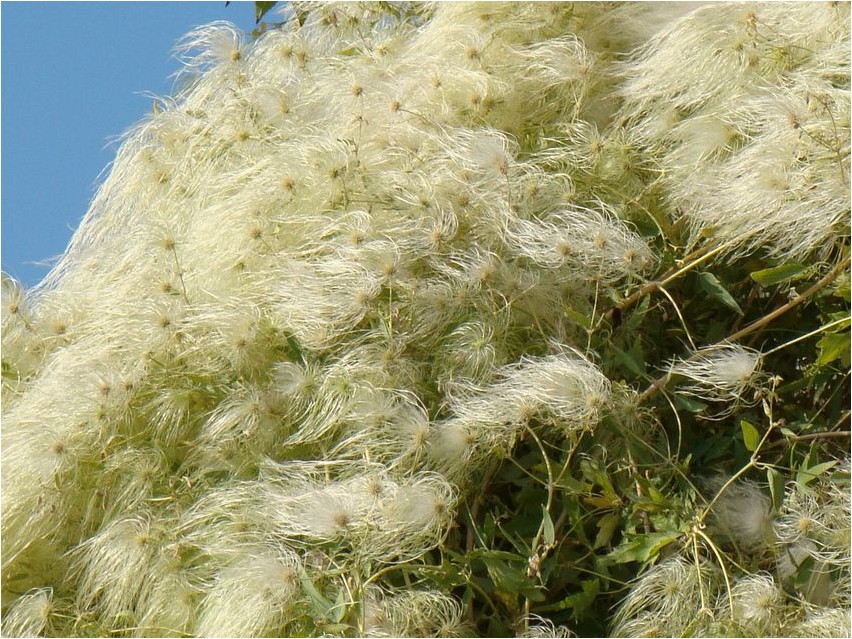
Oriental clematis is a member of the buttercup family, and its Latin name is Clematis orientalis L.
As for the family name itself, the Latin name is Ranunculaceae Juss.
Description of Oriental Clematis
Oriental clematis is a perennial herbaceous plant, which is either more or less densely pubescent or almost smooth. The stem is ribbed and can sometimes have a reddish tint. Its leaves are pinnately dissected and light gray-green in color. These leaves are also slightly thick and stiff, and it is noteworthy that they vary greatly in both width and shape. The flowers of oriental clematis are borne in small paniculate inflorescences in the axils of the leaves. This plant has only four sepals, which are yellowish in color and have a reddish tint on the outside. These sepals are oblong-lanceolate and shortly tomentose on both sides, and are approximately one and a half to two and a half centimeters long. The fruit of this plant is compressed, has a very thick margin, and is pubescent.
The flowering period of the oriental clematis begins in July and ends in August. In the wild, this plant is found in Central Asia, the Caucasus, Altai, and also in the following regions of European Russia: the Black Sea and Lower Volga regions. This plant prefers coastal forests, tugai woodlands, ravines, muddy meadows, riverbanks, irrigation ditches, and canals, solonetzic and sandy meadows, dry rocky slopes, sand, and semi-desert and desert zones, ranging from plains to mid-mountain zones.
Description of the medicinal properties of clematis orientalis
Clematis orientalis possesses highly valuable medicinal properties. The roots, fruits, and herb of this plant are recommended for medicinal use. The herb includes the flowers, stems, and leaves of this plant. These valuable medicinal properties are attributed to the alkaloids and triterpene saponins found in this plant: gamma-lactone, ranciculin, coumarins, flavonoids, dzhungaroside B, and caulosapogenin.
It should be noted that this plant is endowed with very effective protistocidal, anti-inflammatory, insecticidal and bactericidal effects. In Central Asia, a powder made from the roots of the oriental clematis has become quite widespread. This powder is recommended for use for bone fractures. It is noteworthy that in Tajikistan the use of fresh crushed herbs of this plant is also quite common. This healing agent is used not only for various skin diseases, but also for bites of poisonous snakes. As for Kyrgyzstan, the stems of eastern clematis are used in medicine. Such stems of this plant are recommended for smoking for syphilitic lesions of the nose.

An infusion of oriental clematis flowers and fruits in the form of lotions is used for osteomyelitis. It should be noted that the roots, fruits and flowers of this plant are endowed with very extensive bactericidal activity, while the leaf extract is endowed with repellent and acaricidal properties. It is worth noting that in addition to all its other advantages, oriental clematis is also an ornamental plant.





