Persimmon
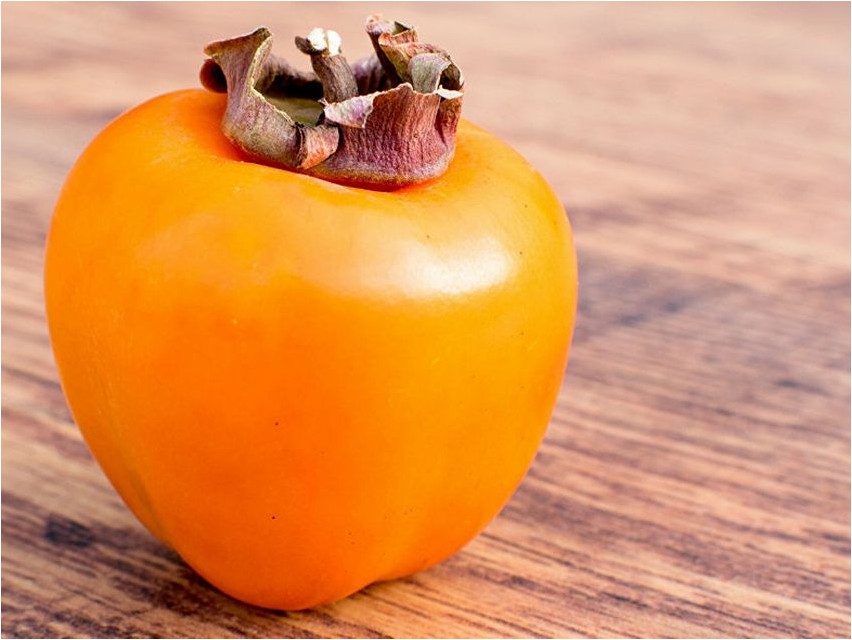
Persimmon (lat. Diospyros) is a fruit crop; genus of deciduous shrubs and trees of the Ebony family. Found naturally in tropical and subtropical countries.
China is considered to be the homeland (presumably). Most members of the genus are valued for their tasty and sweet fruits, some for their wood. The average age is 500 years.
Characteristics of culture
Persimmon is a fast-growing shrub or tree up to 30 m high. The trunk is covered with brown or dark gray, deeply cracking bark. Young shoots are gray-brown or red-brown, often pubescent, equipped with round orange lentils. The leaves are alternate, oval, elliptical or ovate, heart-shaped or broadly ovate, narrowed at the ends, ciliated or smooth along the edge, sitting on thin petioles alternately. On the outside, the leaves are smooth, dark green, and shiny; from the inside — pubescent, less often bare, bluish-green.
The flowers are pale yellow or greenish-yellow, collected in semi-umbellate inflorescences. The calyx is green, hairy on the outside, with sharp lanceolate lobes. The corolla is tubular-lily-shaped or bell-shaped, with rounded lobes. The fruit is a spherical or heart-shaped fleshy berry, contains 3-10 seeds, can have a light orange, orange and even red color. The root system of the plants is powerful, superficial, the roots are black and strong. Persimmon blooms in late May — early June. The fruits ripen in September — October (depending on the climate zone and type).
Subtleties of cultivation and reproduction
Persimmon is propagated by seed and grafting. The first method is used extremely rarely, since plants do not retain maternal characteristics. Sowing is carried out immediately after removing the seeds from the fruit. Dry seeds are not suitable for sowing. Sow persimmons in containers filled with a mixture of turf and leaf soil and sand in a ratio of 1:1:1, then water and place them in a room with an air temperature of 3-5C. In this way, stratification is carried out and it lasts approximately 70-90 days. In March, the crops are moved to a warm room, and with the emergence of seedlings — to a windowsill or other illuminated place. Diving is carried out in the phase of two true leaves, the composition of the substrate is the same.
Cultivated species and varieties are most often grafted onto Caucasian persimmon. After all, this species has a powerful, well-branched root system and the ability to form a large harvest of tasty fruits. In addition, this species easily tolerates transplantation, which is also important. It is not recommended to use oriental persimmon as a rootstock; it is not cold-resistant and has special requirements for soil conditions and humidity. Persimmons are grafted by budding with a germinating or dormant eye. This procedure is carried out in August or early spring. Spring budding is most favorable. Cuttings prepared for grafting are stored in a room with high humidity at a temperature of 2-3C.

Growing indoors
Growing some types of persimmons is possible indoors. Keep plants on a windowsill or in a bright place. With the onset of spring, the plants are transferred to the balcony or garden, but with protection from cold winds and heavy rainfall. The soil in the containers is regularly moistened and sprayed daily with warm water. From spring to early autumn, persimmons are fed once every two weeks with liquid solutions of mineral and organic fertilizers. As organic matter, you can use mullein or chicken manure, and for minerals — superphosphate, ammonium nitrate or potassium sulfate. With active growth of thickening shoots, reduce the amount of nitrogen fertilizers.
As the plants grow, they are transferred to larger pots; non-fruit-bearing specimens are replanted once every 4-5 years, fruit-bearing ones — 2-3 years. Formative pruning is important for persimmons. Plants are formed in the form of compact trees no more than 1. 5 m high. Pruning is carried out every year, but only at a time when the trees are dormant. As is known, among the representatives of the genus there are monoecious and dioecious specimens; they require artificial pollination. To do this, pollen from male flowers is transferred to female flowers using a brush. Seedless varieties do not need such a procedure. Artificial pollination can significantly increase the yield and its quality.