Paznik taproot
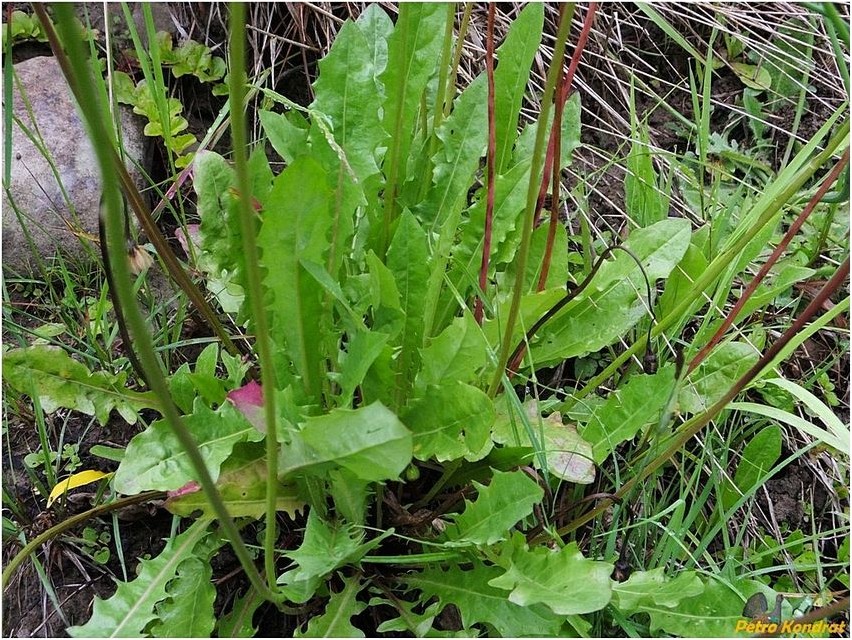
Taproot plant is one of the plants of the family called Asteraceae or Asteraceae; in Latin the name of this plant will be as follows: Hypochoeris radicata L.
As for the name of the taproot family itself, in Latin it will be like this: Asteraceae Dumort. (Compositae Giseke).
Description of the tap root plant
Paznik taproot is a perennial herbaceous plant, the height of which will fluctuate between twenty-five and sixty centimeters. The root of this plant will be spindle-shaped and tap-shaped, the stem, in turn, is bare and straight, for the most part it will be branched, and also endowed with very small sessile leaves. For the most part, such leaves will have several baskets, which are located at the very ends of the branches. The leaves of the basal rosette of taproot are serrated, oblong-lanceolate and lyre-shaped. The baskets of this plant will be quite large, their length will be about two and a half to three centimeters. The corolla will be painted in yellow tones, it will also be equipped with a tongue that will be almost twice the length of the tube, and at the top there will be five linear oblong teeth. The achenes of the taproot plant are endowed with a spout and are grooved.
This plant blooms from June to July. Under natural conditions, the taproot plant is found in Moldova, Belarus, the Caucasus, the Dnieper region and the Carpathians in Ukraine, as well as the following regions of Russia: Volga-Don, Baltic and Ladoga-Ilmensky. For growth, this plant prefers pine forests, forest glades, meadows, places near roads and along the edges of fields, as well as sandy loam and sandy soils.
Description of the medicinal properties of taproot
Taproot plant is endowed with very valuable healing properties, and it is recommended to use the herb of this plant for medicinal purposes. The term grass includes leaves, flowers and stems.
The presence of such valuable healing properties is recommended to be explained by the content of cholesterol, carotenoids, triterpenoid squalene, flavonoids isostin and luteolin in this plant. The roots contain sesquiterpenoids, while the leaves contain steroids, carotenoids, pollen and luteolin.

It is worth noting that taproot plant can be used as an antitumor plant.
For malignant neoplasms, the following remedy based on this plant is effective: to prepare such a healing remedy, you will need to take three tablespoons of taproot herb per half liter of water. The resulting mixture should be boiled for about three to four minutes, then the mixture is left to infuse for about two hours, after which it is recommended to strain the mixture based on this plant very carefully. Take the resulting remedy based on the tap root for malignant neoplasms three times a day, one-third or one-fourth of a glass. It is important to note that in order to achieve the greatest effectiveness when taking such a medicinal product based on the taproot plant, it is recommended not only to strictly follow all the rules for preparing such a medicinal product, but also to carefully follow all the rules for its administration. Subject to such competent use, a positive result will be noticeable quite soon, depending on the severity of the disease.





