Nigella
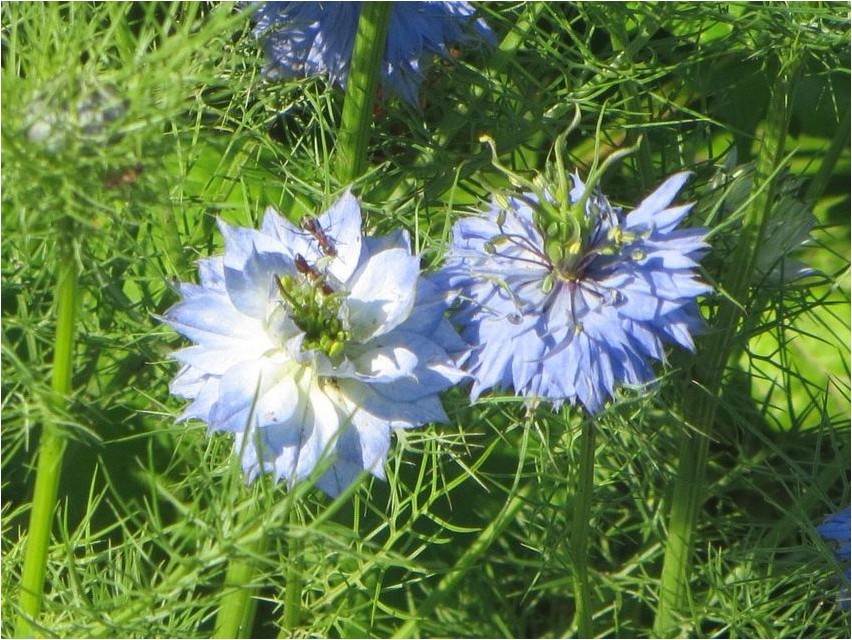
Nigella (Latin: Nigella) is an annual or perennial plant belonging to the buttercup family. It is also known as Nigella.
Nigella grows wild in Europe and Africa. Currently, there are over 20 species. Today, it is cultivated almost everywhere.
Description
Nigella is a herbaceous plant up to 70 cm tall with highly branched stems bearing small, grayish-green, alternate, dissected, pinnate, or palmate leaves. Nigella flowers are large, solitary, and can be blue, lilac, or whitish-blue. The flowers consist of five sepals that resemble stars. The fruits are flattened leaflets containing black seeds. Cultivation nuances
Nigella is an undemanding plant, although it grows best in nutritious, moderately moist, rich, permeable, loose, and neutral soils. Lime is a positive influence on soil quality. Although nigella requires fertile soil, it does not tolerate an excess of organic matter and mineral fertilizers.
Waterlogged, heavy, or damp soils are unsuitable for growing this crop; plants grow slowly, often become diseased, and eventually die. Nigella loves light and blooms profusely in open, sunny areas. It does not tolerate overcrowding. Most varieties are frost-resistant.
Propagation methods: Nigella is propagated by seed. In warmer regions of Russia, nigella is grown by sowing seeds directly into the ground, but in colder climates, this approach is rather unwise, as the plants will not have time to bloom. Seeds are sown in trays with a nutritious substrate containing peat. The crops are watered and covered with glass. Before sowing, the seeds should be soaked in water to speed germination. The seedlings are transplanted to their permanent location in the first ten days of June. Immediately after transplanting, protect the young plants from the sun. The optimal distance between nigellas is 15-25 cm.
Care

Care consists of loosening the soil, watering, weeding, mulching, fertilizing, and disease prevention. Loosen the soil as needed, preferably immediately after watering or rainfall. Nigella requires moderate moisture, but excess water is highly undesirable. Generally, nigella is disease-resistant, but prone to powdery mildew.
Use
Nigella is a highly ornamental plant. It is excellent for creating garden nooks, rock gardens, and other flower beds. Nigella also looks beautiful on a lawn. Even after flowering, the plant will delight the eye with its delicate greenery for a long time. The plant has become widespread in medicine, used for vision problems, memory loss, and weakened immunity. Nigella is also used in the comprehensive treatment of liver and gastrointestinal diseases.
Nigella in the garden: good health
Nigella nigella





