Hornbeam elm
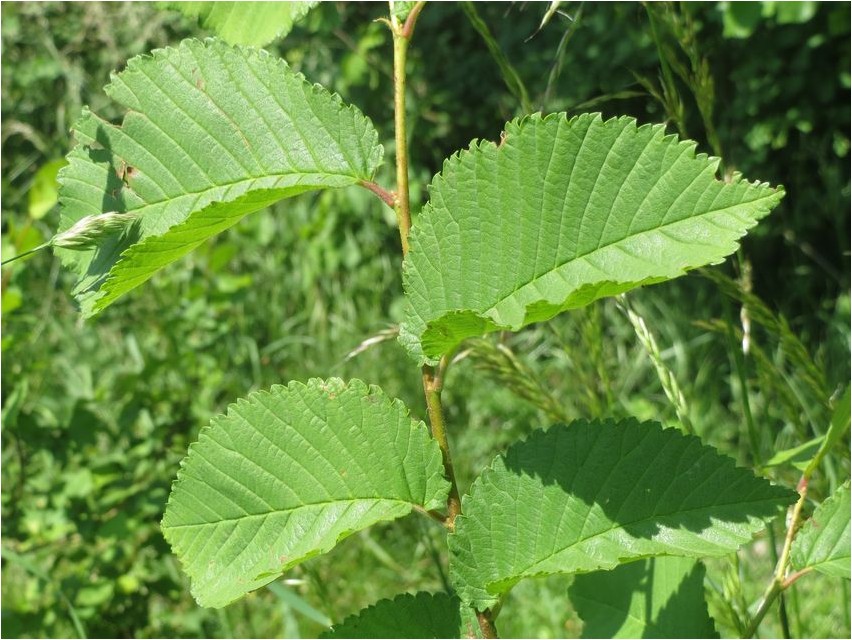
Hornbeam elm is one of the plants of the family called elm; in Latin the name of this plant will be as follows: Ulmus caprinifolia Rupr. ex Suskow.
As for the name of the hornbeam elm family itself, in Latin it will be: Ulmaceae Mirb.
Description of hornbeam elm
The following popular names for this plant are known: elm and birch bark. Hornbeam elm is a tree whose height can be about fourteen to sixteen meters. The bark of the perennial branches of this plant is colored brownish-gray with an ashen coating. Such bark will be quite smooth, and one-year-old shoots of this plant will be yellow-brown, and either bare or scatteredly fluffy. The leaf buds of hornbeam elm are obtuse, and the stipules will be oblong-linear and quite narrow, their length will be about five to seven millimeters and their width will be approximately one millimeter. The leaves are oblong-obovate and will taper towards the base. The length of such hornbeam elm leaves will be about twelve centimeters, while their width can be equal to six centimeters. The fruit of this plant is an obovate lionfish, which will be on a thin stalk approximately fifteen to twenty millimeters long and approximately ten to fourteen millimeters wide.
This plant blooms from March to June. Under natural conditions, hornbeam elm can be found in Belarus, Ukraine, the Caucasus, and also in Central Asia. In addition, this plant is also found in the European part of Russia: namely, in all regions, with the exception of only the Baltic, Ladoga-Ilmen, Dvino-Pechora and Karelo-Murmansk.
For growth, this plant prefers forest-steppe, semi-desert and steppe areas, as well as open flat places; in addition, hornbeam elm can also be found on slopes, along rivers and gorges, as well as along the edges of the southern part of broad-leaved forests.
Description of the medicinal properties of hornbeam elm
It should be noted that the hornbeam elm is endowed with quite valuable healing properties, and it is recommended to use the flowers, seeds, leaves and bark of this plant for medicinal purposes. Hornleaf elm wood contains sexviterpenoids, and catechins, stigmasterol, chlorogenic acid, friedelin, dehydroergosterol, leukocyanides and tannins were found in the bark of the trunk. The leaves of this plant contain vitamin C, alpha-catechin, rutin, quercetin, chlorogenic acid, as well as derivatives of leukopelargonidin and leukopeonidin. The fruits of this plant will contain carotene, fatty oil, glycerin, capric acid glyceride, and also vitamin E.

It is noteworthy that in folk medicine, remedies based on hornbeam elm have become quite widespread. A decoction prepared from the roots of this plant is recommended for external use on festering wounds, as well as in the form of a patch for eczema. As for root bark decoction and wood decoction, such remedies are quite effective in the fight against cancer. The bast of this plant is recommended for use for bleeding, skin diseases and fever. An infusion of the bark of the hornbeam elm trunk is used for rinsing for scurvy, as well as for dousing for various skin diseases. As an emollient, crushed bark of this plant can be applied to purulent wounds. By rubbing with water, a paste is obtained from the young bark and leaves of hornbeam elm: this remedy is used for tumors and burns.





