Piculica cistus
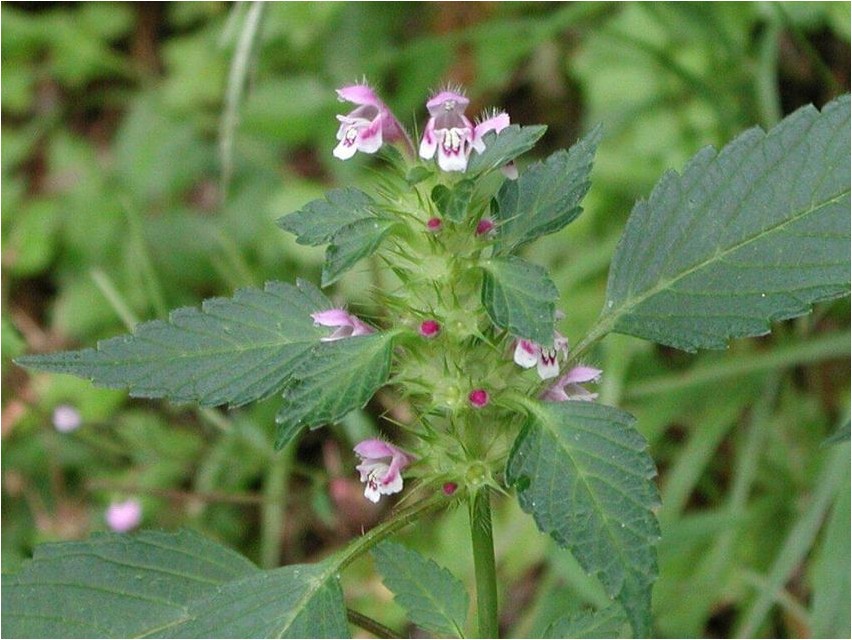
Cistus rosemary is one of the plants of the family called Lamiaceae; in Latin the name of this plant will be as follows: Galeopsis ladanum L.
As for the name of the cistus family itself, in Latin it will be: Apiaceae Lindl. (Labiataae Juss.).
Description of Piculica cistus
Cistus rosemary is known by numerous popular names: field basil, gillweed, field cornflower, cockerel, summer spikelet, forest cap, click beetle, wild torica, multi-colored and desert. Pikulnik cistus is an annual herbaceous plant, endowed with a tetrahedral stem, the height of which will fluctuate between fifteen and forty centimeters. The leaves of this plant are toothed and short-petioled, they can be either oval-lanceolate or lanceolate. The two-lipped flowers of the cistus are purple in color and are found in whorls of about six to ten pieces. The calyx of this plant will be broadly bell-shaped, it is endowed with five small teeth and ten veins. The corolla of the cistus is equipped with a tube, widened at the very pharynx; this corolla is two-lipped and it is almost three times longer than the calyx itself. The upper lip of this plant is concave in the form of a helmet, in front such a lip will be serrated, while the lower one is three-lobed with an obverse heart-shaped middle lobe. When ripe, the fruit will disintegrate into four round shaped nuts, which are compressed at the top and will be obversely heart-shaped.
The flowering of the rose cistus occurs in the summer. Under natural conditions, this plant is found in Ukraine, Belarus and most regions of the European part of Russia.
Description of the medicinal properties of Pikulnik cistus
Pikulnik cistus is endowed with very valuable healing properties, and it is recommended to use the herb of this plant for medicinal purposes. The concept of grass includes stems, leaves and flowers. It is recommended to collect such medicinal raw materials during the period from July to August. The presence of such valuable healing properties is recommended to be explained by the content of resins, wax, fat, carotene, alkaloids, vitamins, coloring and bitter substances, lactic and gallic acid in this plant.
Pikulnik cistus will be endowed with very effective antispasmodic, expectorant and anti-inflammatory effects.

A water infusion prepared from the herb of this plant will promote more abundant mucus discharge. An infusion based on the herb of this plant in milk or water is recommended for use in folk medicine. Here, such a healing remedy has become quite widespread and is recommended for use for pulmonary tuberculosis, cough, chronic rhinitis, bronchitis, bronchial asthma, furunculosis, anemia and various diseases of the spleen. Together with horsetail, this healing agent is used for pulmonary tuberculosis.
It should be noted that cistus rosemary is a very poisonous plant, for this reason the use of such a healing remedy based on this plant requires a great degree of caution.
For anemia, it is recommended to use the following healing remedy based on this plant: to prepare such a healing remedy, you will need to take three teaspoons of the herb Cistus cistus per two glasses of boiling water or hot milk. This healing remedy should be infused for one hour, after which it is carefully filtered. Take this remedy three times a day, one third of a glass.