Flea Plantain
Flea Plantain is a member of the plant family Plantaginaceae. Its Latin name is Plantago squalida Salisb. (P. psyllium sensu L.).
As for the family name itself, the Latin name is Plantaginaceae Juss.
Description of Flea Plantain
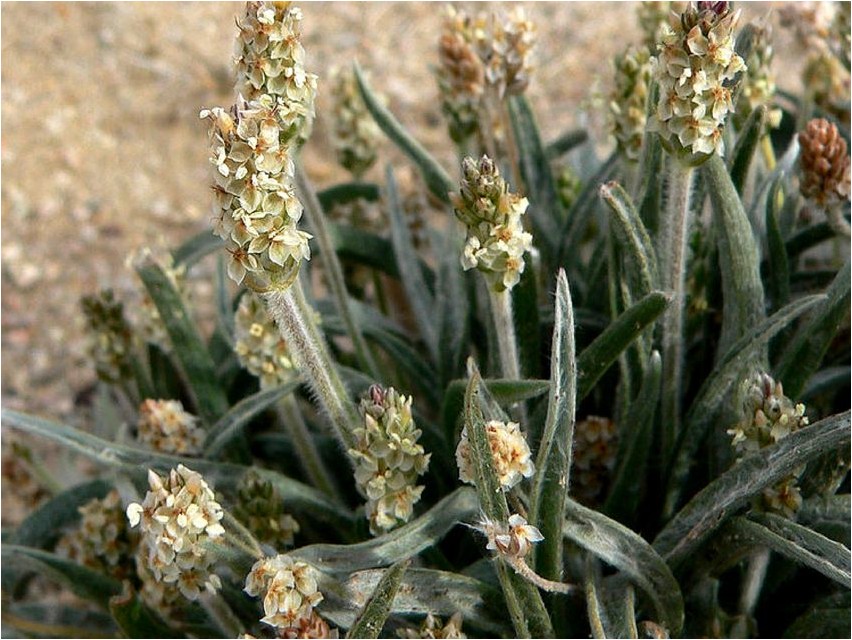
Flea Plantain is also known as flea grass or flea grass. This plant is a small, annual, short-haired, herbaceous plant with a spindle-shaped root. The height of this root varies between ten and forty centimeters. The stems of this plant are glandular and branched. The leaves of Flea Plantain are linear and opposite, and can be either horizontally sessile or reclining. The small flowers of this plant are borne in dense, spherical or ovoid spikes, perched on rather long stalks located in the leaf axils. At the top of the stems, these flowers form a corymbose inflorescence. The corolla of this plant can be pale pink or rose-colored. The fruit of the flea plantain is a capsule containing two small, reddish-brown seeds. The seeds of this plant are shiny, smooth, and oval in shape, with one side concave and the other convex.
Flea plantain blooms in July, while the seeds ripen in August. Description of the medicinal properties of plantain
Plantain possesses valuable medicinal properties, and it is recommended to use freshly harvested grass and seeds for medicinal purposes. These valuable medicinal properties are attributed to the aucubin content of the plant’s roots, while the leaves contain mannitol, aucubin, beta-sitosterol, and linoleic acid. Plantain flowers contain linoleic acid and beta-sitosterol, while the seeds contain carbohydrates and related compounds, alkaloids, beta-sitosterol, aucubin, and the following nitrogen-containing compounds: linoleic acid, fatty oil, plantagonin, indicain, and indicamine.
As for obstetrics and practical gynecology, an infusion prepared from the seeds of this plant has become quite widespread. This healing agent is recommended for use in various inflammatory diseases of the female genital organs, and is also used as a poultice of crushed seeds for cracked nipples in nursing mothers. A decoction and infusion, as well as moistened flea plantain seed powder, is used as an anti-inflammatory, laxative and enveloping agent. A decoction prepared from the seeds of this plant is also used in cosmetic production as a starch substitute.
Together with the juice of plantain leaves, flea plantain juice is used for stomach and duodenal ulcers, and is also used to treat hypoacid gastritis. Externally, this healing agent is used for various cuts and wounds.

It should be noted that it has been experimentally proven that flea plantain juice will have a positive effect in the fight against chronic colitis, and is also used to treat dysentery. In addition, the juice of this plant will also accelerate blood clotting processes.
Flea plantain. Overview of the plant and method of use.
https://www. youtube. com/watch? v=7-W6nru0rTI
Plantain flea plantain