Piglet auricularis
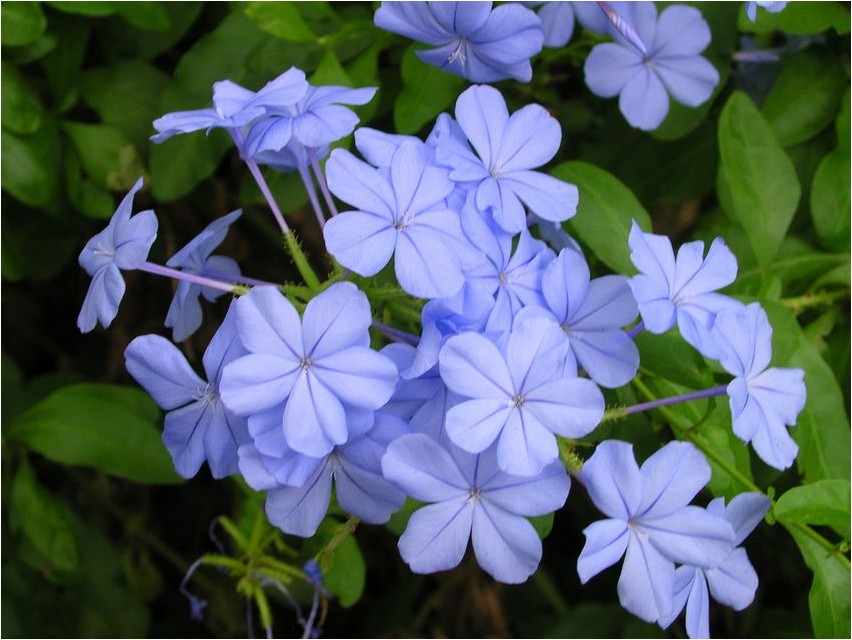
The auriculata is also known under the following names: Cape auricaria, plumbago, plumbago auricularis. In Latin, the name of this plant will be as follows: Plumbago auriculata.
Plumbaginaceae is one of the plants in the family called Plumbaginaceae. In Latin, the name of this family is Plumbaginaceae.
Description of auricular piglet
For the favorable development of this plant, it will be necessary to provide it with a sunny light regime or a partial shade regime. Throughout the entire summer period, watering should be maintained at a fairly moderate rate, while air humidity should remain average. The life form of auricaria is an evergreen shrub.
This plant is recommended to be grown indoors on any sunny windows, with the only exception being north-facing windows. In addition, the auriculata can often be found in general purpose premises: namely, in offices and lobbies. The plant is also grown in greenhouses and winter gardens.
As for the maximum size in culture, the length of the whip-like shoots of this plant can reach approximately one and a half meters.
Description of the features of caring for and growing auricular piglet
For the favorable development of this plant, it will be necessary to provide it with regular replanting, which should be done every two to three years. For replanting, you need to select either pots of standard proportions or hanging flowerpots. As for the composition of the soil mixture itself, you need to mix one part of sand and turf soil, as well as three parts of leaf soil. The acidity of such soil should be either neutral or slightly acidic.

It is important to remember that if the soil is excessively moist, the roots of this plant will rot quite quickly. For this reason, it is recommended to allow the soil time to dry out slightly between waterings. In order to cause this plant to bloom again, it is recommended to promptly trim those flower stalks that have already bloomed.
It is necessary to remember that in some cases damage to the aphids by auricoid aphids, whiteflies and spider mites can occur.
In the summer, when the plant is actively growing, it is important to maintain abundant watering, but in no case is it recommended to allow the soil to dry out excessively.
Throughout the dormant period, the auricula plumbago plant should be maintained at an optimal temperature between eight and fifteen degrees Celsius. Watering should be moderate, and humidity should remain consistent. When the plant is grown indoors, this dormant period is forced, beginning in October and ending in February. This dormant period occurs due to insufficient air humidity and low light.
Plumbago propagates through cuttings, which should be taken in the spring before flowering. These cuttings should root when the soil temperature is approximately twenty to twenty-five degrees Celsius, and humidity should also be maintained at a fairly high level.
It’s important to remember that during the winter, the auricula plumbago plant should be kept in relatively cool conditions. For the buds to mature, eight hours of light per day are required. Plumbago auriculata (Cape leadwort) – Kiryat Yam, Israel