Japanese elm medium
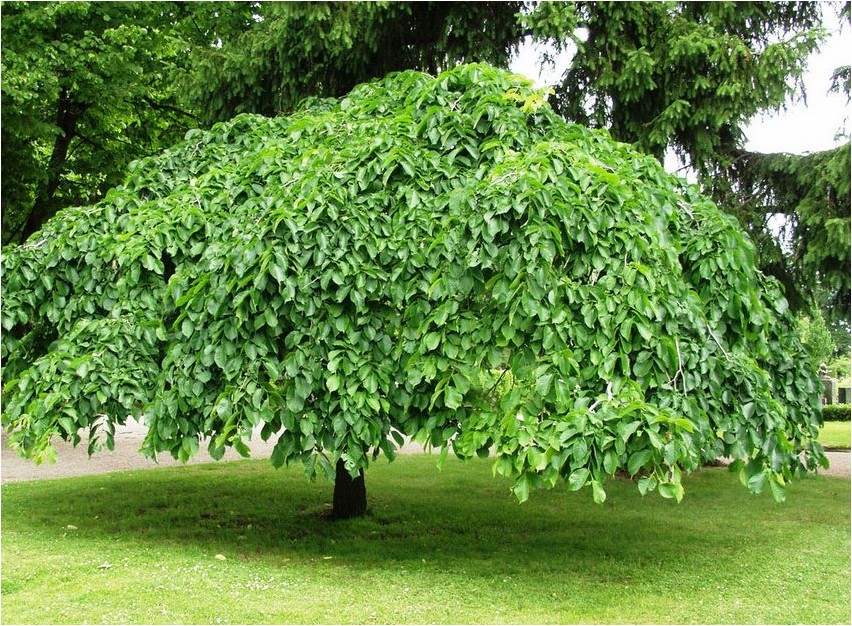
The middle Japanese elm is one of the plants of the family called elmaceae; in Latin the name of this plant will be as follows: Ulmus japonica (Rehd.) Sarg.
As for the name of the Japanese middle elm family itself, in Latin this name will be: Ulmaceae Mirb.
Description of Japanese elm
The medium Japanese elm is also known as the Japanese elm. This plant is a tree whose height can reach approximately thirty-five centimeters. The trunk of this plant is whitish; very often this trunk can be endowed with cork growths. The leaves of this plant can be either bare or rough. These leaves are fluffy and obovate, they are endowed with a double-serrate edge, their length is about two to eight centimeters, and their width is about one and a half centimeters. The fruit of the Japanese middle elm is a glabrous and obovate lionfish. The flowering of this plant begins in April and continues until June.
Under natural conditions, this plant can be found in the Daursky region of Eastern Siberia, as well as in the Far East, namely in Primorye and Sakhalin. For growth, the middle Japanese elm prefers mixed and broad-leaved forests, and can often form pure stands in foothill and lowland areas. Typically, this plant does not grow above 700 meters above sea level, preferring illuminated slopes and river terraces. Actually, this plant is quite decorative, and besides this it will also be a honey plant.
Description of the medicinal properties of Japanese middle elm
The middle Japanese elm is endowed with very valuable healing properties, and for medicinal purposes it is recommended to use the bast, leaves, seeds, shoots and bark of the branches of this plant.
These valuable medicinal properties are due to the tannins found in the bark of this plant’s trunk, while the leaves contain isoquercitrin, quercetin 3-glucuronide, and phenolic acids. In folk medicine, the shoots are widely used to treat various skin conditions, with an infusion of the bark of the Japanese elm branches being quite effective for rashes and bleeding, as well as fever. A decoction made from the leaves of this plant is used to treat cystitis and, externally, for dermatitis. This decoction can also be consumed. As for the seeds, they are commonly used to treat a wide range of skin conditions.

This plant plays a significant role in forestry, as well as for fire protection of buildings, in land reclamation, and in shelterbelt and ravine afforestation. Interestingly, the bark of the Japanese elm branches is also used for leather tanning. As for the wood, it can be used in construction, shipbuilding, furniture and plywood manufacturing, as well as for various turning and carpentry applications. Japanese elm can be eaten roasted or raw.
For psoriasis, the following remedy is recommended: to prepare it, take one tablespoon of crushed dry bark from the branches of this plant per 300 milliliters of water. Boil the resulting mixture for about five to six minutes, then let it steep for about an hour, after which it should be thoroughly strained. Take approximately two tablespoons of this remedy three times daily.
Another effective remedy is to prepare one tablespoon of dried, crushed leaves per glass of water. Boil the mixture for three minutes, then let it steep for an hour, and then strain thoroughly. This remedy is recommended for compresses and external use for dermatitis. The rough elm and its weeping form, ‘Camperdownii.’ Habitat, cultivation practices, and diseases.





