Blueberries
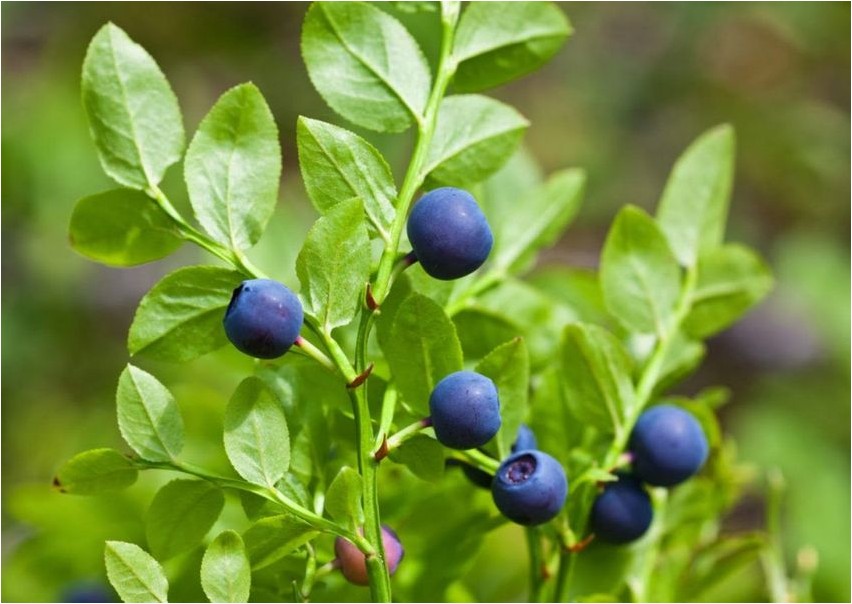
Blueberry (lat. Vaccinium myrtillus) is a berry crop; a representative of the Vaccinium genus of the Heather family (previously blueberries were classified as part of the Cowberry family).
Other names are blueberry, chernega, blueberry, bilberry and blueberry. The culture is a very valuable material used in cooking, official and folk medicine, as well as for decorative purposes. The plant received its Russian name due to the shade of the berries, which stain your hands and mouth black. In nature, blueberries are found in the Baltic countries, Belarus, the Caucasus, Ukraine and in the European part of Russia, Western and Eastern Siberia, and the Far East. Typical habitats are broad-leaved and fir-spruce forests, pine forests and swamps.
Characteristics of culture
Blueberry is a low-growing shrub up to 50 cm high. The leaves are leathery, crenate-serrate, alternate, ovate, petiolate, and fall in late autumn. The leaves are equipped with grooves through which rainwater rolls down to the roots. The rhizome is creeping and forms a large number of lateral branches as it grows. The flowers are regular, solitary, greenish-white in color. The corolla is five-petalled. Cup with inseparable bends. Flowers are pollinated by the shoulders and bumblebees. Blueberries bloom in May. The fruit is round, bluish-black or black, with a bluish bloom. The flesh of the fruit is purple. One fruit contains about 40 seeds.
Growing conditions
Areas for growing blueberries are preferably shaded; in sunny areas, plants need regular and abundant watering. Solid shadow is not prohibited. The soils are desirable: light, well-moistened, acidic. The optimal substrate is one consisting of peat, bark, sand, sawdust, fallen pine needles and rotted leaves, mixed in any proportion. Sulfur is used to acidify the substrate.
Blueberries are not demanding on temperature conditions, because in nature they grow in swampy areas and forests in the northern regions. The crop is very sensitive to a lack of moisture; dry soils are not suitable for its cultivation. The plant welcomes areas with close groundwater, although constant stagnation of water in the tree trunk zone is contraindicated.

Soil preparation
Soil preparation procedures depend solely on its composition and pH reaction. Light soils with a pH of 5-5. 5 are dug to a depth of 20-25 cm, peat chips enriched with nutrients are added, as well as a small amount of sawdust, crushed bark and oak leaves.
Heavy soils are dug to a depth of 30 cm, all of the above components and additional coarse washed sand are added. Powdered sulfur is used to acidify garden soils. Prepare the soil at least 2-3 weeks before the intended planting. When planting blueberries in autumn, all procedures are carried out no later than the first ten days of September.
Landing
It is preferable to plant seedlings and other planting material in September — early October, in the southern regions — until early November. Spring planting is also not prohibited. It is best to use 2-3 year old seedlings as planting material; they take root faster and soon begin to bear fruit.
Young plants must be planted with a ball of earth. When planting, the lump is carefully loosened and the roots are straightened. Having lowered the seedling into the hole, the empty space is covered with soil mixed with peat and sand, compacted, watered and mulched with fallen leaves or sawdust. It is advisable to plant seedlings immediately after purchase; if this is not possible, they are brought into a shaded room and watered regularly.
Reproduction
Blueberries are propagated by seeds, cuttings and dividing the bush. The seeds are sown immediately after collection; to do this, the berries are kneaded, filled with warm water, mixed thoroughly and the floating peels, pulp and empty seeds are removed. The procedure is performed several times until the water in the container becomes clear. Then the seeds are placed on a sieve with fine holes, dried and sown in seedling boxes filled with high-moor peat.
Shoots appear in 2-3 weeks. Until spring, seedlings are stored in a bright room with a temperature of 5-10C. With the onset of warmth, the seedlings are planted in separate containers and grown. Blueberries are planted in a permanent place after a year. Cuttings and division of the bush are carried out at the end of summer. Cuttings and divisions are planted in pots or greenhouses until rooting. With the emergence of a stable root system, the material is transplanted to a permanent location.
Care
Every year, a layer of fresh sawdust is added to the tree trunk area. Instead of sawdust, you can use kitchen scraps, straw, fallen leaves and any other decomposing materials. If mulch is not available, it is important to carefully loosen the tree trunk area throughout the season. Under no circumstances should compaction of the soil be allowed.
The culture has a positive attitude towards fertilizing; organic matter is added annually in the spring. Rotted manure, chicken droppings, peat chips or compost are ideal for these purposes. Rich soils are fed once every three years. Ammonium sulfate, potassium magnesium and superphosphate are used as mineral fertilizers. Blueberries respond well to the addition of piafoxan blue. Watering and weeding are no less important procedures for caring for blueberries; they should not be forgotten either.





