Rejuvenated
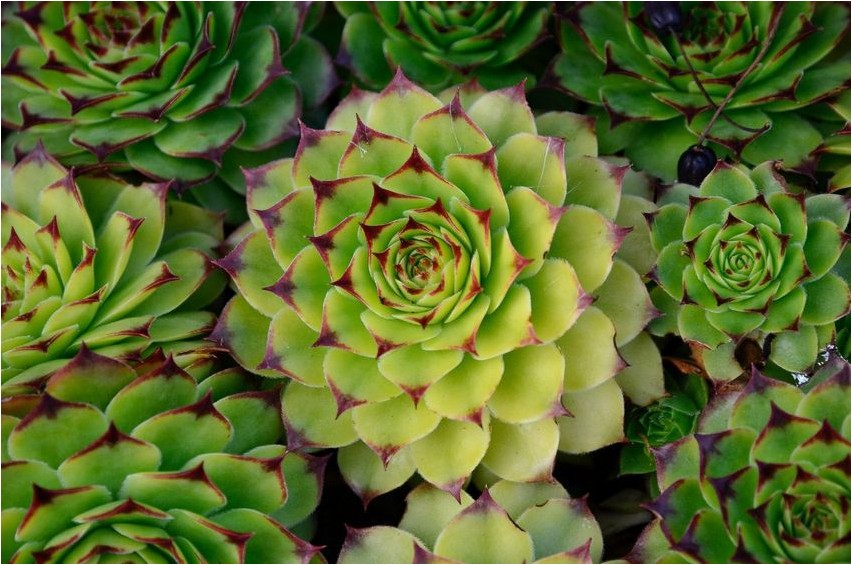
Juvenile (lat. Sempervivum) is a genus of perennial plants with fleshy leaves, most often covered with glandular hairs, belonging to the Crassulaceae family.
Fresh juicy leaves of plants can be eaten. Infusions and decoctions of fresh leaves have healing powers and are used to treat many human ailments.
What”s in your name
The fantastic endurance of plants of the genus in the face of environmental conditions unfavorable for life gave botanists the reason for the Latin name of the genus, which sounds like “Sempervivum”. In Russian translation, this phrase means “Always alive.”
Description
Plants of the genus Molodilo are herbaceous perennial natural creatures that are not afraid of drought, since they store moisture for future use in their fleshy, pointed leaves. Plants are low growing. Their height varies from five to forty centimeters. Spectacular rosettes of numerous leaves take on a spherical or slightly flattened shape, and grow up to ten to fifteen centimeters in diameter. Rosette shoots, called “stolons” by botanists, grow taller. The green, ovate-lanceolate, fleshy leaves often have reddish tips. The edges of the leaves are equipped with glandular hairs called cilia.
Flowering occurs once in the life of the plant. From a rosette of leaves, a densely pubescent fleshy peduncle, covered with succulent pointed leaves, appears into the world, at the top of which there is a picturesque corymbose-shaped inflorescence. The inflorescence is formed by regular hermaphroditic star-shaped flowers. The flower corolla consists of pointed petals, which are longer than fleshy sepals, fused at the base into a protective cup, usually covered with hairs. The color of flower petals can be very different: from white and yellow to pinkish, crimson, or even purple. The flowers are small, but very elegant, looking like miniature stars.
The pollinated flower turns into a leaflet containing small, numerous seeds. After the seeds ripen, the plant dies. Reproduction occurs in two ways: through sowing seeds and vegetatively. The mother plant is overgrown with numerous daughter rosettes of leaves, forming a continuous plantation of picturesque fleshy rosettes.

In the wild, Molodilo prefers to be located on sandy hills exposed to sunlight, or in clearings of dry pine forests. Damp places and dense shade are not made for plants of the Molodilo genus.
Species of the genus Molodilo
The similarity of different species of the genus to each other presents difficulties for botanists to clearly classify species, and therefore the number of species varies in the literature from thirty to fifty. The most famous types are the following:
* Roofing sapling (lat. Sempervivum tectorum)
* Russian rejuvenated (lat. Sempervivum ruthenicum)
* Marble rejuvenated (lat. Sempervivum marmoreum)
* Sempervivum globiferum
* Cobwebby young (lat. Sempervivum arachnoideum).
Usage
Plants of the genus Molodilo, with their unpretentious attitude to living conditions and picturesque appearance, have gained great popularity when decorating flower beds, especially rockeries, rocky walls, and are also used as ground cover plants.
In the old days, people protected their homes from thunder and lightning by planting Molodilo on the roofs. This is where the name of one species came from — Roofing young.
Fresh leaves are used in cooking: in green or vegetable salads, when cooking cabbage soup and soups, as well as in other dishes.
Fleshy and juicy leaves contain many substances useful to humans, and therefore are actively used as healing agents with analgesic, sedative, anti-inflammatory, and wound-healing effects.