Rhubarb
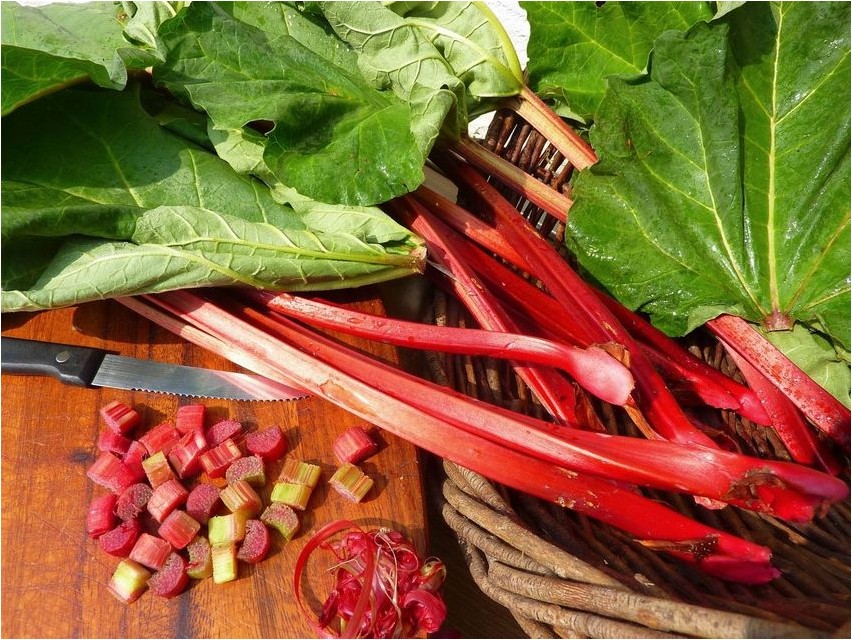
Rhubarb (Latin: Rheum) is a genus of perennial herbaceous plants in the Polygonaceae family. Native to Asia and Europe, there are currently over 20 recognized species, some of which can produce various hybrids.
It is especially difficult to obtain a pure variety from seed.
Crop Characteristics
Rhubarb is a perennial herbaceous plant with a strong woody rhizome and straight, thickened above-ground stems. The basal leaves are quite large, entire, serrated or palmately lobed, and sit on polyhedral or cylindrical petioles of green or red color, with sockets at the base. The cauline leaves are small.
The flowers are greenish or white, unisexual or bisexual (depending on the stage of development), and are gathered in large paniculate inflorescences. The perianth is simple, with six leaflets, either equal or different in size. The fruit is a triangular nut, either narrowly or broadly winged.
Rhubarb is a cold-hardy crop, growing and overwintering without problems in the Non-Black Earth Region. In central Russia, it requires careful care and shelter. The optimal growing temperature is 20-24°C. Seeds germinate at 5°C. Rhubarb rhizomes can withstand temperatures as low a s-25°C.
Growing Conditions
Rhubarb loves the light and thrives in sunny locations. Mature plants tolerate light shade, while first-year plants suffer from insufficient light. Light, fertile, and permeable soils are preferred. Clayey chernozems, loams, and cultivated clays are ideal.

Although rhubarb loves moisture, it does not respond well to waterlogged soils. This often leads to rhizome rot and eventual death. Selecting a site for rhubarb is a critical task, as the crop will grow there for 10-15 years. The site should be free of perennial weeds, including couch grass, sow thistle, and goutweed.
Propagation and Planting
Rhubarb is propagated by seeds and rhizome division. The crop is grown primarily from seedlings. Before sowing, the seeds are soaked in water until they swell, then placed in damp cheesecloth or burlap. When white sprouts appear on the seeds, they are dried and sown in seedling trays filled with fertile soil. Seedlings appear in 5-6 days. Seedlings are planted in open ground in May. If sown in seedbeds, the young plants are transplanted the following spring.
It is not forbidden to sow rhubarb directly into open ground. In this case, sowing is carried out in an ordinary way at the end of April – beginning of May. Planting depth is 2-3 cm. When 3-4 true leaves appear on young plants, the crops are thinned out. The distance between plants should be about 20 cm. Subsequently, the plants are planted at a distance of 100 cm from each other.
During vegetative propagation, healthy mother bushes are divided with a knife so that each division has a sufficient number of roots and 1-2 growth buds. The delenki are immediately planted in the ground, watered abundantly and shaded from direct sunlight for several days. This procedure is carried out in early spring. From one plant you can get at least 5-10 divisions.
The area for rhubarb is prepared in advance, the soil is dug up with a shovel full, filled with organic matter (at the rate of 2-3 buckets of rotted composted manure or humus per 1 sq. m), mineral fertilizers are applied (ammonium sulfate or urea – 30 g, potassium chloride – 30 g, superphosphate – 60 g). Acidic soils are subjected to preliminary liming.
Care
Caring for rhubarb after planting in the ground consists of weeding, loosening, watering and fertilizing with mineral and organic fertilizers. Control of pests and diseases is also important for the culture. Plants are most often affected by buckwheat flea, rhubarb beetles and larvae, rhubarb bug, ascochyta blight (or blight) and gray mold. It is not recommended to use pesticides; it is better to try all known folk methods, they are also effective. Starting from the second year of life, uterine stems form in the crop; they greatly deplete the plants, so they should be removed. Fertilize rhubarb every 3-4 years.
Harvest
The harvest is harvested in the second year after planting. In the first year of life, rhubarb forms petioles that are quite suitable for nutrition, but they should not be broken off, as this can significantly weaken the plants and reduce yields in subsequent years. The first cutting is carried out in May, and further collection is carried out as needed. Cutting is stopped 2 months before the end of the growing season. In the first 2-3 years, up to 1-2 kg of petioles can be collected from one bush, in the future – up to 4-6.





