Veronica Daurskaya
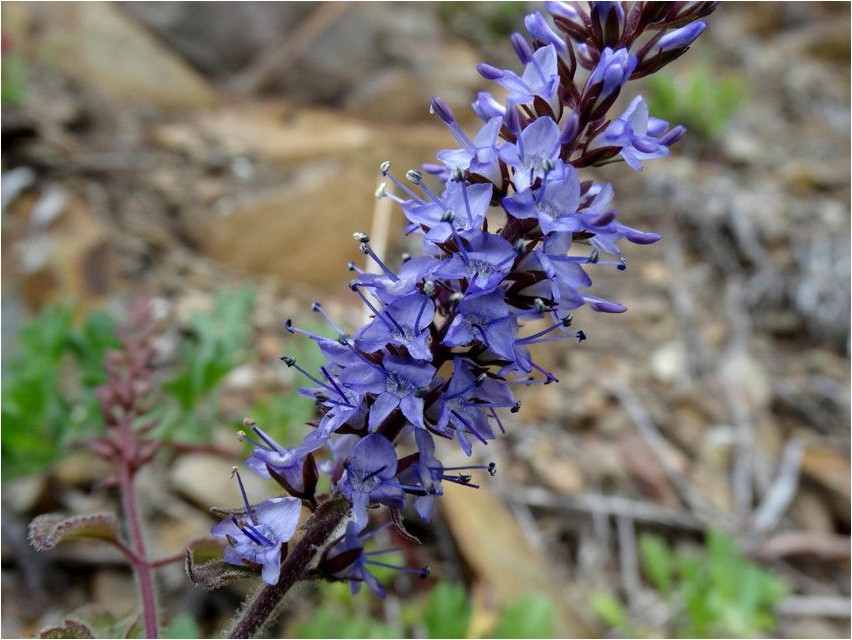
Veronica davurica is part of the family called Noricaceae; in Latin the name of this plant is as follows: Veronica davurica Stev. or V. grandis Fisch. ex Spreng.
As for the noricaceae family, the name of this family in Latin will be: Scrophulariaceae Juss.
Description of Veronica Dahurskaya
Veronica Daurica is a perennial herbaceous plant, the height of which will fluctuate between thirty and ninety centimeters. The leaves of Veronica Daurica can be either narrow-lanceolate or linear. Moreover, the length of the leaves of this plant will be approximately two to five centimeters, while their width will not exceed three to seven millimeters. The leaves themselves will be quite sharp and finely toothed, with teeth that face backwards. Sometimes such leaves of Veronica Daurica are also entire. The racemes of these leaves are always axillary and small-flowered, endowed with very thin, but at the same time rather long pedicels. The corolla of speedwell is painted either whitish or pale blue. The plant capsule will be flattened on the sides; it can be either kidney-shaped or ovoid.
As for distribution in nature, this plant can be found in Eastern Siberia, namely in the Daursky region. Also, Dahurian speedwell also grows in the Far East: namely, in the Amur region and Primorye. Under natural conditions, the plant grows on rocky slopes and on sand and pebble deposits.
Description of the medicinal properties of Veronica Daurica

The plant is characterized by very valuable medicinal properties; the roots and grass of Veronica Daurica should be used specifically for medicinal purposes. Grass refers to flowers, leaves and stems. It is noteworthy that the following elements were found in the aerial part of this plant: flavonoids, coumarins, alkaloids and cardenolides.
In folk medicine, a decoction made from the roots of Veronica dahurica is quite common. This remedy is indicated for a wide range of ailments, including hepatitis, gastroenteritis, endometritis, and cardiovascular disease. In these cases, a decoction of the roots is used as both a pain reliever and a wound-healing agent. An infusion and decoction made from the herb of Veronica dahurica are used as a wound-healing, antipyretic, and hemostatic agent.
For hepatitis, prepare the following decoction: approximately ten to twelve crushed dried roots per glass of water. This mixture should be simmered over fairly low heat for five to six minutes, then left to steep for one hour, which will allow the mixture to return to its original volume. After this, strain the mixture. The resulting decoction should be taken one to two tablespoons before meals three to four times daily.
For bronchial asthma, a slightly different decoction of Dahurian speedwell requires preparing. To prepare it, add two tablespoons of crushed dried speedwell to half a liter of boiling water. Let the mixture steep for two to three hours, then strain. It is recommended to take one-quarter to one-third cup of this decoction three times daily.
Dahurian speedwell can also be used as a wound-healing remedy. For this, prepare a slightly stronger infusion of Dahurian speedwell. This infusion is used as a compress, but fresh speedwell can also be used.





