Ginger
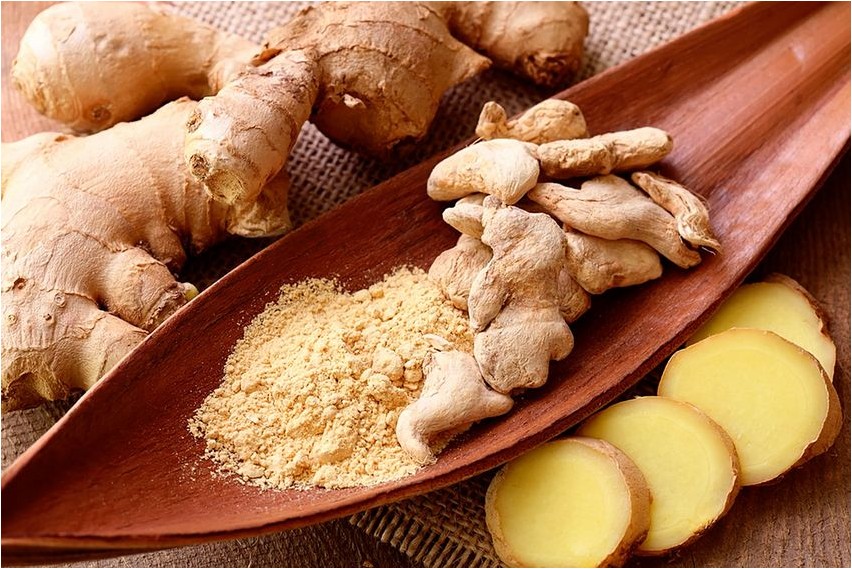
Ginger (lat. Zingiber) is a genus of perennial herbaceous plants of the Zingiberaceae family. The popular name is white root.
South Asia is considered to be the birthplace of the plant. Today, ginger is grown in West Africa, Australia, Indonesia, India, China, Barbados and Jamaica. The genus contains about 80 species, distributed from tropical Asia to Northern Australia.
Characteristics of culture
Ginger is a herbaceous plant with stems up to 50 cm high. The leaves are elliptical or narrowly lanceolate, vaginal, up to 20 cm long, tightly covering the stem. The rhizome is tuberous-dismembered, developing horizontally in the bud, equipped with basal scales. The flowers are medium-sized, collected in apical spike-shaped inflorescences, located in the axils of the bracts.
Growing conditions
In temperate climates, it is recommended to grow ginger in greenhouses or hothouses, since this exotic plant requires abundant moisture and high air temperature to fully ripen. The soil for the crop is preferably loose, nutritious, with the addition of coarse sand or gravel in small quantities.
The optimal option is structural turf soil, leaf humus and river sand in a ratio of 1:2:1. Direct sunlight is contraindicated; protection from wind is advisable. It is necessary to create conditions for plants that are as close to natural as possible, because ginger is native to South Asia. You can grow ginger indoors.
Landing
Ginger root with live buds, purchased in a regular store, is used as planting material. Before planting, the roots are soaked in water for 2 days, and then planted horizontally with the buds up in a large wide pot or container. It is important to provide high-quality drainage at the bottom of the pot or any other container; this can be coarse sand or fine gravel.

I plant the root so that it is located 2 cm below the soil surface. After planting, the soil is moistened abundantly. Shoots will appear in 1. 5-2 weeks. Young shoots develop very quickly, and by the end of spring the plants form a powerful green mass. A pot or container with ginger is placed in the garden or greenhouse for the summer.
Care
Fertilizing for the crop is very important; it is carried out from the time of emergence until the end of August. It is recommended to use mullein diluted with water in a ratio of 1:10 as fertilizer. At the beginning of August, fertilizing with organic matter alternates with fertilizing with potassium fertilizers. This approach will allow the formation of larger tubers.
In addition to watering, regular spraying is carried out; it is better not to allow the leaves to dry out. Spraying is carried out in the evening or during the day in cloudy weather. Loosening the soil in the near-stem zone has a beneficial effect on the growth of the above-ground parts and rhizomes. The optimal loosening depth is 1 cm. By the end of September, ginger foliage is stopped being sprayed and watering is significantly reduced.
Harvest and storage
Ginger is harvested after the leaves turn yellow and begin to fall. The rhizomes are dug up, cleared of the earthen clod, adventitious roots are removed and dried. Store ginger tubers in a basement or cellar at a temperature of 2-4C. You can store ginger in a paper bag in the refrigerator.
Usage
Ginger root is widely used in cooking as a spice for preparing drinks and any other first and second courses. Ginger can also be consumed in its pure form (pickled, with salt or lemon). In Russia, ginger root is used in the production of gingerbread, buns and gingerbreads, as well as kvass, tinctures and liqueurs.
Ginger is also used in folk medicine. The spectrum of its action is wide. It is useful for diseases of the liver, gastrointestinal tract and cardiovascular system. Ginger improves memory, supplies the brain with oxygen and improves immunity.





