Ilama
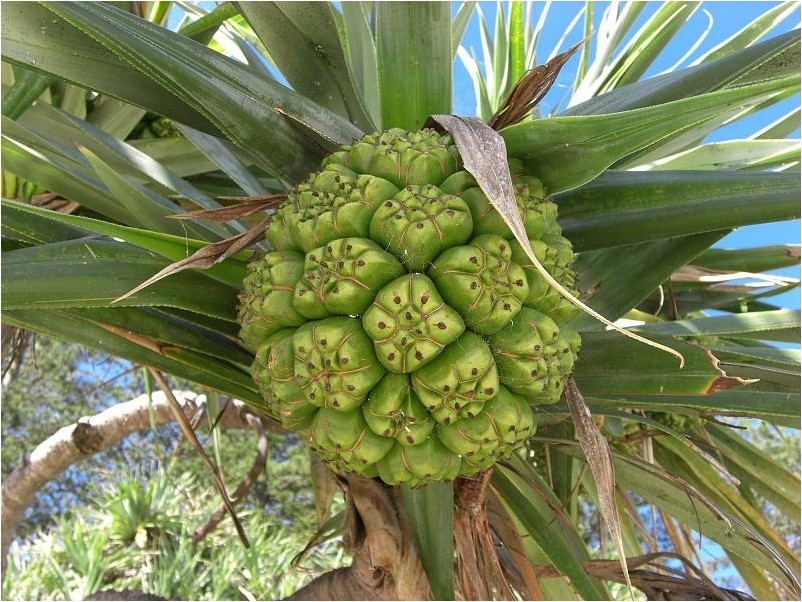
Ilama (lat. Annona nodiversifolia) is a fruit tree belonging to the Annonaceae family. In science, this crop is called Annona varifolia.
Description
Ilama is a low fruit tree whose height can reach seven meters. The branches of the trees are wrinkled and widely spread, and the length of the oblong-elliptical leaves reaches fifteen centimeters. Young foliage is usually characterized by a copper or reddish tint, and a little later it becomes completely green.
Single and rather long burgundy flowers of ilama are endowed with miniature pubescent sepals.
Ilama fruits, which often weigh up to one kilogram, are either rounded-oblong or heart-shaped. And their length can vary from fourteen to sixteen centimeters. The hard skin of the fruit, studded with numerous triangular spines, is colored either in dark green tones or in purple shades with a slight grayish tinge. Sometimes smooth fruits are also found. And the fibrous pinkish or whitish sweet pulp contains brown and rather soft oval seeds. As a rule, there are from twenty-five to eight dozen of them in each fruit.
Ilama is characterized by an average yield — most often, about a dozen fruits can be collected from one tree throughout the year, although in some years individual trees produce a harvest of about a hundred fruits. Ilama usually begins to bear fruit in June, and the duration of its fruiting period is about two weeks.
Where does it grow
The homeland of ilama is Southwestern Mexico, more precisely, its Pacific coast. This is where it mainly grows — both cultivated and wild. In addition, Ilama can be found in the wild in Guatemala and El Salvador, as well as in the adjacent foothill areas.

Application
Ilama fruits are eaten fresh and are widely used in cooking — a wide variety of dishes, cocktails and drinks are prepared with their addition. And to enhance the taste, cream, lemon juice or sugar are often added to the pulp.
Ilama contains quite a lot of vitamin C, as well as B vitamins and various minerals. B vitamins have a positive effect on the nervous system and take an active part in the oxygen exchange occurring in tissues. And ascorbic acid is the best helper for strengthening the immune system. It also contains potassium, which helps normalize the activity of the cardiovascular system, significantly reducing the risk of strokes and heart attacks.
Also in the composition of ilama you can find thiamine, which supports the functioning of the digestive system and heart and takes an active part in metabolism. And phosphorus is vital for the full formation of muscle and bone tissue. Moreover, it is also involved in the formation of new tissues and brain cells.
This fruit is used to prevent atherosclerosis and for its treatment, as well as for anemia, diabetes, cirrhosis of the liver and disorders of the digestive tract. In addition, it helps maintain normal cholesterol levels in the body.
It is also recommended to include ilam in their diet for all people who have problems with the digestive organs, as well as those who experience certain eye problems.
Ilama should be stored in the refrigerator. And so that the fruits are not damaged and survive transportation as best as possible, they are most often collected and exported unripe. Subsequently, these fruits ripen on their own.
Contraindications
There are no special contraindications to the use of ilama — it is not recommended for use only by people with individual intolerance.