Istod Siberian
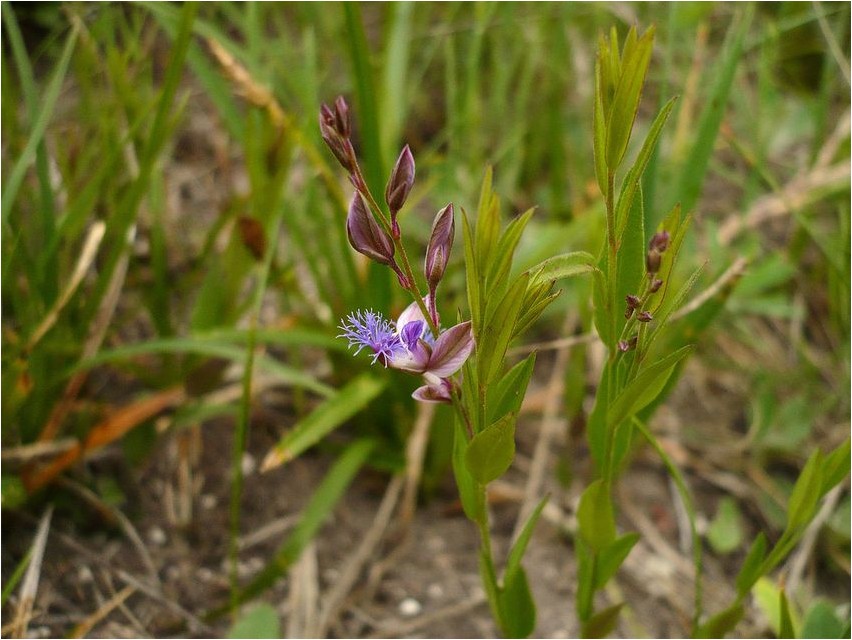
Siberian istod is one of the plants of the family called istodaceae; in Latin the name of this plant will be as follows: Polygala sibirica L.
As for the name of the Siberian istodia family itself, in Latin it will be: Polygalaceae R. Br.
Description of the Siberian source
Istoda Siberian is a perennial herbaceous plant, the height of which will be about fifteen to twenty centimeters. This plant will be endowed with a short taproot, as well as numerous low, thin stems that are short-haired. The leaves of Siberian istod are sessile and lanceolate. The inflorescence of this plant is a one-sided, thin lateral raceme. The flowers of the Siberian istod are painted in blue tones. The fruit of this plant is a two-locular, round-heart-shaped capsule.
Flowering of the Siberian origin occurs during the period from May to July. Under natural conditions, this plant is found in the Far East, Western and Eastern Siberia, the Volga region, the Caucasus, as well as in the following regions of Ukraine: along the Dniester, in the south of the Donetsk region and in the southeast in the Donets basin.
Description of the medicinal properties of Siberian istod
Siberian istod is endowed with very valuable healing properties, and it is recommended to use the roots of this plant for medicinal purposes. Such roots should be dug up in the autumn, the roots should be shaken off the ground: it will crumble very easily. The roots are then cut short and air dried in the shade with good ventilation. After drying the roots of the Siberian istod, the remaining soil should be shaken off on nets.
The presence of such valuable healing properties is explained by the content of glycosides, saponins, triterpene saponins, polyhalite alcohol, resins, glucose and the following acids in the roots of this plant: valeric, ascorbic and polyhalic.

The roots of this plant are endowed with emollient, expectorant, enveloping and anti-inflammatory effects. A decoction and infusion of the roots of the Siberian istod can cause increased secretion of the bronchial glands, as well as dilution and will increase the tone of the smooth muscles of the intestines. In addition, it has been scientifically established that by irritating the nerve receptors of the mucous membrane, the saponins of this plant will excite the cough center by reflex.
It has been found that preparations based on this plant will not cause particularly harmful side effects, and are considered very effective expectorants for chronic and acute diseases of the lungs and upper respiratory tract, including bronchial asthma, bronchitis, laryngitis and lung abscesses.
As for traditional medicine, a decoction of the roots of this plant is widely used. This remedy should be used as an antiperspirant, diuretic and emetic. An infusion of the leaves of Siberian istod is recommended for use in cases of sexual weakness, memory loss and wet dreams. In addition, such a remedy is also effective as a restorative and anti-fever agent. As for external use, this decoction is used for abscesses on the mammary glands, boils, carbuncles, tumors and abscesses. Compresses based on the juice of the Siberian istoda herb should be applied to the sites of snake bites. Also, a decoction of the roots of this plant can be used in the form of washes and lotions for both carbuncles and abscesses. However, when using products based on Siberian istod, you should be especially careful, due to the fact that in large doses the roots of this plant can have an emetic effect.





