Crocus
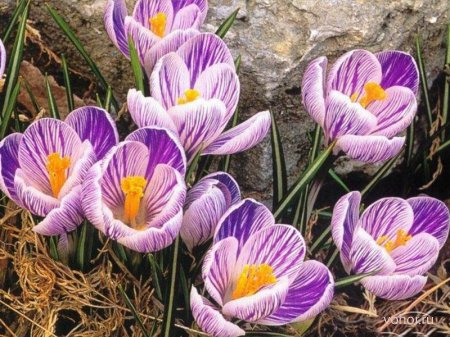
Saffron (or crocus) is a perennial bulbous plant. The mother corm is renewed annually. Its leaves are green, narrow, and have a white stripe. Flowers emerge directly from the corm.
Saffron belongs to the iris family and is a popular plant among gardeners. All varieties of saffron are very beautiful, with a striking variety of colors.
historical Background
Crocuses were planted in entire fields as early as Ancient Greece and Egypt. The word “iris” literally means rainbow. Artists have depicted the multicolored flowers of this flower in their paintings. The iris is depicted on the coats of arms of the kings of France and England. These are not only beautiful flowers, but also medicinal plants used in perfumery and confectionery. A valuable essential oil with a delicate violet scent is extracted from crocus rhizomes.
Crocus extract is used in the production of luxury perfumes and added to the finest wines.
Garden Crocuses

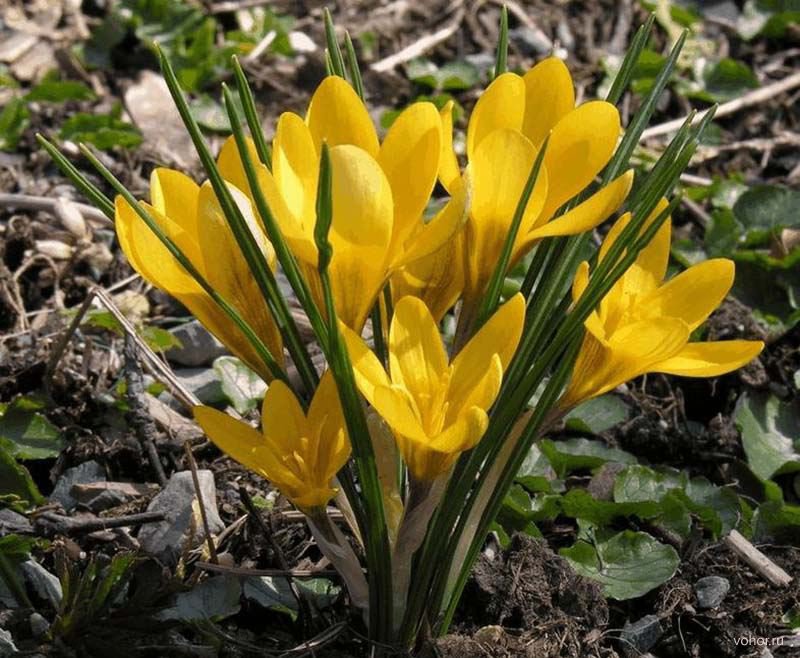
to assist gardeners, crocuses are divided into 16 classes. Crocus bulbs thrive in full sunlight. However, they can tolerate light shade if planted near trees. Lack of sunlight will kill the flowers.
Gusty winds are harmful to the large crocus flowers. Wind combined with rain, in particular, can cause significant damage to the flowering plants.
Crocuses are sensitive to overwatering and excessive soil moisture. It is best to water the flowers in the evening Sudden temperature changes can cause the flowers to change color. The best soil for crocuses is light loam. Heavy soil should be lightened by mixing it with sand and peat. Ash can be added to acidic soil. Before planting, the soil should be dug over and weeded. Well-rotted manure should be worked into the soil to a depth of 20-25 cm, but not mixed with the soil
fertilize crocuses at least three times during the summer.
Decorating your dacha
Crocuses have always been used to decorate gardens, city parks, and garden plots. They are used in arrangements, but should not be planted next to perennials or fast-growing plants, as this will kill the bulbous crocuses.
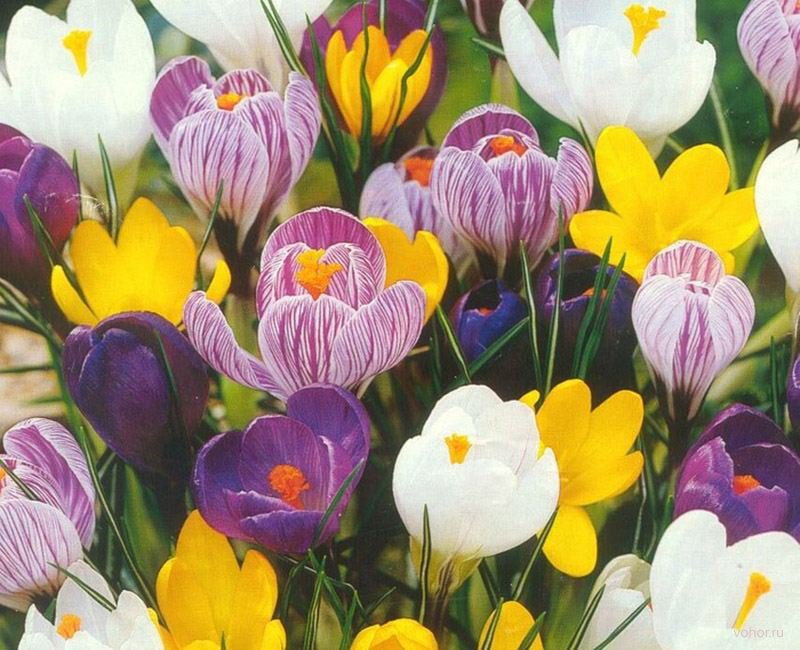
the best decorative addition to a dacha is a composition of several varieties of crocuses.
Large rock formations of various shapes and sizes, arranged in mounds, will add a decorative touch.
If there is a small hill on the site, then it is perfect for dwarf flowers in relation to phlox caps, multi-colored tulips, and royal crocuses.
Medium-sized bulbous crocus flowers look beautiful near a pond, especially the Japanese iris variety. You can plant colorful Siberian crocuses in moist and shaded areas of your dacha or garden. Place green ferns between the groups.
Medicinal properties of crocuses
Pharmaceuticals use crocus rhizomes. The roots contain essential oil, organic acids and tannins. Used as an expectorant and diuretic.
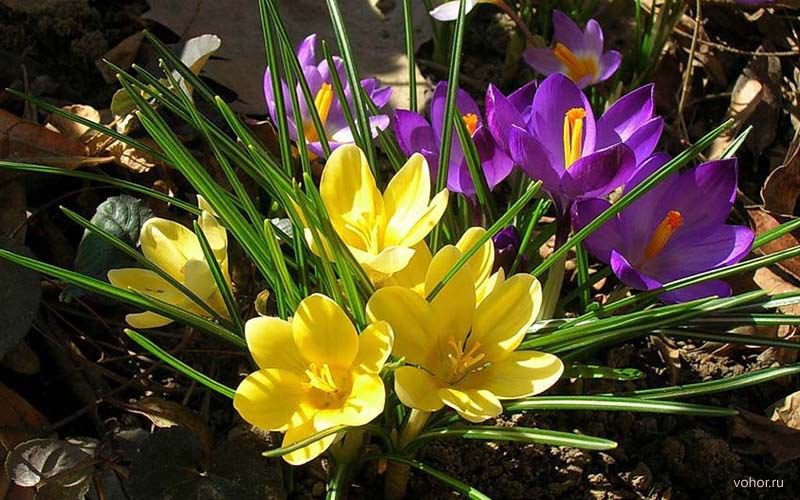
crocus
crocus