Hazelnut
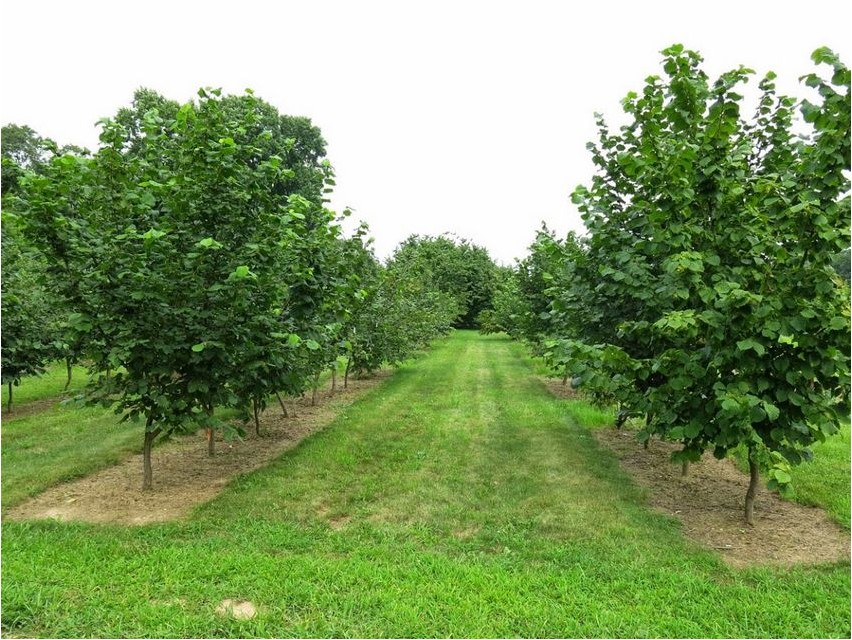
Hazelnut (lat. Corylus maxima) is a nut from the Hazel genus, which belongs to the Birch family. In fact, hazelnuts are the fruits of the Lombardy nut (large hazel).
A little bit of history
It is generally accepted that hazelnuts were developed by either the ancient Greeks or the ancient Romans. In Ancient Greece, these nutritious nuts were always considered a symbol of prosperity, health, wealth and well-being in the family. In Rome, they personified strength and health, and our wise ancestors generally called hazel a blessed tree. In Rus”, double nuts were constantly carried with them — they served as a talisman to help protect against dark forces and thunderstorms. Our ancestors also believed that lightning could not strike a hazel tree.
Nowadays, the word “hazelnut” includes several types of hazel, but the nuts we are used to in most cases are the fruits of large hazel.
Description
The height of this plant often reaches ten meters. Each tree is endowed with annual densely glandular-pubescent shoots and gray branches. And the wide oval or round leaves are endowed with heart-shaped bases and short pointed tips. The leaflets are twice toothed along the edges, and pubescent along the veins below. In addition, all leaves are endowed with lanceolate stipules and soft pubescent petioles.
Hazel fruits are slightly elongated or spherical single-seeded nuts, reliably protected by woody pericarps. They can be either single or clustered in groups of two to five. Each nut is protected by a cut tubular cover. And the velvety pubescent fruit wrappers are characterized by a light green color and can be either bell-shaped or wide-goblet-shaped.
Useful properties
Hazelnuts are very rich in all kinds of nutrients, and in terms of calorie content (about 700 kcal for every 100 g), they are eight times higher than milk and chocolate and two to three times higher than bread. This nut is widely used as a dietary food product — it is recommended to be used for varicose veins, enlarged prostate gland, anemia and various diseases of the cardiovascular system. Even people with diabetes can eat hazelnuts. Moreover, it can be consumed without the risk of gaining weight even on the most strict diet — this is due to the fact that hazelnuts have a fairly low carbohydrate content.

Hazelnuts also contain substances that help remove toxins from the body in general and from the liver in particular. Regular consumption of these nuts helps strengthen the immune system, cleanse the body and even prevent putrefactive processes.
Use in folk medicine
Hazelnuts are often used in folk medicine. An infusion of hazel leaves is an excellent diuretic. In addition, this drink has a beneficial effect on the functioning of the intestines, stomach and liver.
Tree bark helps to heal from dysentery, hemorrhoids, trophic ulcers, rheumatism and colds. And nut oil, like any hazelnut products, is a great help in cases of decreased sexual function.
As for nut milk, it is very successfully used to treat chronic bronchitis and as an effective sedative. By the way, such a product is not difficult to prepare at home. Fifty chopped nut kernels are poured into a glass of warm water and left for ten hours. Then the kernels are ground and left to stand for three hours, after which the mixture is brought to a boil and filtered. Five tablespoons of cream and one and a half tablespoons of honey are added to the resulting composition and everything is thoroughly mixed. And they use the healing potion twice a day before meals, one tablespoon.