Draconis nutans (Dragonhead) is a member of the Lamiaceae family. Its Latin name is Dracocephalum nutans L.
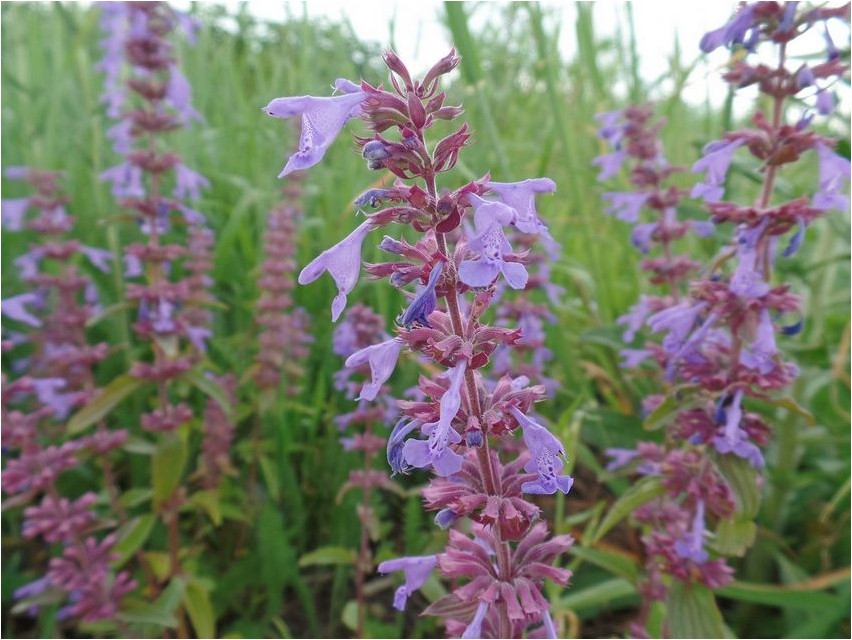
The family name of Draconis nutans is Lamiaceae Lindl.
Description of Draconis nutans
Dragonhead is an annual or biennial herbaceous plant, growing between five and forty centimeters tall. Its leaves are ovate-oblong. The calyx is approximately six to eight millimeters long, and the corolla is seventeen to twenty-two millimeters long. The calyx is blue-violet in color, but can sometimes be white. The flowers of this plant are borne in false whorls, which gather at the ends of the stems into fairly dense, capitate, spike-shaped inflorescences.
In the wild, the revolving dragonhead is found throughout Western and Eastern Siberia, Central Asia, the Carpathians and the Dnieper region of Ukraine, the Upper Dnieper region of Belarus, and the following regions of European Russia: the Volga region, the Black Sea region, and the Ladoga-Ilmensky region. This plant is also found in the following regions of the Far East: the Okhotsk region, Upper Amur, and Primorye.
Description of the medicinal properties of the revolving dragonhead
The revolving dragonhead has very valuable medicinal properties, and it is recommended to use the herb and seeds of this plant for medicinal purposes. The term “herb” includes flowers, leaves, and stems. The plant’s valuable medicinal properties are explained by its coumarins, flavonoids, essential oil, and alkaloids. Its seeds contain fatty oil containing palmitic, stearic, linoleic, oleic, and linolenic acids. Remarkably, the sum of flavonoid aglycones has been shown to have a sedative effect in experiments. Furthermore, an extract from this plant’s herb has been shown to exhibit antibacterial activity.
As for traditional medicine, an infusion and decoction of the herb drooping snakehead has become widespread here. Such remedies are recommended for use for headaches, gastritis, angina pectoris, gastralgia, respiratory infections, pulmonary tuberculosis, asthenia and numerous female diseases. Baths with this plant should be used for rheumatism. In folk medicine, an infusion of the herb of this plant is used for gastroenteritis and nephritis, and you should gargle with this infusion for gingivitis and stomatitis.
Drakehead drooping seeds are considered a mucilage agent that is considered similar in effect to sage-based products.

For headaches, it is recommended to use the following remedy based on drooping snakehead: to prepare such a remedy, you will need to take one tablespoon of dry crushed herb per glass of boiling water. The resulting mixture should be infused for twenty to thirty minutes, and then this mixture should be filtered very carefully. Take two tablespoons of this remedy three to four times a day before meals.
For gastritis, pulmonary tuberculosis, asthenia, respiratory infections, angina pectoris and headaches, the following remedy is used: take three tablespoons of dry crushed grass per four hundred milliliters of water. The resulting product is boiled over low heat for several minutes and infused for two hours. Take the resulting product one third of a glass three times a day slowly and in warm sips.
Spicy plant Moldavian dragonhead
Drooping snakehead





