Rosehip May
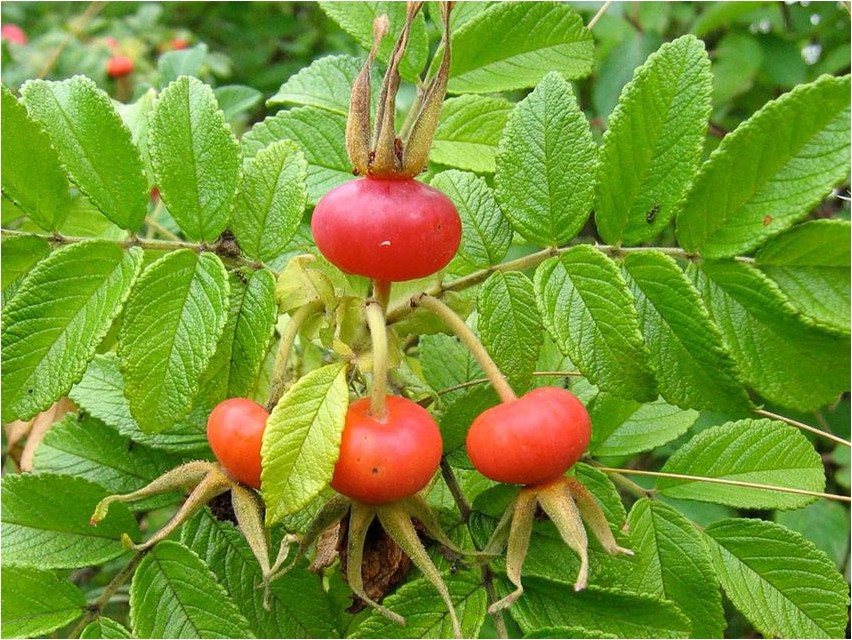
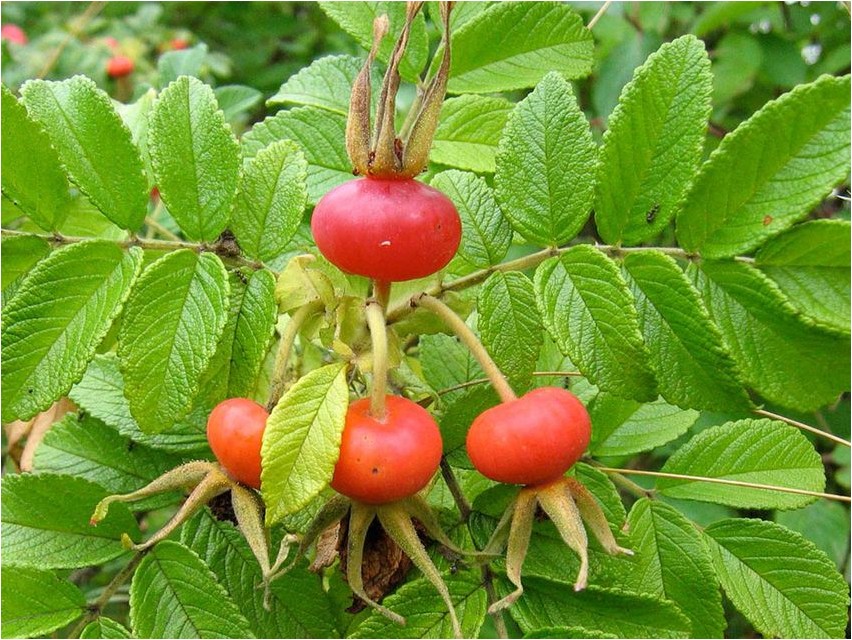
may rose hip (lat. Rosa majalis) is a cold-resistant and unpretentious shrub of the genus Rosehip (lat. Rosa) from the Rosaceae family.
A fast-growing shrub with beautiful fragrant flowers has occupied a certain niche in the landscaping of Russian cities. Its orange-reddish fruits are distinguished by a high content of vitamin C, and therefore are used by humans not only for food, but also for medicinal purposes.
Description
The perennial nature of the May Rosehip is supported by a taproot that goes deep into the soil and adventitious roots that spread horizontally from the taproot.
On the surface of the earth, the plant is represented by a branched shrub, reaching a height of 2 meters. The twig-like thin red-brown branches of the bush are protected from uninvited guests by hard thorns, which like to be located at the base of the petiole leaves in pairs, looking eerily at the world with their curved ends, similar to pointed sickles. Their scarcity is added by slightly curved or straight thorns-needles, which cover young shoots without flowers in more friendly clusters, as well as branches located in the lower part of the bush. Shoots intended for flowering, as a rule, are devoid of thorny protectors, so as not to repel pollinating insects.
The compound leaves of Rosehip May are formed by elliptical leaflets arranged in pairs on a common pubescent petiole of the compound leaf. There can be from 3 to 7 such pairs on one petiole. The veins of the leaf plate, fanning out from the central vein of a simple leaf, turn its edge into a wavy one, giving the leaves a decorative and delicate appearance. Glands are sometimes hidden under the hairy pubescence of the petioles.

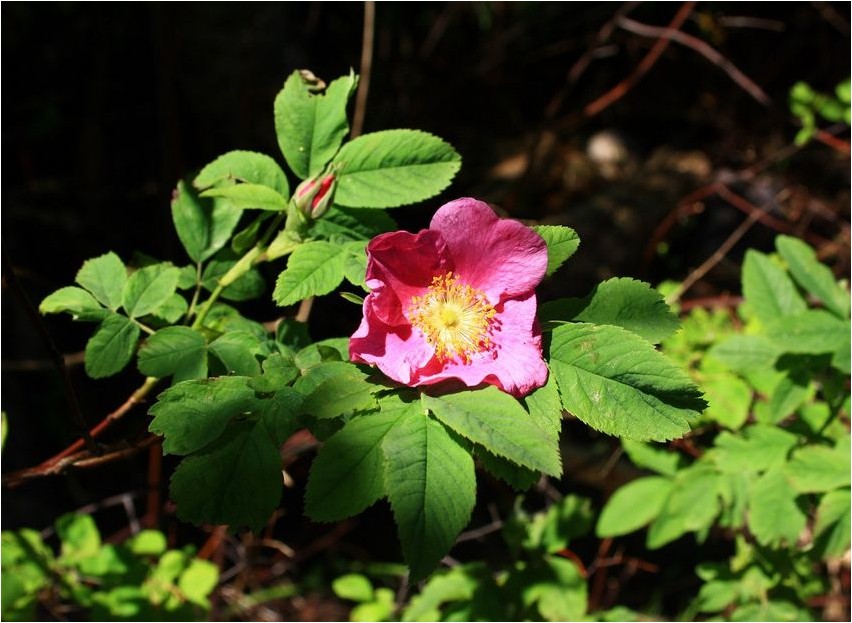
Large fragrant flowers, which appear in the world from May to August, often prefer solitude, but occasionally they can gather 2-3 flowers together. Their delicate dark pink petals, five in number, frame a yellow woolly core with numerous pistils and stamens.
The spherical, smooth, red-orange fruits have an edible fleshy shell with a sour taste, inside of which there are bristly and hard seeds-nuts. Narrow and relatively long sepals after fruit ripening remain in the form of a green crown at the top of the fruit.
Usage
Rose hips are a real natural storehouse, filled with a number of vitamins necessary for the human body, among which vitamin “C” is the leader. In addition to vitamin E, the bristly seeds contain valuable fatty oil.
A person could not pass by such a pantry indifferently, and therefore he began to actively use the fruits of the May Rose Hip, collecting them during the period of ripeness, but before the first frosts, which turn the fleshy, dense shell into a soft pulp, pleasant to the taste, but no longer suitable for drying for future use.
All kinds of medical preparations, tablets, syrups, mixtures, extracts used as a vitamin remedy, in particular, for the prevention against scurvy, are prepared from the harvested fruits of the Rosehip May.
Rosehip oil is obtained from bristly nuts, which has excellent wound-healing properties.
Lovers of jam made from rose petals also use rosehip petals for similar purposes. Rose vinegar is also produced from the petals.
If you need to make a beautiful living hedge, then Rosehip May is one of the first in line for this purpose. Its thorny, intertwining branches grow very quickly, creating an impregnable obstacle for those who like to invade someone else’s territory. And decorative green leaves, fragrant delicate flowers and bright fruits will become an additional decoration of the site.
https://www. youtube. com/watch? v=uI6Ffb2y_W8





