Nectarine
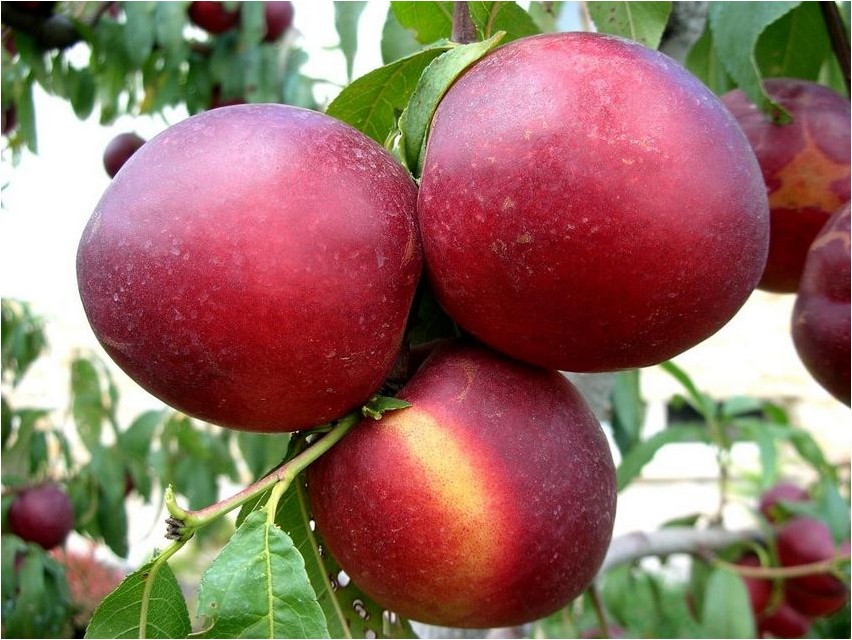
Nectarine (lat. Prunus persica) is one of the varieties of peach that has a smooth skin.
History
The word “nectarine,” according to English-language publications, was known already in 1616. However, nectarines gained popularity only towards the end of the 20th century, when large-fruited varieties (the weight of one fruit could easily reach 200 g or more) with aromatic and juicy yellow pulp began to go on sale.
It is generally accepted that nectarines appeared as a result of a classic mutation, namely as a result of self-pollination of some peach trees and periodic failures in the development of buds. And when people learned to graft trees, this funny mutation turned into a very successful variation.
Description
Nectarine fruits have the same smooth skin as plums. Essentially, these are hairless peaches. By the way, the most delicious and beautiful fruits are usually located closer to the soil surface or to the trunks.
Where does it grow
The main producers of these fruits are currently Mediterranean countries: Tunisia, Greece, Cyprus, Italy and the former Yugoslavia. China is considered the birthplace of nectarines.
Application
Nectarines are eaten fresh or these fruits are used to prepare canned compotes, sweet jams and a wide variety of desserts.

These juicy fruits are very rich in vitamins C and A — this property makes nectarines indispensable for the skin, because they help retain life-giving moisture in its cells, preventing it from sagging and wrinkles. Regular consumption of nectarines helps enhance the secretion of the digestive glands, greatly facilitating the process of digesting fatty and poorly digestible foods. And in general, these wonderful fruits have a pronounced therapeutic and preventive effect — they quite quickly normalize metabolism and can even prevent the development of oncology.
The pectin compounds contained in these fruits significantly inhibit the activity of various harmful microorganisms. And a quarter glass of freshly squeezed nectarine juice, drunk a quarter of an hour before meals, is an excellent remedy for constipation, increased stomach acidity, heart rhythm problems and anemia.
Systematic consumption of nectarines is considered an excellent prevention of atherosclerosis and hypertension, because these fruits help remove fluid and sodium from the body.
Nectarines have also been used in pharmacology — excellent healing ointments and life-saving medicines are made from the oil of bitter varieties.
Nectarine shells are also widely used to produce activated charcoal. And the beautifully polished wood is used to make attractive souvenirs. Thus, nectarines can safely be considered a versatile crop.
Harm
If nectarines are consumed in moderation, high blood sugar levels and inevitable weight gain will quickly follow. Since these fruits contain allergens, they are strictly contraindicated for those with allergies and diabetics.
Children under seven years of age should also avoid giving excessive amounts of nectarines. Canned peeled nectarines are considered much safer, as the protein in nectarine skin can cause allergic reactions.
Nectarine seeds contain hydrocyanic acid, a fairly potent poison.
Cultivation
Compared to regular peaches, nectarines are much more resistant to various pests. More recently, winter-hardy nectarine varieties have been developed, successfully cultivated not only in the North Caucasus but also in the Volgograd region.
Gardeners love nectarines because the early varieties can be harvested much earlier than other stone fruits.