Gorichnik Russian
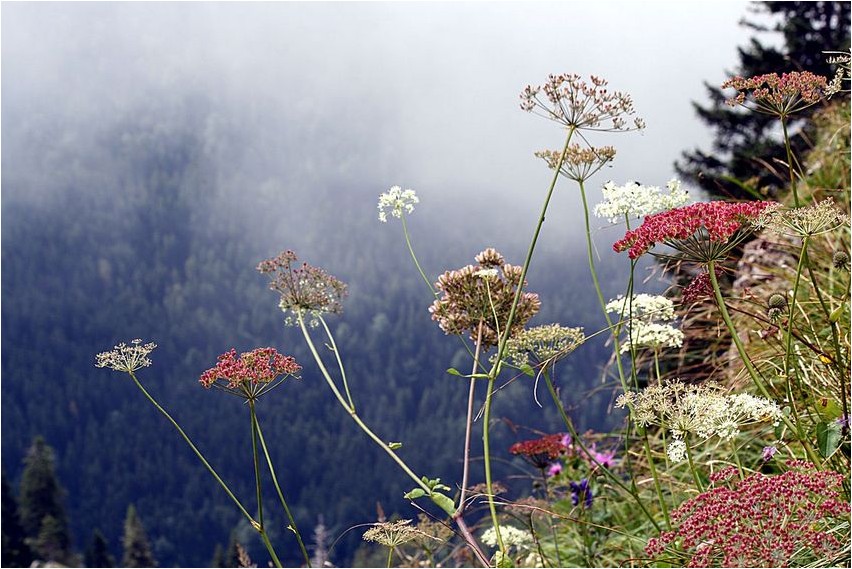
Russian gorichnik is one of the plants of the family called Umbellaceae; in Latin the name of this plant will be as follows: Peucedanum ruthenicum.
As for the Latin name of the Russian gorichnik family itself, in Latin it will be like this: Apiaceae Lindl.
Description of the Russian gorichnik
Russian gorichnik is a perennial herbaceous plant that is endowed with a rather thick tap root. The stem is quite tall, and its height will be about fifty to one hundred centimeters. Such a stem is branched, grooved and cylindrical. The basal leaves of Russian gorichnik are on long petioles that will expand at the very base into the vagina; such leaves are three-triple dissected. The leaf blades will be broadly triangular in outline, the terminal lobules are long and narrowly linear and endowed with a single vein. The stem leaves of Russian gorichnik will be slightly shorter in length and less dissected; they are apical in the form of sheaths. The flowers are quite small in size, they are painted in light yellow tones and are collected in a complex umbrella. The apical umbel of this plant is endowed with fourteen to twenty unequal rays, and the lateral umbels will be smaller. Such umbrellas are endowed with involucres consisting of five to seven linear-subulate leaves. Such leaves will be shorter than the rays of the umbrella themselves. The fruits of the Russian gorichnik are ovoid, double-ribed two-seeds.
This plant blooms from July to August. Under natural conditions, this plant can be found in the forest-steppe, steppe, as well as on sandy and calcareous soils in the Caucasus and in the southern zone of the European part of the former Soviet Union.
Description of the medicinal properties of Russian gorichnik
Russian gorichnik is endowed with very valuable healing properties, and it is recommended to use the roots of this plant for medicinal purposes. The roots of Russian gorichnik should be harvested either in late autumn or early spring. The presence of such valuable healing properties is explained by the content of essential oil and peucedanin in the roots of this plant. The roots are endowed with a nauseating and rather sweetish-spicy taste.
A drug called peucidanin was isolated from the roots of this plant, which is recommended for use in the treatment of circus baldness and vitiligo, and also as part of complex therapy, which will enhance the effect of antitumor drugs. As for the decoction and infusion prepared on the basis of this plant, they have the properties of enhancing the secretory activity of both the stomach and intestines. In addition, such drugs are endowed with stimulant, diaphoretic, diuretic, antiseptic and analgesic effects.

It is noteworthy that in folk medicine, infusion and decoction prepared from the roots of this plant are used in the treatment of headaches, epilepsy, bronchitis, colds, asthmatic bronchitis, bronchial asthma, and also for gout, insomnia, rheumatism, atherosclerosis and as a stomach and antimalarial remedy. Among other things, for dropsy, Russian gorichnik can be used as a diuretic. A decoction of the roots of this plant is used as a pain reliever when washing purulent wounds, and this remedy can also be used for bad breath and toothache.
For gout, it is recommended to use the following remedy: to prepare it you will need to take one teaspoon of Russian gorichnik roots in two glasses of cold boiled water. The resulting decoction should be infused for eight hours and then filtered thoroughly. This remedy should be taken one third of a glass three to four times a day half an hour before meals.





