Stefanandra
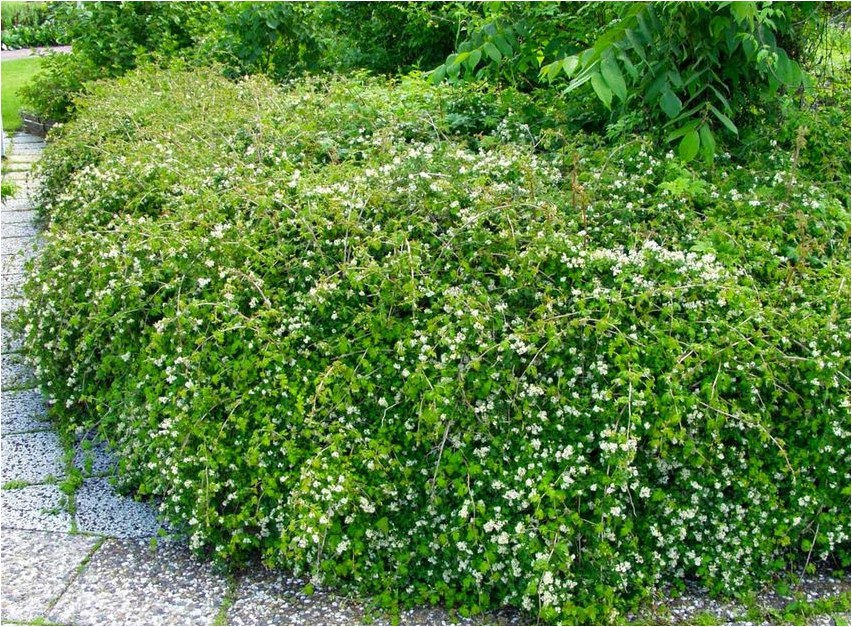
Stephanandra (lat. Stephanandra) is a genus of deciduous shrubs of the Rosaceae family. The genus includes only four species. In nature, stephanandra is found in Korea and Japan.
Characteristics of culture
Stefanandra is an ornamental shrub up to 2. 5 m high, similar in appearance to spirea. The shoots are thin, sinuous, arched, slightly deviated, brown in color with a shine. The leaves are light green, ovate, serrate along the edge or finely lobed, pointed, with stipules. The flowers are inconspicuous, bisexual, usually white, collected in loose paniculate inflorescences. The fruit is a leaflet.
The decorative foliage and graceful crown are especially attractive. Due to the arrangement of leaves and shoots, the shrubs look airy, and thanks to the contrast of the brown color of the shoots and soft green foliage, they look impressive. Stephanandra is attractive not only in summer, but also in autumn, since its foliage acquires reddish, pinkish and lemon shades.
Stefanandra is grown both in European countries and in Russia. However, only one species is cultivated in Russia — Stephanandra incisa, and very rarely Stephanandra tanakae.
* Stephanandra incisa (lat. Stephanandra incisa) — the species is represented by medium-sized, rather lush shrubs with arched brown-red shoots. The leaves are deeply lobed, with pubescent veins on the inside. The flowers are greenish-yellow. Stephanandra incisifolia blooms from the second ten days of June to the first ten days of July, sometimes longer. Typically, flowering time is 25-30 days. The crown of the plants is ornamental, attracting attention.

*Stephanandra Tanaka (lat. Stephanandra tanakae) — the species is represented by large shrubs up to 2 m high. The color and shape of the shoots does not differ from the previous representative of the genus. The leaves are slightly lobed, double-serrate, heart-shaped at the base. The flowers are small, whitish-green. Stephanandra Tanake blooms from the third ten days of June to the first ten days of August.
Growing conditions
The location is preferably sunny, light partial shade is not prohibited. Stefanandra needs protection from cold gusty winds. The soils are desirable: fresh, fertile, loose, neutral. The addition of sand and peat will have a positive effect on the development of the crop.
Reproduction and planting
Stephanandra is propagated by seeds and summer cuttings. Sowing is done in spring without preliminary seed preparation. Planting of seedlings of the crop is also carried out in the spring. The optimal distance between plants is 1. 5-2 m.
When planting in an area with clay soils, high-quality drainage is laid, which can be pebbles, coarse sand or broken bricks. The drainage layer is at least 15 cm. Before planting, add urea, ammonium nitrate and mullein solution, thoroughly mixed with the soil, into the hole.
Care
Stefanandra needs annual feeding with a mixture consisting of ammonium nitrate, urea and mullein solution, as well as regular watering, weeding and loosening of the tree trunk area. In hot summers, the number of irrigations and volumes of water used increase 2-3 times.
Mulching the tree trunk circle is desirable, but not necessary. It is recommended to use wood chips or peat as mulch. The mulch layer should be about 5-7 cm. Pruning is an equally important procedure. This procedure is carried out in the spring before the sap flows.
The crop is very rarely affected by pests and diseases, which eliminates the need for systematic treatments. In winter, the tree trunk area is insulated with dry fallen leaves or peat, and with the onset of warm weather, the shelter is removed.
Application
Stefanandra is ideal for creating single, group and composition plantings. Shrubs harmonize perfectly with evergreen crops. They look good in the coastal zone, near artificial and natural reservoirs, and in rocky gardens. Stephanandra”s excellent allies will be peonies, astilbes, hosts, chrysanthemums, primroses and some deciduous shrubs.





