Ilm
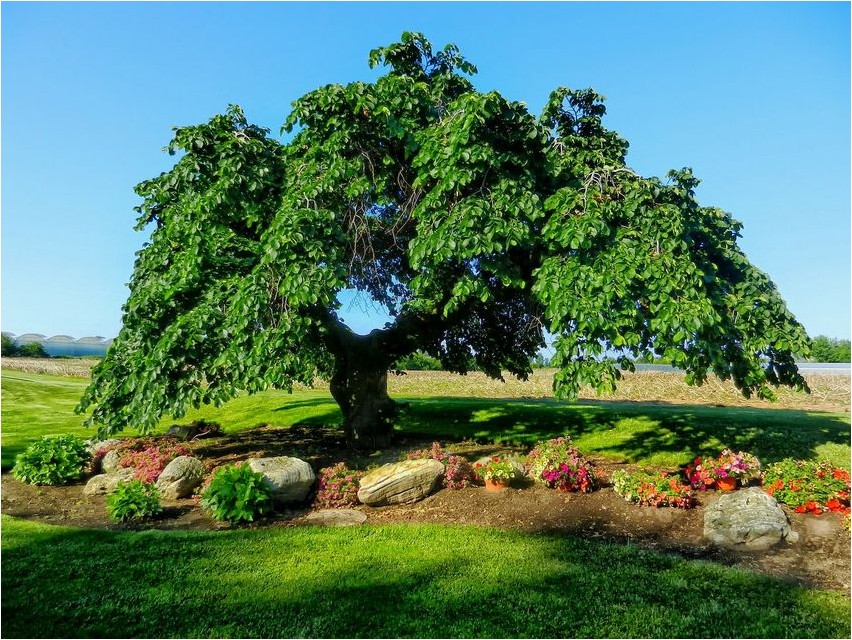
Elm (lat. Ulmus) is a light-loving woody plant belonging to the Elm family. Other names are birch bark or elm.
Description
Elm is a very beautiful deciduous tree with a dense and incredibly spreading elliptical or oval crown. Its height sometimes reaches forty meters, and the diameter of the trunks is two meters. The branches of the elm have neither thorns nor thorns, and the unequal, simple alternate leaves of this plant sit on short petioles.
Elm flowers are small and rather inconspicuous — they are all collected in small bunches. And the fruits of this plant have the appearance of winged nuts, the ripening of which begins approximately three to six weeks after flowering.
In total, the elm genus includes about forty species.
Where does it grow
Elm is quite widespread in the mountains of tropical Asia, as well as in the temperate zone of Europe, North America and Asia. There, these trees can be seen either in the subzone of luxurious broad-leaved forests, or in the middle and southern parts of the subzone of no less picturesque spruce forests. But elm plantations in their pure form are extremely rare. On the territory of Russia, only seven species of elm grow in natural conditions. By the way, it is generally accepted that elms appeared about forty million years ago!
Usage
Elm is quite actively used in urban landscaping — this amazing tree can often be seen on the streets, in parks and gardens. In addition, it is quite suitable for creating spectacular trimmed hedges. If elms are planted in groups, it is important to try to maintain a distance of two and a half to three and a half meters between seedlings, and when planting in hedges, a distance of one and a half to two meters will be sufficient. In the first year, the hedge is trimmed in the spring and towards the end of summer, and in subsequent seasons it is trimmed four to five times per season.

Incredibly strong and at the same time quite viscous elm wood has long been used to make a wide variety of bent products. Bast is also used for making boxes, roofing and sleigh tires. The bark is considered a fairly good raw material for the production of paints and tanning, and the young shoots of this plant are excellent twig food for livestock (pets especially love bark and elm leaves). You can also harvest firewood from elm — such firewood can boast a fairly high calorific value.
Growing and care
Elm grows best in well-drained, fertile soils, especially alluvial ones. However, some varieties of this tree are quite tolerant of relatively dry sites (in general, elm tolerates dry soil very poorly), as well as saline soils. As for location, this tree thrives in both partial shade and full sun.
Ornamental varieties and forms of elm are usually propagated by grafting, while all other varieties are propagated by sowing freshly harvested seeds from the plants in summer. Elm can also be propagated from stump suckers. Elm is regularly attacked by a wide variety of insect pests, but is particularly susceptible to leaf-eating parasites such as the elm springtail, elm leaf beetle, and others. As for diseases, elm most often faces fungal diseases in general and Dutch elm disease in particular, which often leads to massive tree dieback. In this case, trees affected by this dangerous disease are promptly cut down and immediately burned. Incidentally, many American and European elm varieties are already on the verge of extinction!
Elm Elm