What brick is needed for what and where to use it
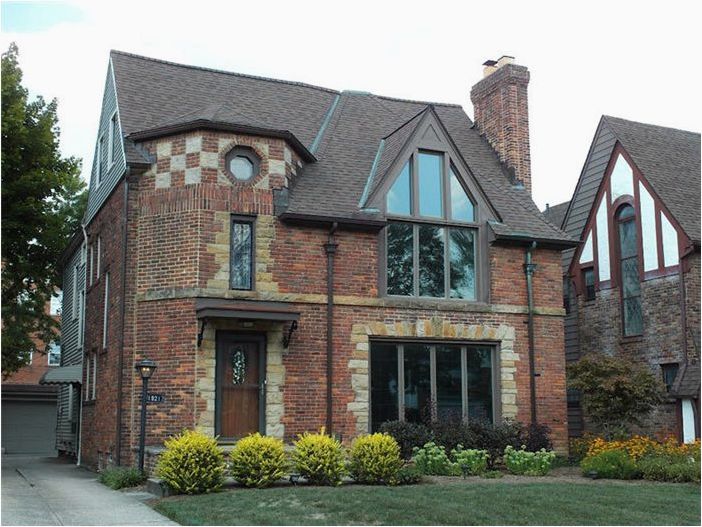
Ecology of consumption. Manners: In private construction, up to 20 brands of brick are used, but this storeroom is used for other purposes. It’s time to dot the i’s. The range of uses of the most popular types of brick products is described below.
Contents of the article:
in private construction, up to 20 brands of brick are used, but this storeroom is used for other purposes. It’s time to dot the i’s. The spectrum of use of the most popular types of brick products is described.
Classification and purpose
Bricks are artificial stones intended for the construction of vertical building structures. Therefore, the purpose of the brick is completely determined by the function of the building structure and its technical requirements.
Most common bricks Volgograd masonry or ordinary, intended for the construction of load-bearing walls, internal partitions and filling the enclosing structures of buildings based on reinforced concrete frames. When laying load-bearing walls, the main requirements for bricks are density and high compressive strength.
For internal partitions, density is also important, as it increases the already high thermal inertia. For the same purpose, solid brick can be used to fill frame structures if materials with thermal resistance are available, but nowadays hollow masonry, characterized by low thermal conductivity, is more often used.
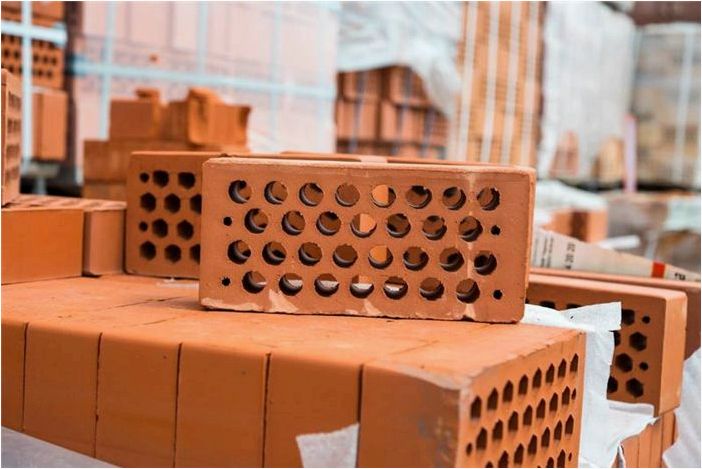
The second most popular type of brick is intended for finishing facade work, building fences and load-bearing structures, such as auxiliary structures. fences, canopies and parapets. The most popular in private construction are hollow and porous bricks, the volumetric weight of which is up to 2. 5 times less than that of ordinary ones.
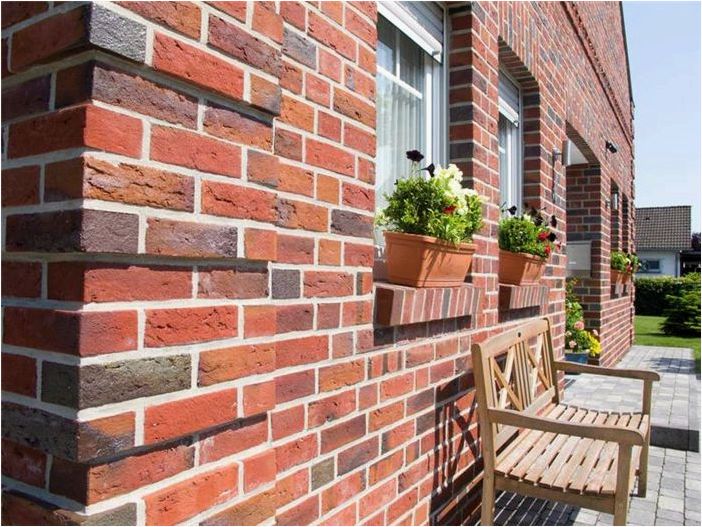
Textured and chopped bricks are also common. This gives the masonry, in addition to heat-saving properties, a high aesthetic value. A special type of brick is clinker and repressed. These stones are ideal for finishing building plinths due to their high hardness and impact resistance.
Drawing up a general classification of bricks is complicated by the lack of a unified marking system. All varieties are determined by GOST or the one within which the stone is produced, but each standard has its own requirements regarding volumetric weight, rake and dimensional tolerances. Additionally, brick comes in several sizes and can be made from a variety of materials.
Silicate and ceramic: what is the difference
The two main types of bricks are ceramic and silicate. The first, as the name suggests, is made from a certain type of clay by firing, and the second is made from a mixture of sand and lime with numerous additives. The raw materials and manufacturing process determine the quality of the building stone. If the production of thermobricks is based on the thermal firing mechanism, then under the influence of chemical and hydration processes it acquires silicate hardness.
For this reason, the production of ceramic bricks is more energy intensive and therefore more expensive, while sand-lime bricks are somewhat cheaper, but are still susceptible to erosion when in contact with moisture and atmospheric gases.
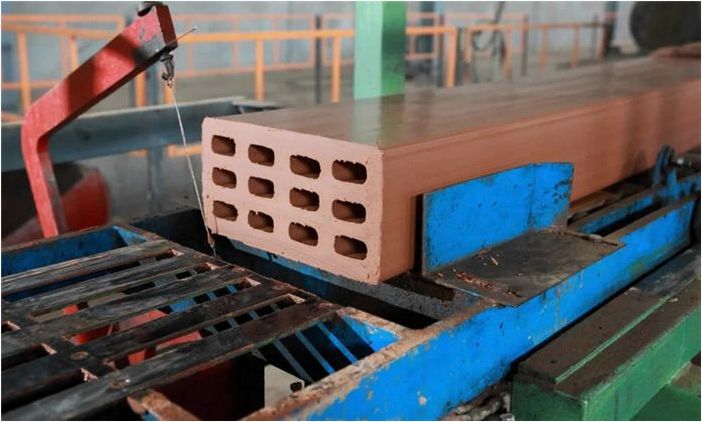
Both sand-lime and ceramic bricks meet most of the requirements for building construction. However, there are some nuances, for example, the issue of color. Sand-lime brick can be painted with pigment masses that are resistant to fading, while the color of ceramic brick depends on the composition of the clay mixture and the heat treatment regime.
It is also important to note that there are very large differences in the color of ceramic bricks from different batches. This should be taken into account when purchasing materials for facade cladding.
In general, ceramic bricks are stronger and more durable than silicate bricks, but in civil engineering this difference is often insignificant. However, when designing load-bearing structures, one should take into account the reduced strength of silicate stones during compaction, and also remember that sand-lime brick cannot be used for the construction of fireproof elements due to its low fire resistance.
It is also necessary to approach the use of sand-lime bricks for external masonry. They have relatively high water absorption and, unlike ceramic stone, dry out.

Dimensions and tolerances
The main form of normal brick used in construction is single, characterized by dimensions (HxWxD) 65x250x120. There are also double and half bricks. They differ from the single one only in height (88 and 138 mm), respectively.
Increasing the height of the stone helps speed up the construction process, but reduces the number of joints needed to level and set the required load eccentricity. Therefore, as a rule, one-and-a-half bricks are used in the construction of internal partitions and filling concrete frames, and mainly on surfaces where external heat is introduced.
There are also special types of bricks, the length of which is 288 mm and the width is 138 mm, but such stones are rarely used in construction. In addition, there are shaped bricks, the shape of which differs from rectangular ones due to parallel laying. An example is wedges for laying arches, corners and cornices. The assortment of facing bricks often includes additional elements for the correct execution of corner masonry and junctions.
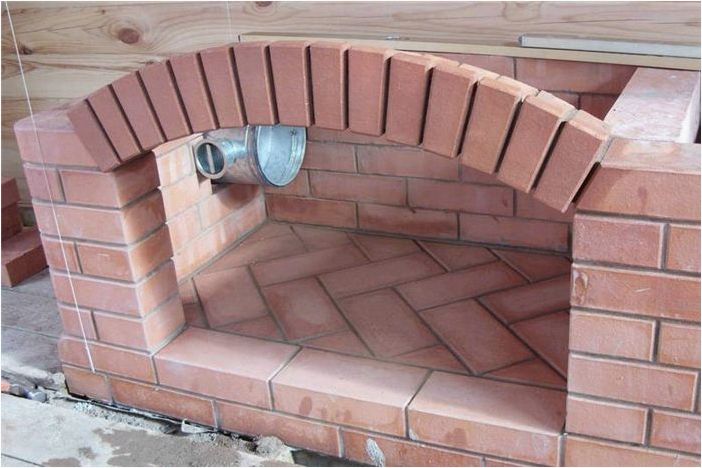
When making bricks, the compressive strength is very strictly controlled, as well as the size, which is quite strictly controlled. Therefore, the length tolerance is less than 4 mm in width and less than 3 mm in height, usually less than 3 mm, and against the face less than 2 mm. In addition, according to GOST 530-2012, maximum deviations in the flatness and verticality of the face, as well as the presence of defects, are established.
For facing bricks, front and corner protrusions with a depth of more than 15 mm are not allowed, but small chips are allowed, but only in quantities of no more than 2 pieces. For normal bricks, small defects and selections are not standardized, since chips with a depth of more than 15 mm are allowed in an amount of no more than 4 pieces. Bricks that have not passed quality control are allowed only under the guise of rockets for filling voids in non-professional masonry or in prefabricated and prefabricated monolithic structures.
Ordinary and facing
During the control test, the brick is assigned a grade for an average density of 0. 7-2. 4, which corresponds to a density of 1 m3 for a brick weighing 700-2400 kg. The average density of a brick is determined by its blanks, with silicate and ceramic densities having the same density. For example, for a normal brick the voids content is less than 13%, which corresponds to an average density of at least 2. 0.
Factory-made hollow bricks are not suitable for masonry, as this requirement requires high compressive strength. However, they can be used for masonry walls of single-story buildings of sufficient design thickness.
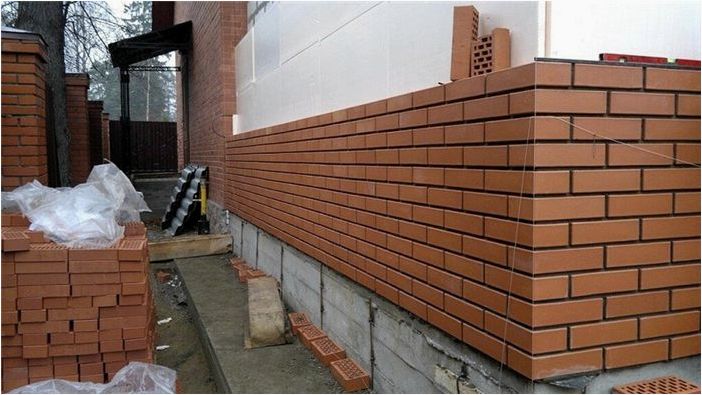
Hollow bricks are considered facing bricks. The brick’s relief is necessary to ensure self-supporting properties and reduce the weight of the facing for more reliable bonds with the load-bearing layer of the wall. Bricks can contain up to 96 voids: round and square ones up to 20 mm wide, as well as gaps up to 16 mm.
Furthermore, facing bricks are subject to strict requirements for maintaining their geometry and the absence of defects. Some types have headers and stretchers or a textured surface, while others have polished faces and chamfers. Almost all bricks with a facing surface are ceramic.
Thermal insulation brick
Another parameter of brick orientation is thermal efficiency, which is determined by the average density. A standard brick has an average density greater than 2. 0 and is considered to have an energy efficiency of no more than 1. 4.
Thermal efficiency is regulated for slab materials with an average density of up to 1. 4. This type of material is used in thermal insulation buildings. In terms of aesthetic properties, it matches standard facing brick, but is physically and mechanically inferior.
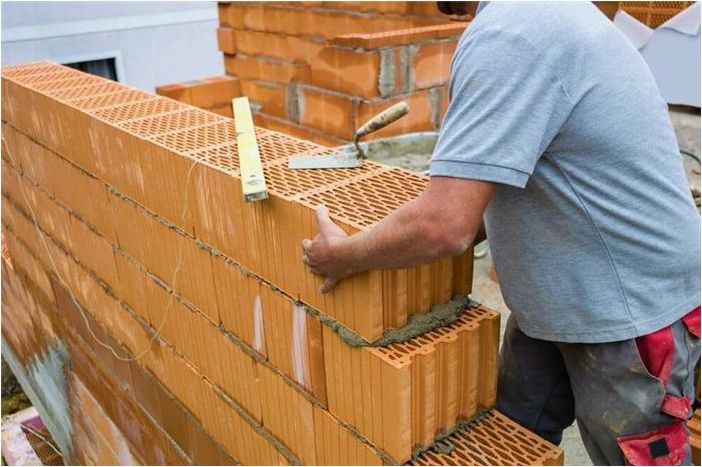
It is easy to see that achieving an average density of 0. 7 is very difficult simply due to the voids formed during molding. Indeed, most bricks with a bulk density of less than 1 t/m³ are porous products, which contain sawdust that burns during firing. For example, this production process is typical for porous ceramic blocks, suitable for external thermal insulation cladding, but not capable of serving as the primary load-bearing material.
Fireproof grades
In conclusion, we can say that this is a special type of brick that can withstand high temperatures and their cyclical fluctuations. This type of brick is used for laying fireplaces, fire-resistant screens in baths, and fire partitions that can perform their supporting function at extremely high temperatures.
There are two types of refractory bricks – Kamotny and Dinas, which, to a first approximation, are called ceramic and silicate analogues; Kamotny brick is made from a certain type of clay that has been fired and finely cleaned. Dynasty brick is quartz flour that has been purified after being packed in lime milk.
The latter grade is suitable for laying stoves due to its increased heat resistance, but such bricks do not have sufficient aesthetic value. In addition, DINAS refractories are much less common than Chamotis.


