Water Marsh Marsh
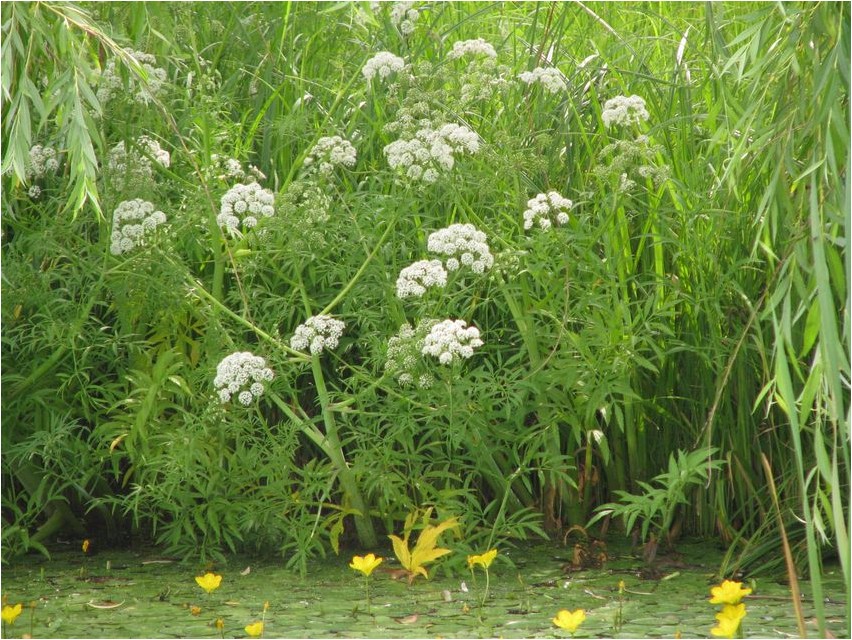
Water Marsh … The flowers of the water hyacinth are quite small, five-membered, and white. These flowers are collected in compound umbels, which in turn have seven to twelve rays. These flowers of this plant can be either without involucres or with involucres that fall off early. The involucres of the water hyacinth consist of five to ten linear leaflets. The fruit of the water hyacinth is an oblong disechen, which, when ripe, splits into two seeds.
This plant blooms from June to October. In the wild, this plant can be found throughout the European part of Russia, Ukraine, Belarus, the Ciscaucasian region of the Caucasus, Central Asia, the Angara-Sayan region of Eastern Siberia, and Western Siberia. Description of the medicinal properties of water primrose
Water primrose has very valuable medicinal properties, and its fruits are recommended for medicinal purposes.
These valuable medicinal properties are explained by the flavonoids it contains: kaempferol and quercetin. The fruits also contain essential oil, phenols and their derivatives, fatty oil, coumarins, and polyacetylene compounds. The essential oil of this plant consists primarily of the toxic terpene phyllandrene. Furthermore, it contains a toxic resinous substance called enanthokeine, which is very similar in its effects to cicutoxin.
It is noteworthy that this plant is poisonous, and its roots will be especially toxic. For this reason, it is recommended to exercise strict caution when handling water sap. The aerial part of this plant is recommended to be used for furunculosis.
Tincture of the fruits of this plant, essential oil and extract are used as an expectorant for pneumonia, bronchitis, respiratory infections, pulmonary tuberculosis and bronchial asthma. In addition, such drugs are endowed with diaphoretic, diuretic and analgesic effects for stomach cramps, colic and hypochondria. Locally, such healing agents are used for mastitis.
In homeopathy, healing remedies based on this plant have become quite widespread, which are recommended for use for pulmonary tuberculosis, fevers and dyspepsia. It is worth noting that preparations based on waterweed are also used in veterinary medicine.
As for traditional medicine, the crushed fruits of this plant are used as a very effective expectorant. In case of inflammation of the mammary glands in nursing women, compresses should be applied based on an aqueous infusion of crushed fruits of the aquatic plant. But we should not forget about increased caution when using preparations based on this plant due to the high toxicity of the aquatic plant.

56870; FLOWERS THAT WILL KILL YOU IN A SECOND! | TOP 10 FLOWERS – KILLERS
Omezhnik water omezhnik