Weeping cypress
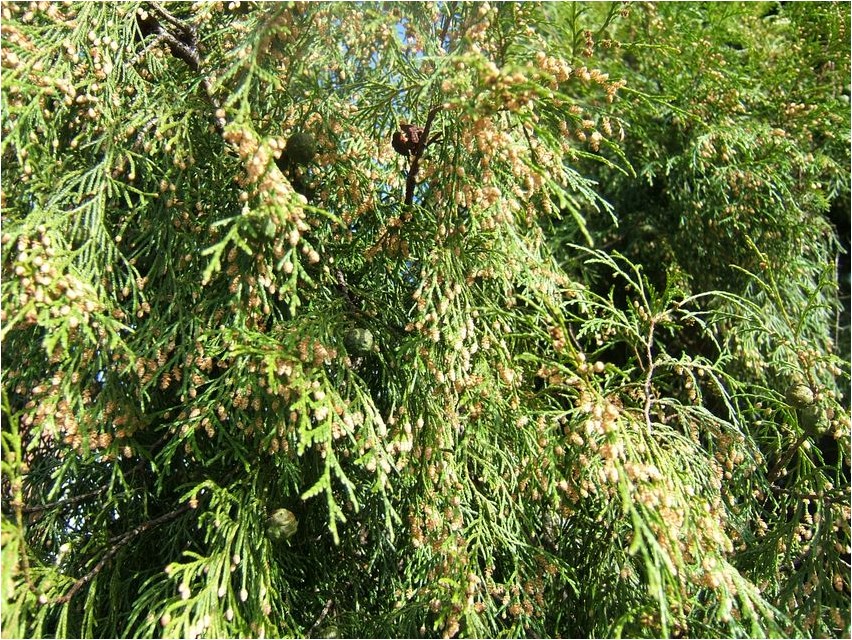
Weeping cypress (lat. Cupressus funebris) is one of the species of coniferous plants of the genus Cypress (lat. Cupressus), which is part of the Cypress family (lat. Cupressaceae).
Weeping cypress is native to southwestern and central China. It is also found in the wild in Vietnam. The mournfully drooping branches of the plant gave rise to the popular name “Mourning Cypress”.
What”s in your name
The first word of the name is repeated in each plant species included in the Cypress genus.
The specific Latin name “funebris” (weeping) reflects the appearance of its branches drooping towards the surface of the earth, which seem to mourn the frailty of existence. In addition to the name “Mourning Cypress”, there are others, for example, “Chinese Weeping Cypress”.
Description
Weeping cypress is a medium-sized coniferous tree that grows to a height of 20 to 35 meters.
Very thin, slightly compressed shoots, covered with a dense carpet of scale-like leaves, look like bright green suspended spray. At the age of 5 to 10 years, trees are considered young. They have soft, needle-like leaves that are 0. 3 to 0. 8 centimeters long. The scale-like leaves of older plants range from 0. 1 to 0. 5 centimeters in length. The crushed leaves have the smell of cut grass.

Weeping Cypress blooms from April to May. The plant was created by nature as monoecious, that is, both female and male flowers are located on the same tree. Pollination occurs with the help of wind.
The spherical seed cones grow from 0. 8 to 1. 5 centimeters in length and have from 6 to 10 (most often 8) protective scales. It takes the seed cones two years from pollination to full maturity. During this period, they turn from green to dark brown. When fully ripe, the scales open to spill the seeds into fertile soil. But it happens that cones can remain on branches with closed scales for several years. And only a stray fire rushing through the plantings, taking the lives of many plants, provokes the opening of the cones to scatter the seeds into the soil covered with ash from the fire. Seeds sprout in the wounded earth, and shoots quickly rush to the skies to restore the destroyed natural harmony.
Healing abilities
Local folk healers use the leaves of Weeping Cypress to treat bleeding wounds and excessive menstrual bleeding.
Colds are treated with a decoction of fruiting branches.
When self-medicating with any plants, including when treating with Weeping Cypress, experts recommend consulting with a professional in order to avoid adverse consequences.
Other uses
The white wood of the Weeping Cypress is tough and durable. It is used for the construction of houses and wooden structures. In addition, tools for agricultural work are made from it.
Growing
For the successful development and growth of Weeping Cypress, choose a sunny place, since in the shade the plant refuses to surprise fans with its mournful beauty.
The soil for the tree needs to be moist, well-drained, or dry. These can be loamy or peaty soils, and the plant also tolerates sandy, poor soils. True, during prolonged drought, weeping cypress, growing on poor sandy soils, is less resistant to insect pests.
The soft branches of the tree are easily damaged by gusts of wind, so it is advisable to choose a planting site that is protected from the prevailing wind direction in the area.
Weeping cypress is propagated by seeds or spring cuttings harvested in May or April. For seeds to germinate in the soil, an air temperature of plus 20 degrees Celsius and 1 or 2 months are required.
Young seedlings are watered with great care, as they tend to dry out.