Olives
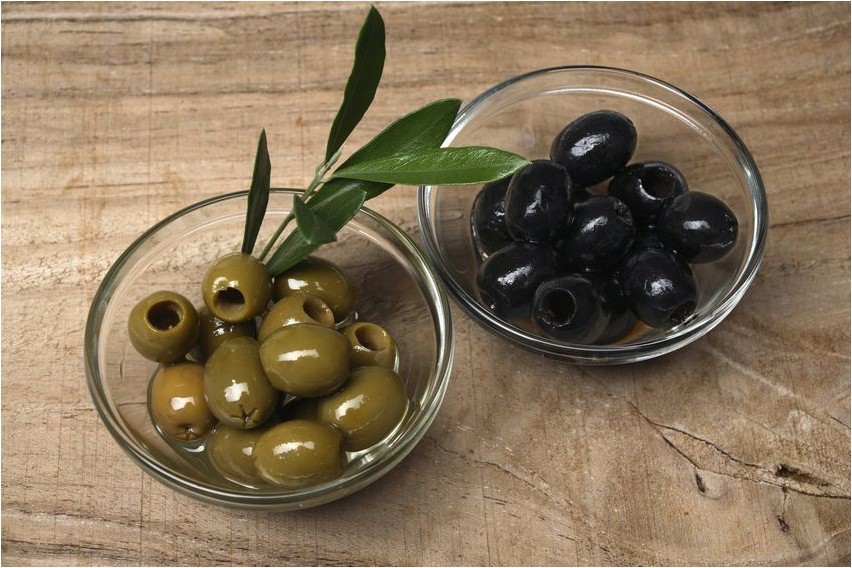
Olives (lat. Olea) are the fruits of evergreen shrubs or trees belonging to the Olive family. This plant has been cultivated since ancient times.
History
Branched olives have been cultivated as a cultivated plant since ancient times. Their images can be found even on ancient Egyptian amphorae or vases, and in the texts of those distant times, mentions of the olive are also not uncommon. By the way, the ancient Greeks believed that the olive was given to them by the goddess of wisdom Athena, who patronized peaceful labor. It is not for nothing that the heads of the winners of the Olympic Games were often crowned with colorful wreaths made of olive branches.
Description
Olives are evergreen shrubs or trees covered with durable grayish bark.
The sessile buds of the plants are devoid of scales, and the leaves are located oppositely on the olives. All leaves are whole and have entire edges, although occasionally they can be jagged. As for their shape, it can be either linear-lanceolate or oblong-ovoid. The leaves are green on top and usually grayish-silver underneath. But olives, as a rule, do not have stipules.
Axillary or terminal inflorescences can form rather loose heads or luxurious brushes. The tiny fragrant whitish flowers of olives are usually bisexual or dioecious. Their short calyxes can be either bell-shaped or goblet-shaped, and the sphenoletal corollas are equipped with short tubes and small semi-ovoid lobes in the amount of four or five pieces. Sometimes olives have no rims. Flowers most often have two, three or four stamens; they are all attached oppositely near the bases of short tubes. And the almost round, short, bilocular ovaries are endowed with two ovules.
Olive fruits are single-seeded drupes with oily pulp and brittle or hard ovoid seeds. The plant”s seeds include flat germinal leaves, oily cotyledons and miniature germinal roots.

Olives are always picked while still green, and they acquire their characteristic black color already during the cooking process — this color is the result of oxygen saturation of the brine in which the collected fruits are placed.
Compound
Olives contain around a hundred different active substances. These fruits are particularly rich in vitamins A, C, and E. The pulp of high-quality olives is 50-75% fat, and they are also rich in pectin, valuable ash substances, as well as proteins and sugars. All fruit tissues also contain essential plant lipids, and olive skins will delight olive lovers with their valuable essential oils.
Benefits
Olives are an extremely nutritious and incredibly healthy food. The unsaturated fatty acids they contain help reduce bad cholesterol levels, which in turn helps maintain an adequate balance of vital nutrients in the body. Furthermore, regular consumption of olives has a beneficial effect on liver and digestive function, and a decoction of fresh olive bark helps normalize high blood pressure.
Olives are also used externally in the form of oil. This oil is excellent for bee, wasp, and bumblebee stings, as well as headaches and bruises.
Uses
Consumers are currently offered piquant pickled, uniquely stuffed, or salted olives, as well as olives in oil. They can be used as a stand-alone appetizer or added to meat dishes, soups, and salads. Incidentally, olives promote much better digestion.
Olives also pair well with wine (especially rosé or white wines)—they are often found in some cocktails.