Kobeya
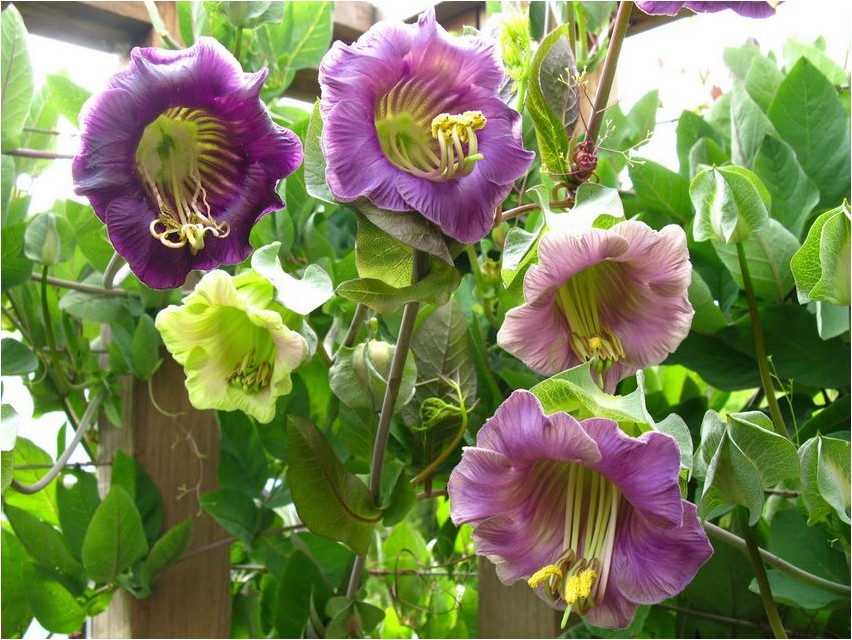
Kobea (lat. Cobaea) is a genus of climbing plants of the cyanaceae family (lat. Polemoniaceae).
Born in the tropical regions of the American continent, today they decorate the gardens of many countries, winning the hearts of gardeners with their complex decorative leaves, numerous large bell-shaped flowers and their ability to easily climb to a height of up to six meters.
What”s in your name
The Latin name of the genus “Cobaea” preserved for posterity the glorious name of the Spanish Jesuit, Padre Bernabe Cobo, who at the age of 14 went to South America not to exterminate the local population, but to study the natural resources of the new continent “discovered” by Europeans. Having devoted 61 years of his life to such a noble cause, he left the material he had accumulated in his books, which also contain a description of a vine that deftly climbs a support and decorates the tropical forest with spectacular large bells.
Description
Plants of the genus Kobeya, according to various sources, number from 9 to 20 species, represented in nature by woody vines that have the dexterity of climbers, clinging with their tendrils to the available support and rushing to the heavens.
The stems of the vines reach a length of 6 meters. Kobei leaves are compound. On a long petiole, short-petioled simple leaves of an elongated oval shape are arranged in pairs. The same leaf is located at the top of a long petiole. Leaves with clearly defined veins, giving them a decorative appearance.

The liana owes its popularity to its large, showy flowers, which appear like bells on short peduncles from the axils of the leaves. It seems that just touch such a bell, and a gentle melody will flow through the garden from the touch of the fragile stems of the stamens on the bright corollas of the flower. The corollas can be white, creamy white or various shades of purple.
The fruit of the plant, which Kobeya rarely manages to grow into in the climate of central Russia, is a leathery seed capsule similar to a plum.
Varieties
* Climbing kobeya (lat. Cobaea scandens) is a species of the genus Kobeya, which can most often be found in Russian gardens. Although the perennial Kobeya climbing does not tolerate frost, due to its rapid growth it may well claim a place under the Russian sun as an annual plant.
If the climate of New Zealand allows the climbing Kobea to grow beautifully anywhere, turning into an annoying weed, then for its successful growth in Russian open spaces it is necessary to create a number of conditions for the beauty that not every summer resident can provide for it.
Although the plant can grow in partial shade, a sunny place would be preferable for the heat-loving Kobei.
The soil should be fertile, loose and moist, but not soggy, with good drainage.
The shoots should be directed in a timely manner in the direction the gardener needs, without waiting for them to intertwine with each other.
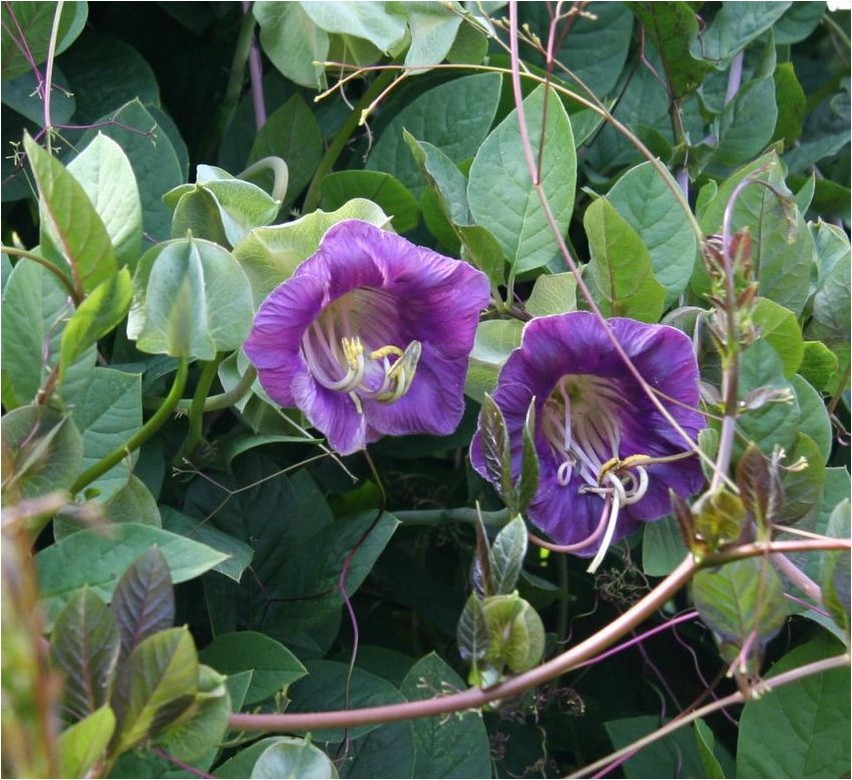
With proper care, the climbing Kobeya will perfectly drape the place offered to it during the summer season, decorating it with its leaves and large bell-shaped flowers of all shades of purple.
* Cobaea pringlei (lat. Cobaea pringlei) — the specific epithet of the plant honors the memory of the American botanist, whose name is Cyrus Guernsey Pringle, lived 1838 — 1911. The length of the vine stem reaches 5-7 meters. Funnel-shaped creamy white flowers on long stalks slyly tease with their intricate stamens.
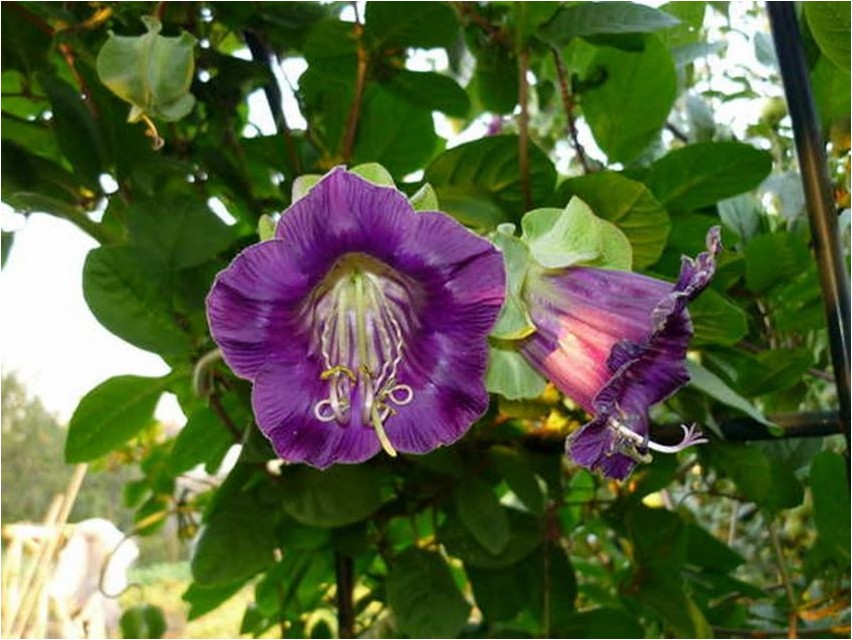
The plant is grown in well-drained, fertile, moist soils, choosing an area protected from the wind. Withstands low temperatures down to the mark on the thermometer “minus 5 degrees”. It prefers to wait out lower temperatures in greenhouses, although stems carefully laid on the ground, reliably protected from frost by covering materials, can withstand lower temperatures.


