Guarana
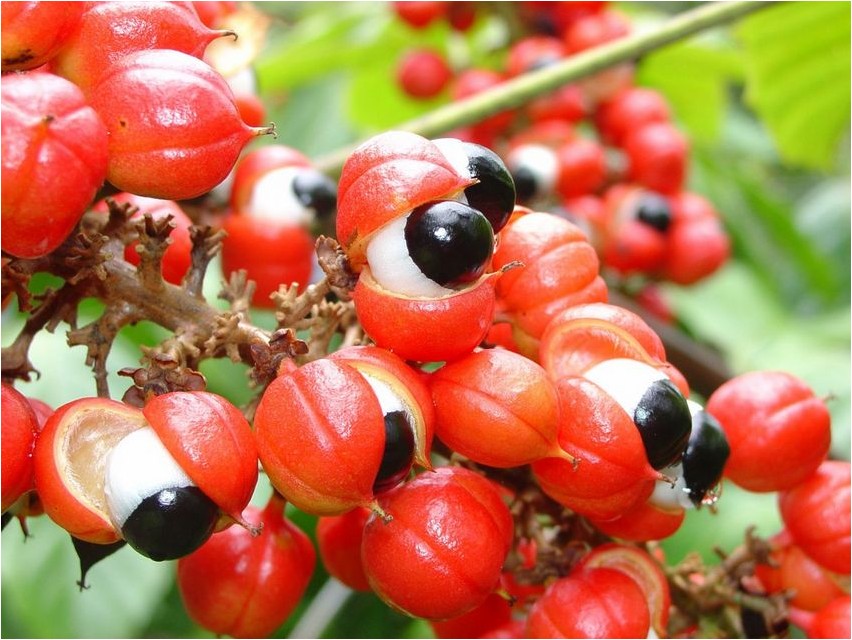
Guarana (lat. Paullinia cupana) is a bright evergreen representative of the Sapindaceae family, looking like a climbing vine. In Brazil, this plant has long been a cult plant.
Description
Guarana is a vine plant that can grow up to twelve meters in length. The jagged leaves of this culture are characterized by an oval shape, and the bright red flowers are collected in fancy bunches. This spectacular beauty begins to bear fruit only in the third year of its wonderful life.
Guarana fruits are the size of a hazelnut and are covered with very thin peels, the color of which can vary from gray to yellowish. As soon as the fruits begin to ripen, all the peels burst, revealing black or purple-brownish seeds. Such interesting transformations give guarana a very original and unusual appearance — its fruits resemble human eyes.
Where does it grow
The homeland of guarana is sunny Paraguay (to be more precise, the territory of the Amazon basin) and distant Brazil. Sometimes you can find guarana plantings in Peru, as well as in Colombia and Venezuela. In any of these countries, this crop has been actively grown for several centuries.
Application
The main value of guarana fruits is that they contain twice as much caffeine as coffee. This allows them to be used as an excellent stimulant. And the plant itself needs such a high concentration of this substance in order to actively resist pathogenic microbes.
Guarana fruits are not consumed raw; they are used to make a paste that serves as a valuable source of caffeine. This paste is widely used for preparing coffee drinks and as an additive to chocolate. And the peeled fruits are often fried and immediately ground into a fine crystalline powder.

Guarana is rich not only in caffeine — it also contains some other stimulating substances (and pacemakers too). Such valuable properties have made it possible since time immemorial to use it as a doping among local tribes — guarana helped them especially well during long and long migrations. She was also valued for her ability to relieve headaches and relieve fever or severe constipation. Guarana is also famous for its antispasmodic, powerful antipyretic, as well as bactericidal, strengthening and tonic properties. In addition, it is also an excellent aphrodisiac.
Relieving fatigue and intense hunger, relieving hangovers, arthritis, and diarrhea—the miracle of guarana can do it all. Drinks made with it help stimulate thinking and strengthen memory, and as a dietary supplement, guarana is highly beneficial for active athletes. It also helps curb appetite, thereby promoting weight loss, improves bowel function, and lowers bad cholesterol.
The high caffeine content in guarana gives it the valuable ability to remove excess fluid from the body, which in turn helps quickly eliminate swelling and significantly reduce the burden on the kidneys and heart. However, it”s important to remember that caffeine leaches calcium from bones and actively hinders its proper absorption. Therefore, moderation is a must when consuming this valuable fruit; otherwise, you could significantly increase the risk of developing arthritis, osteoporosis, or tooth decay as an unpleasant “bonus.” Furthermore, excessive consumption of guarana can lead to increased nervous excitability and insomnia. People with hypertension, the elderly, and anyone suffering from heart disease and atherosclerosis should use guarana with extreme caution. Pregnant and breastfeeding women should avoid it altogether!