Cupuacu
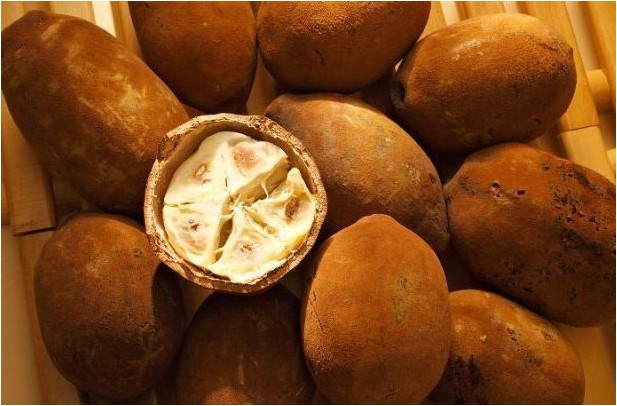
Cupuaçu (lat. Theobroma grandiflorum) is a fruit tree from the Malvaceae family, scientifically called theobroma grandiflora.
Description
Cupuaçu is a tree reaching a height of five to fifteen meters, endowed with brown bark. And wild trees sometimes grow up to twenty meters.
The leathery and fairly large leaves of the cupuacu are usually gray below and velvety bright green on top. On average, their width is from six to ten centimeters, and their length is from twenty-five to thirty-five centimeters.
Cupuaçu flowers grow in intricate bunches on thick branches and trunks. And they are pollinated by insects (mainly aphids and ants).
The fragrant and very juicy cupuaçu fruits are distinguished by their oblong shape and grow up to twelve centimeters in width and up to twenty-five centimeters in length. Each fruit is covered with a rather dense red-brown peel reaching 4-7 mm in thickness.
The pulp of the cupuaçu fruit is sweet and sour and very soft, with seeds ranging from twenty-five to fifty pieces located in five miniature nests. It smells great (its smell is somewhat reminiscent of citrus fruits) and is distinguished by its content of theacrine (a purine alkaloid).

Where does it grow
Cupuacu fruits were first discovered in the Amazon forests. Now this crop is actively grown in Brazil. And the Japanese patented it, thereby causing violent indignation among Brazilians, who consider the bizarre fruit to be their national product. By the way, in Latin America this fruit is the most expensive.
Application
Cupuaçu is eaten fresh, and these fruits are also used to make liqueurs, jams, sweets, yoghurts and juices. In addition, the pulp of the fruit is added to various drinks and ice cream.
Occupying a fifth of the total volume of each cupuaçu fruit, the seeds contain a large amount of white oil (up to 50%). This butter is very close in its properties to cocoa butter, but its melting point is much higher — thanks to this property, cupulate (chocolate made from cupuaçu seeds) does not melt in the mouth at all.
Due to the high content of various microelements and vitamins, cupuaçu fruits have an excellent tonic effect, and also help reduce the risk of developing cancer and resist the effects of a wide variety of infections. These unusual fruits are famous for their antibacterial and anti-inflammatory effects. If you eat cupuaça regularly, you can easily cleanse your body of waste products and toxins.
Ascorbic acid, which is part of this fruit, helps strengthen the immune system and greatly enhance the body”s protective functions. And B vitamins help normalize the functioning of the nervous system.
Cupuaçu fruits are also good because they can be easily eaten during a period of weight loss — they are characterized by a very low calorie content.
The rich composition of cupuaçu has made it possible to actively use these fruits in cosmetology. The extract of these fruits has a moisturizing and softening effect, so it is often added to various hair and skin care products. And the phytosteroids and fatty acids in cupuacu help reduce inflammation and irritation, and increase skin elasticity. These fruits are quite widely used in the treatment of dermatitis and eczema.
Cupuaçu oil also has a positive effect on the general condition of the skin — it becomes silky and smooth. In addition, the fruit contains substances that protect the skin from the adverse effects of ultraviolet radiation.
Cupuaçu fruits cannot be stored for a long time, so they are often frozen before being sent for processing.





