Lapageria
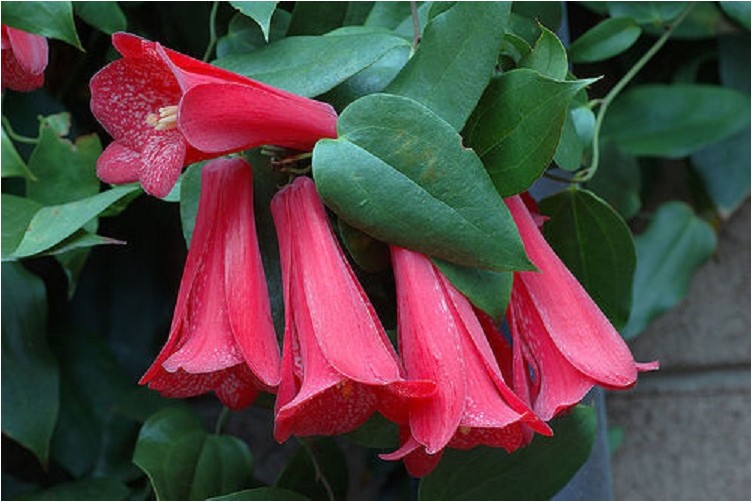
Lapageria (Latin: Lapageria) is a genus consisting of just one species of plant, which the Almighty placed in just one place on Earth, in the South American country with the short name Chile.
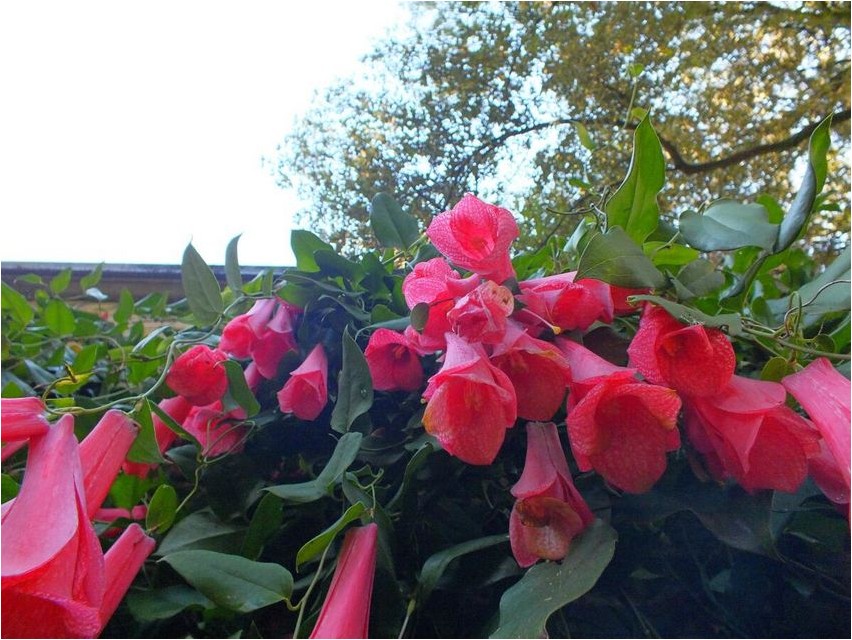
It is a climbing shrub, capable of climbing whatever supports are available, with leathery, tropical, dark green leaves and large, bell-shaped, carmine-pink flowers of extraordinary beauty. A true “scarlet flower” growing in distant lands.
What”s in a name
The Latin name of the genus “Lapageria” honors the memory of Napoleon”s first wife, Josephine de Beauharnais, who retained the title of empress after her divorce from him. Napoleon began calling her Josephine early in their marriage, and her long birth name ended with “. de La Pagerie.” It was this ending that inspired the name “Lapageria” for the genus, when botanists decided to honor the memory of Josephine de Beauharnais, who, after her divorce from Napoleon, devoted much of her time to plants, amassing a rich collection of exotic plants from all over the world in her greenhouses and conservatories.
Description
The only species in this genus is Lapageria rosea. It is an evergreen perennial vine native to dense forests on the slopes of the legendary Andes, which run through central Chile.
The climate of that region is not particularly kind to this beauty. Frequent torrential rains have left its leaves leathery and shiny, oval-shaped, with pointed tips that allow rain to flow freely to the ground, harmlessly. The evergreen leaves can withstand temperatures as low as minus 5 degrees Celsius without losing their strength and durability.

The sturdy stems, typically growing to 2-3 meters in length, can sometimes set athletic records, stretching up to 10 meters. The strength and bluish-green surface of the stem make it resemble metal wire. Numerous lateral branches form a continuous carpet around the shrubs and trees encountered along the vine”s path. The stems, lying flat on the ground, easily root, adding vigor and density to the plant. Interestingly, the stems of plants native to the Earth”s southern hemisphere twist counterclockwise, while those unfortunate enough to grow in the northern hemisphere twist clockwise.
In the axils of beautiful leaves, elegantly lined with longitudinal veins merging at the pointed tip of the leaf blade, single large (up to 10 centimeters long) flowers are born.
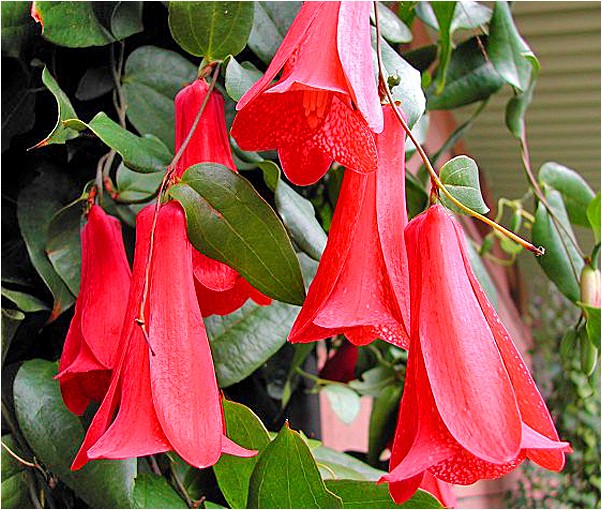
Six free petals forming two circles represent the amazing perfection of nature. The natural tissue of the petals is so dense and smooth that it gives the impression that bees have worked on the masterpiece, sacrificing their wax to create a miracle bell, inside of which there is a tongue of stamens and pistil, ready to touch the walls of the bell to fill the air with a melodic chime. The color of the natural petals is red with white spots. New varieties developed have expanded the palette, making it richer. Now you can see white, pink, light purple. as well as two-color bells.
To pollinate such large flowers, the Almighty specially created miniature colorful birds, hummingbirds, endowing only them with the ability to fly not only forward, but also backward. Where hummingbirds do not live, artificial pollination must be resorted to if the grower wishes to have seeds from his own vine. By the way, the seeds are planted immediately after collection, without waiting for them to dry. Because they quickly lose their ability to germinate.
The fruits of Lapageria are oblong berries with a hard skin and edible pulp containing numerous small seeds the size of a tomato seed. Previously, they could be bought at markets, but today there are fewer and fewer plants, and therefore the fruits have become rare.
Lapageria