Ledum
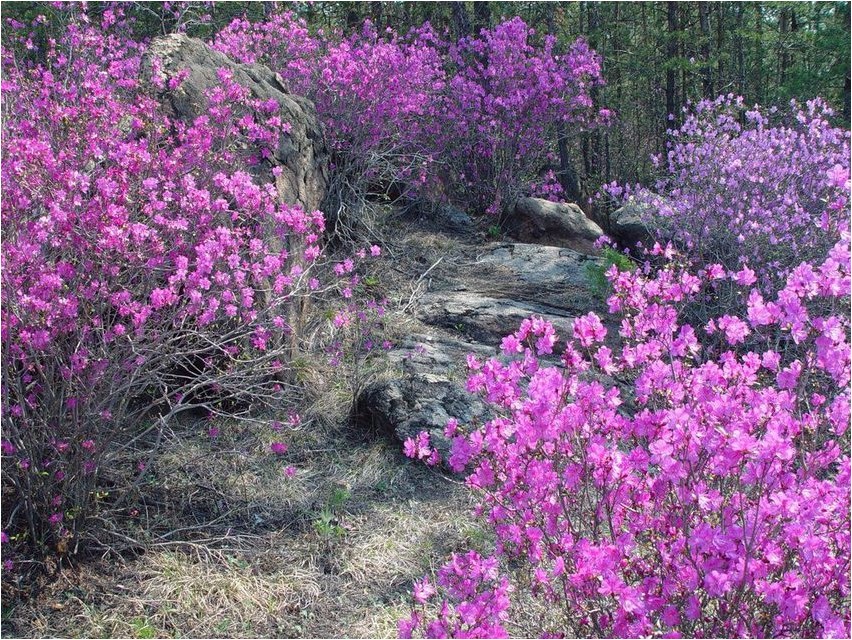
Ledum (Latin: Ledum) is a genus in the Ericaceae family. In Western countries, species of the genus are classified in the genus Rhododendron. In the wild, Ledum grows in countries with temperate climates.
Currently, the genus comprises 10 species, of which only 4 are cultivated in Russia. According to other sources, the genus only includes 6 species. Other common names include wild rosemary, bugleweed, or wild rosemary.
Cultivation Characteristics
Ledum is a subshrub or shrub with branches that have a pungent and unpleasant odor, which is due to the presence of essential oil. The leaves are entire, evergreen, alternate, leathery, sometimes with recurved edges, and also emit a strong odor. The flowers are white, bisexual, and borne in corymbose or umbel-shaped inflorescences that form on the previous year”s shoots. The fruit is a five-chambered capsule containing small winged seeds. When ripe, the capsule dehisces from the base.
Species common in Russia
*Marsh wild rosemary (Ledum palustre) is a highly branched evergreen shrub up to 120 cm tall with tomentose, ascending shoots, lanceolate, glossy leaves, and white or pinkish flowers gathered in umbels. This species is common in the wild, growing in Eastern and Western Siberia, North America, Southern, Northern, and Western Europe, as well as China and Korea. Common names include marsh wild rosemary, oregano, bug grass, wild rosemary, marsh hemlock, bog rosemary, canabornica, and others.
*Greenland wild rosemary (Ledum groenlandicum) is a shrub up to 1 m tall, found in peat bogs in the northern and western regions of North America. It is rarely cultivated, but can be found in botanical gardens in major cities in Russia and Europe. An ornamental species, it forms oblong leaves and white flowers gathered in umbels as it grows.
*Ledum macmphyllum is an evergreen shrub up to 1. 5 m tall, growing in sphagnum bogs and in the undergrowth of coniferous forests in Japan, North Korea, the Far East, and Eastern Siberia. The species is distinguished by abundant flowering and an average growth rate.

*Ledum decumbens (lat. Ledum decumbens) — represented by evergreen subshrubs up to 30 cm high, found in sphagnum bogs, shrub tundras, rocky areas and sandy hills in the Far East, Eastern Siberia, northern regions of North America, as well as in Greenland. The species blooms lightly for 20-30 days. Doesn”t bear fruit every year. Growth is slow, annual growth is only 1 cm.
Application
Representatives of the genus Ledum are highly ornamental plants; they look elegant in appearance, so they will be a wonderful decoration for any garden. They accept as allies many crops that prefer acidic soils. It is important to remember that wild rosemary emits a strong odor, so it should not be planted near playgrounds and recreation areas. Ledum will improve shaded and swampy areas, and the shore of an artificial or natural reservoir. Wild rosemary will also be appropriate in medicinal plant gardens, eco-gardens and heather gardens. The essential oil obtained from wild rosemary is used in the perfume and fragrance industries. The pungent odor of wild rosemary branches and leaves repels insects, including moths.
Features of cultivation
Ledums, like other representatives of the Heather family, are adherents of acidic soils. Some species are able to develop normally on poor and sandy substrates. Ledums are moisture-loving; they need moist soils. On dry soils the crop will suffer. When planting, the holes are filled with a special soil mixture made up of coniferous soil, high-moor peat and sand, taken in a ratio of 2:3:1. For Greenland rosemary, the amount of sand is increased. Also, good drainage is very important for plants, which can be sand or pebbles. The location is preferably illuminated, but protected from direct sunlight. Partial shade is also possible.
Ledums develop without any problems in poor soils, but this does not mean that the plants do not require fertilizing. The abundance of flowering and growth activity depend on them. One feeding per season is enough; it is best to do it in early spring. It is recommended to apply complex mineral fertilizers at the rate of 50 g per 1 square meter. m. Also, plants cannot do without watering, loosening, weeding and mulching. The last procedure is not necessary, but mulch will keep the base of the bush moist for a longer period. Sanitary pruning is of no small importance; it is carried out in the spring. Ledums are resistant to diseases and pests and do not require treatment.