Balsam
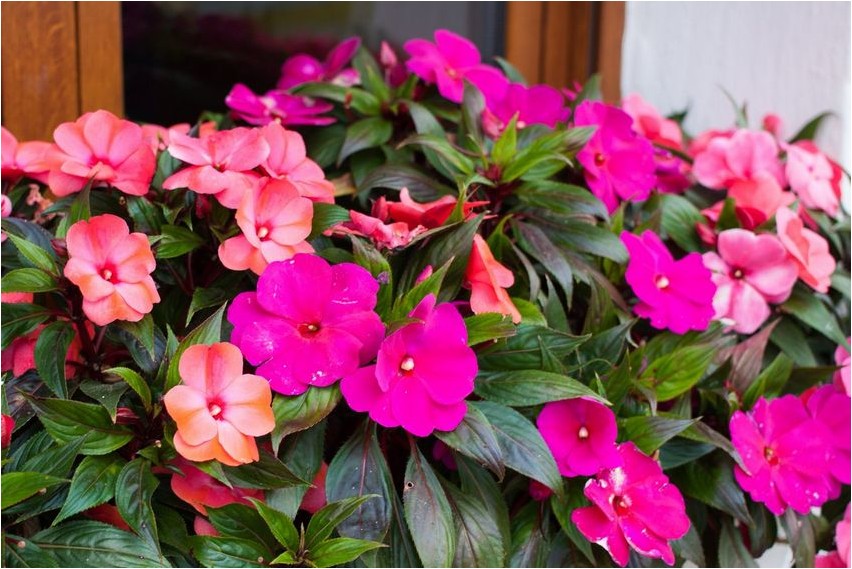
Impatiens is also known under the following names: impatiens, sparkle, impatiens, and even “Vanka wet.” Balsam should be classified as a member of the Balsamaceae family.
This plant is native to East Asia. This plant is quite easy to grow, but certain growing rules must be followed in any case.
Characteristics of culture
Impatiens is a herbaceous plant, the height and diameter of which can vary from thirty to sixty centimeters. Flowering occurs in summer.
This genus itself includes more than 800 annual and perennial plants that will grow where the climate is tropical or warm temperate. These plants are quite popular, because they are not very demanding to care for, are practically not susceptible to various diseases, grow very quickly and their flowers are incredibly beautiful. They got one of their names – impatiens – for the reason that as soon as you touch the ripe balsam fruits, seeds spill out of them. Most often, people prefer hybrids that were created based on plants from East Africa.
Impatiens are also perennials, but annuals are the most widespread. In spring and summer, plants should be provided with good ventilation and diffused light. The temperature at this time should be maintained at approximately eighteen degrees Celsius, although higher temperatures will not be critical. The soil should always remain moist, and plants should only be sprayed in particularly hot weather. When spraying, do not wet the leaves, otherwise they may be susceptible to fungal attacks. Therefore, many experts recommend simply placing the pot on a tray containing wet pebbles. Between May and September, liquid fertilizer should be added to the water once a week.

Balsam propagation
In the period from April to October, cuttings are cut from the side shoots, the length of which is approximately ten centimeters. You should also tear off the lower leaves from the cuttings, place the cuttings in water, and after a few days you can notice small roots on them. Next, the cuttings are planted in pots containing a mixture of fertile soil and peat.
The soil must be moist so that the roots can strengthen well. In this case, the cuttings should be protected from excessive sun activity. After a week or two, the cuttings will have become stronger, then caring for them should be the same as for already mature plants. You should also remember to pinch the tops of the cuttings. To obtain a large number of plants, it is recommended to start sowing at the very beginning of spring: take a tray containing soil, throw seeds there, which are then covered with a small layer of soil. Such a pallet is removed to a warm place where shade will be provided. With the appearance of the first shoots, a small amount of light will already be required. When the plants are already quite large, it is recommended to plant them in separate pots. By the way, in particularly favorable conditions, balsam can sow its seeds on its own.
Dangers when growing balsam
In cold conditions and constant drafts, the leaves of this plant may wither, fall off, and also turn yellow. When the soil is too wet, there is insufficient light, or it is very cold, there is a high risk of developing various fungal diseases. In this case, it is recommended to spray the balsam with an appropriate preparation, and then add antifungal drugs to the soil. Young shoots may be attacked by green aphids: in this case, you will need to spray the balsam with an insecticide based on pyrethrum.
Such a beautiful plant as balsam can hardly be called difficult to care for, which is why many people prefer to grow balsams. There are many varieties, so everyone can choose something suitable for themselves.
Impatiens: cultivation and care
Balsam
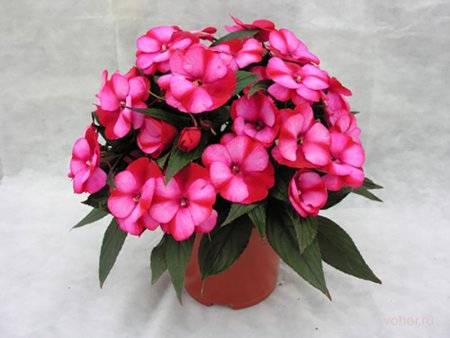
Impatiens or impatiens, wisp, belongs to the balsam family. It is impossible to give a general description of these plants, because the genus balsam has several hundred species.
Their stems are succulent, and their flowers are different colors
holsta and Sultan’s balsam are grown at home. These plants can be placed on all windows except southern ones, because balsam does not tolerate excess sunlight. In winter, the room temperature should be maintained no higher than 16 degrees. At higher levels, the plant may shed its leaves.
To prepare the soil mixture, you need to use leaf and greenhouse soil with a small addition of sand. Or grow the plant in special universal soils.
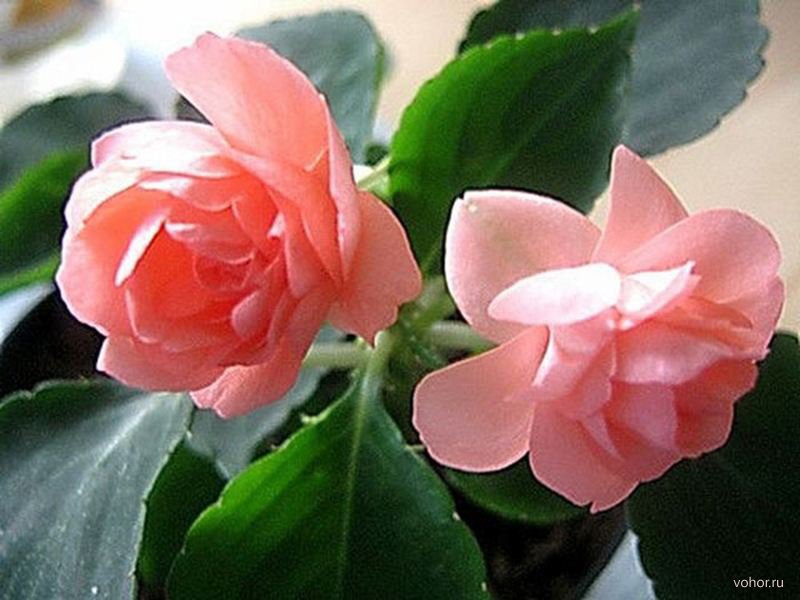
in summer, balsam should be watered abundantly, every three days, and in winter, every ten days. But do not allow the soil to dry out and form a crust. Balsam leaves respond well to spraying, but blooming flowers do not.
You can feed plants with both mineral and organic fertilizers. But do not mix them together, but one at a time, every 15 days.
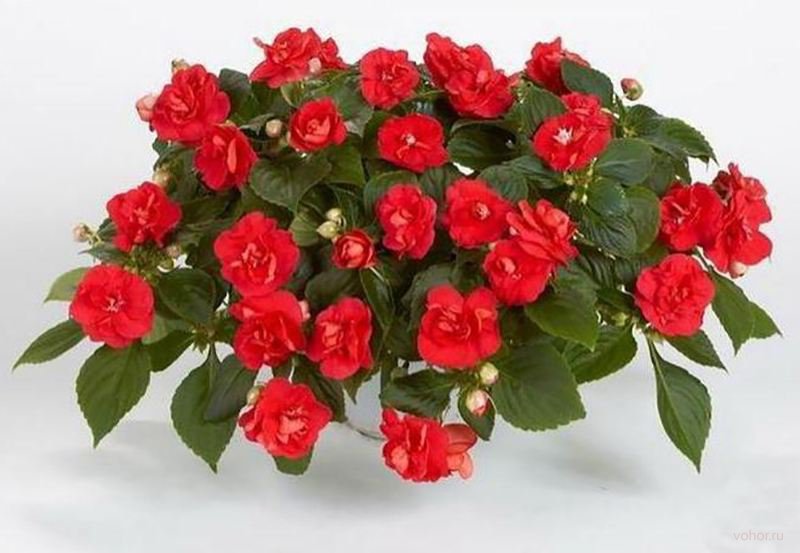
during the dormant period, it is useful for balsam, like many indoor plants, to limit watering and stop feeding.
Impatiens cannot tolerate frequent replanting; its roots are too brittle. It will do well even in tight containers.
In spring and summer, young cuttings are planted in medium containers for rooting, but not in small ones, so that the plant does not require replanting in the first and second year. Within two weeks the cuttings should take root. To obtain balsam seeds, the plant must be pollinated; they germinate after sowing in the third week.
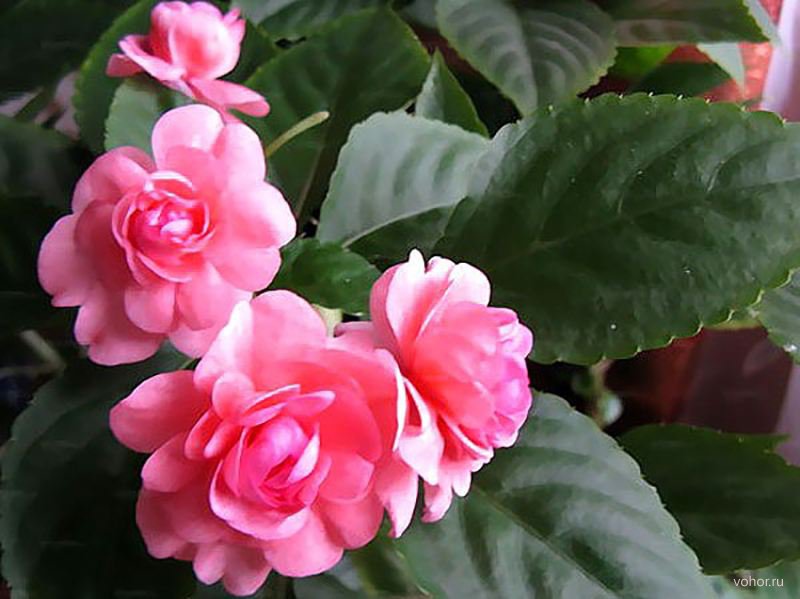
sometimes, due to excess fertilizer, the plant stops blooming, but leaves actively begin to grow. Impatiens may also not bloom if the transplant is poorly tolerated or the air is excessively dry.
He has small enemies – ticks. They need to be combated with chemicals or sprayed with infusions of wormwood and dandelion if the infestation is low. If the plant has dropped flowers, you need to make sure that there are no cobwebs on the back of the leaves. If they are not observed, then it is necessary to increase the frequency of spraying.
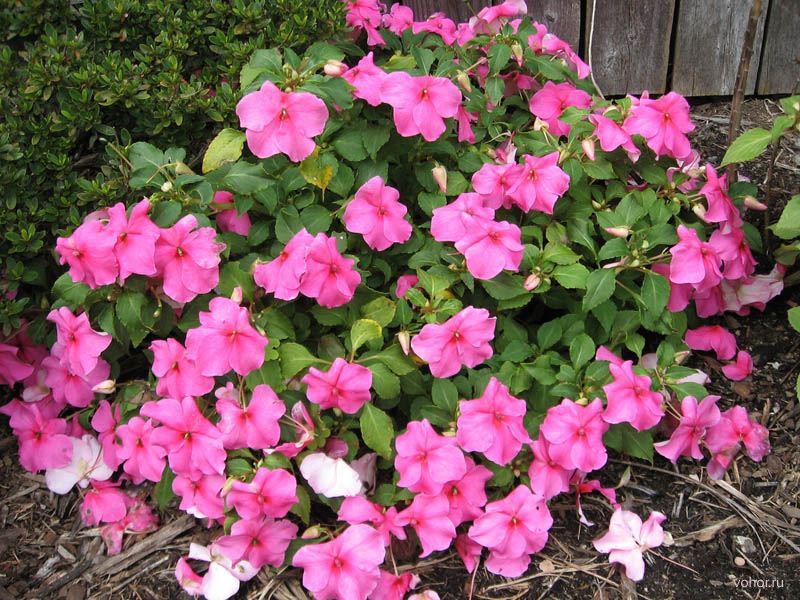
if the plant loses not only flowers, but also leaves, this may be a consequence of hypothermia; it is necessary to control the temperature in the room and prevent sudden changes.