Serenoa Palm
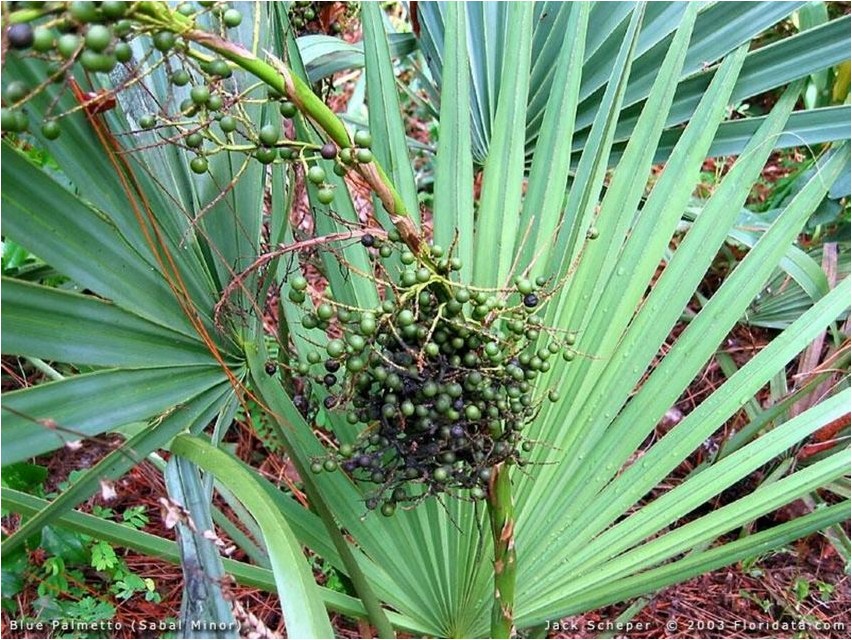
The Serenoa Palm (Latin: Serenoa) is a genus of evergreen plants in the Arecaceae family (Latin: Palmaceae).
Today, the genus contains only one species. This low palm is often called “Palmetto” in America. The palm rarely develops a straight stem or trunk. It more often forms dense thickets of petioles armed with thin, sharp spines, adorned with a complex fan-shaped leaf at the top. The leaves are used to produce textile fibers, and the drupe fruit is edible. Furthermore, an extract is produced from the fruit, used to produce medicinal preparations that can help with prostate conditions. What”s in a name?
The Latin genus name “Serenoa” commemorates the American botanist Sereno Watson (1826–1892), who left behind several works on botany and described at least fifty new plant species.
Besides the widely used name “Palmetto,” the plant has several names given to it by Native Americans, who used the palm”s leaves for fiber and also used them to cover the roofs of their homes. Bahamians and Seminole Indians also used the palm”s fruits to treat an obscure form of fish poisoning.
Description
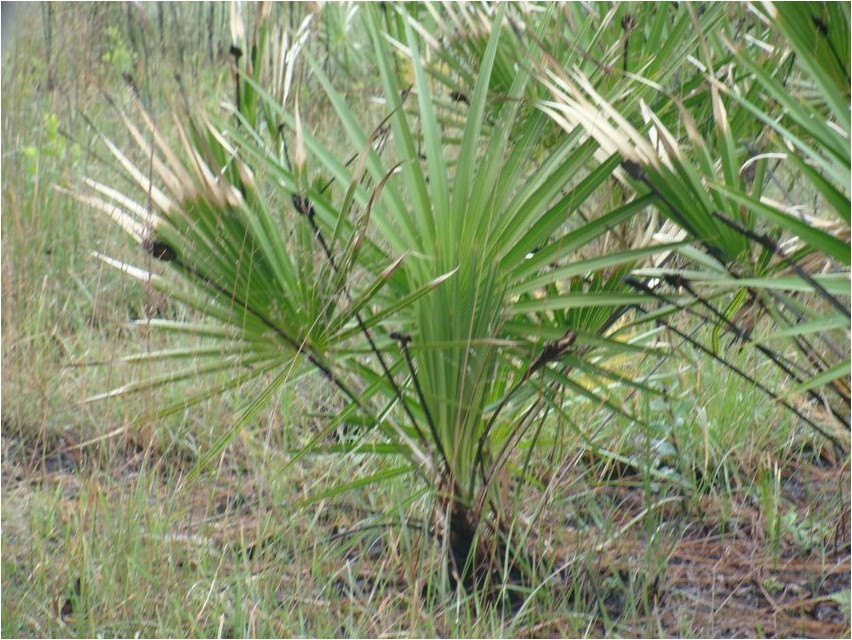
Serenoa repens, the only species in the genus Serenoa, is a low-growing palm, growing to a maximum height of two to three meters. However, under particularly favorable conditions, the palm can reach a height of six meters. This palm is endemic to the southeastern subtropics of the United States, found on the shores of the South Atlantic and on gulf coastal plains on sandy hills, forming dense thickets or landscape formations known in the United States as “hammocks.”
Erect stems or trunks are rare in this palm species, but they do occur in some populations. This hardy palm grows very slowly but is long-lived. In Florida, there are plants estimated to be 500-700 years old.
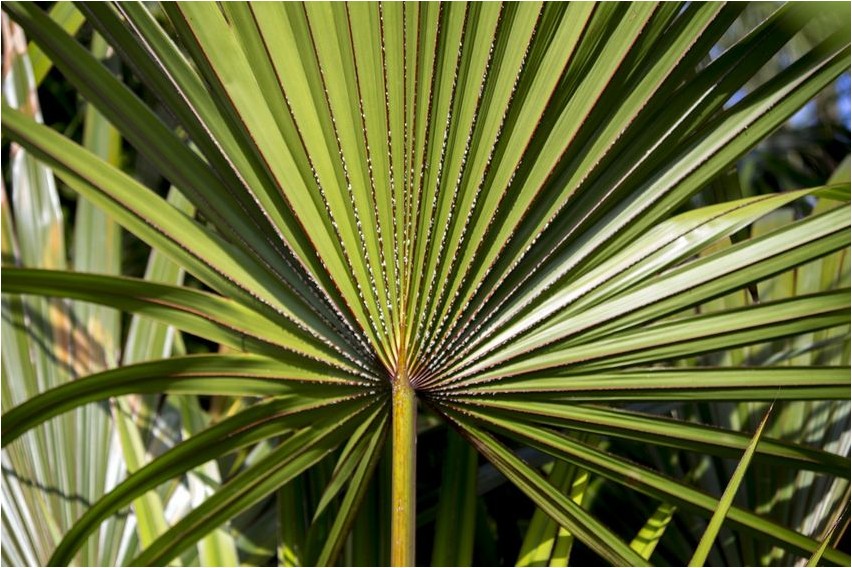
The bare surface of the petiole is armed with thin, sharp teeth or spines, giving the palm its nickname, “Saw Palmetto.” The spines can easily injure human skin, so protective clothing is worn when handling the palm.

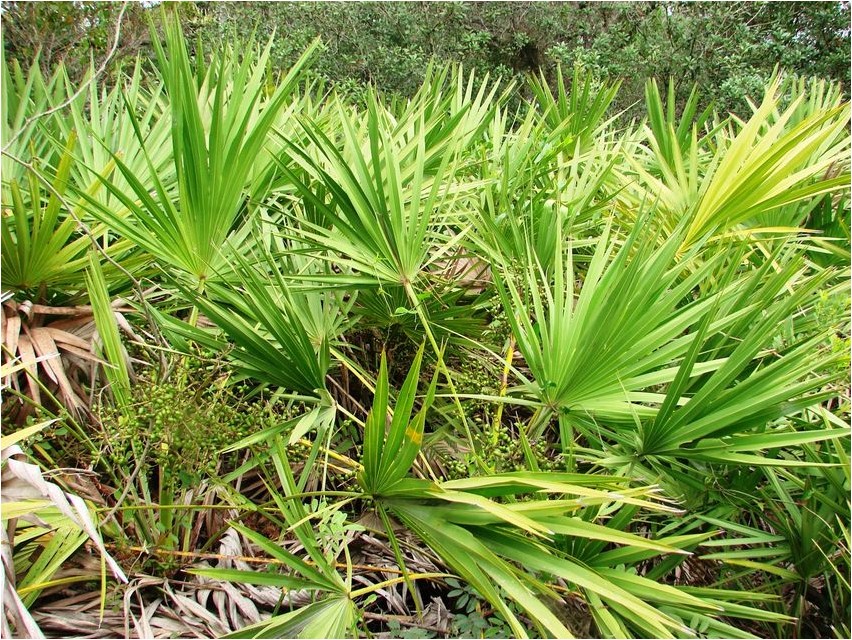
The petiole terminates in a rounded fan-shaped leaflet consisting of approximately twenty leaflets, varying in length from half a meter to one meter, while the entire compound leaf measures one to two meters. The palm”s leaves are silvery-white on the coast, while those located inland acquire a light green hue.
The dense paniculate inflorescences, up to sixty centimeters long, are formed by small yellowish-white flowers, approximately five millimeters in diameter. The flowers exude a pleasant fragrance.
The fruit of the Serenoa repens palm is a reddish-black, relatively large (up to three centimeters long), oval-shaped drupe, which is an important food source for wildlife. Local people also eat the fruits. The fruits are believed to have a tonic effect. The healing properties of saw palmetto fruit
It is claimed that saw palmetto fruit extract prevents and treats prostate cancer in men.
Research by American scientists who conducted a meta-analysis of saw palmetto berry extract showed that even double or triple the dose did not improve urination or other functions of the diseased organ.
Earlier clinical trials showed that saw palmetto fruit extract was safe and effective for mild to moderate BPH (benign prostatic hyperplasia, also known as “prostate adenoma”) compared to placebo (a non-drug substance that produces a positive effect through self-hypnosis), finasteride, and tamsulosin. However, two subsequent large studies by medical scientists showed that the extract was no different from placebo in its effects on the disease. https://www. youtube. com/watch? v=X_gS0ZeoOrY
Saw Palmetto, or Serenoa palm
Saw Palmetto, or Serenoa palm
Saw Palmetto, or Serenoa palm