Barqueria
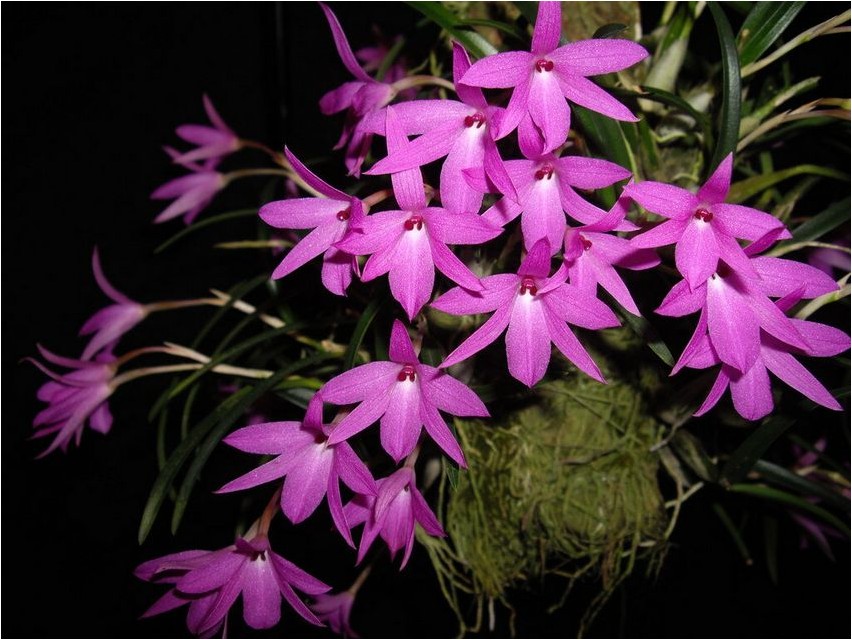
Barkeria (lat. Barkeria) is a genus of herbaceous perennial plants with pretty flowers, classified by botanists as belonging to the Orchidaceae family.
Unlike most orchids, which have evergreen leaves, Barkeria sheds its leaves in the winter, shocking its owners who are not aware of this “quirk” of the plant. They blame themselves for not taking good care of the plant, and that is why it decided to leave this house. But, more attentive people notice that the roots of the plant are alive. If you don’t panic, but just wait for spring, then a sprout will again appear in the world from the living roots, and everything will repeat itself according to the program given by nature.
What’s in your name
The Latin genus name “Barkeria” honors the memory of an English lawyer who was both a keen and competent botanist. His name is George Barker (1776 – 1845). In his nursery, he was the first to cultivate orchids brought from Mexico on English soil.
In the literature on indoor or industrial floriculture, the Latin name of the genus “Barkeria” is shortened to four letters – “Bark”. Sometimes you can come across the synonymous name “Dothilophis”, assigned to plants of the genus in 1838 by the American botanist, Constantine Samuel Rafinesque (10/22/1783 – 09/18/1840), a man with a difficult fate.
Description
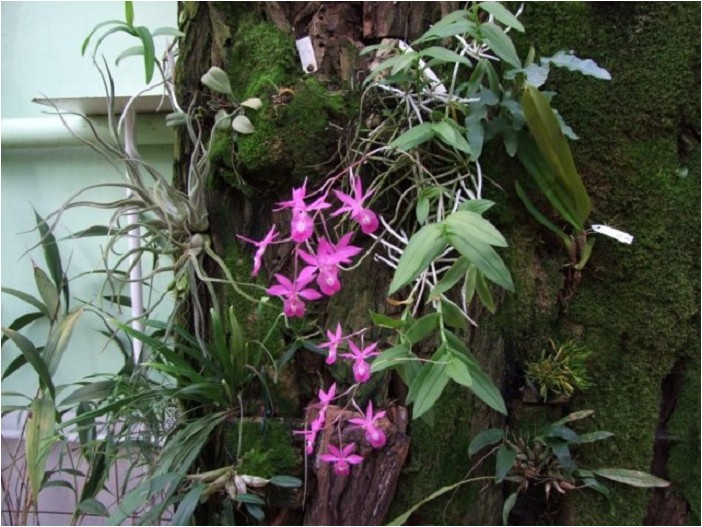
Most species of the genus are epiphytic plants growing on trees in the American tropical forests. Much less often in the wild you can find plants of the genus that live on rocks or rocky soil, that is, they belong to lithophytes.
Unlike most plants of the Orchid family, the thin leaves of Barkeria do not have a long lifespan, but prefer to fall during a clearly defined period of drought in the warm forests of Central America, where they are destined to live. They retain this habit even when they grow in greenhouses and living quarters, slowing down their development in the winter and remaining almost lifeless until spring, which frightens flower growers who are not familiar with this feature of Barkeria. With the arrival of spring, the plant “wakes up” and delights fans with new shoots.

Falling leaves are not the only feature of Barqueria. Plants of this genus are also distinguished by thick roots and the absence of pseudobulbs, although they belong to plants of the sympodial type. True, some authors call the lower part of the stem, covered with leaf sheaths, slightly thicker than the rest of the stem, a “long and thin pseudobulb,” similar to a reed stem.
Due to their morphology (sympodial plant type), orchids of the genus Barkeria are low- to medium-sized plants. Their deciduous foliage is represented by linear-lanceolate leaves.
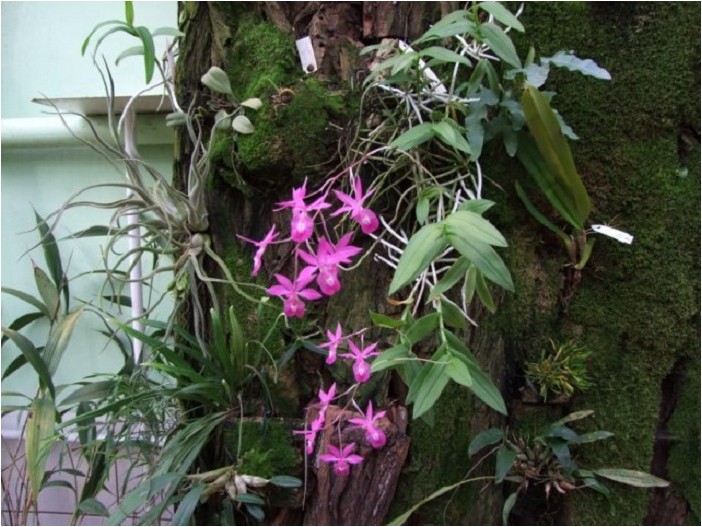
Leathery bracts protect the multi-flowered peduncle, tightly enveloping it. The peduncle displays a raceme-shaped inflorescence formed by numerous brightly colored flowers: white, pink, pale lilac, bright purple, light pink with a purple marking on the lip.
Varieties
The genus Barkeria consists of 17 plant species native to Central America. The number of species in the genus can vary, as many species currently classified in this genus were once listed, for example, in the genus Epidendrum.
From the wild, they have long since made their way into greenhouses and human dwellings across the globe. They are also popular in botanical gardens, where numerous hybrids can be found alongside native species.
Conditions for Favorable Growth
Barkeria can be grown in pots, but given the plant’s thick, long epiphytic roots, which require ample air circulation, it is preferable to use hanging baskets or so-called “block planting.”
During the summer, water sufficiently to maintain the desired humidity, periodically supplemented with mineral fertilizers. Once the leaves have fallen, forget about watering until spring, but don’t forget to provide the dormant roots with bright light. The roots, which may appear completely lifeless, will revive in the spring and delight you with new blooms.