Chickpeas
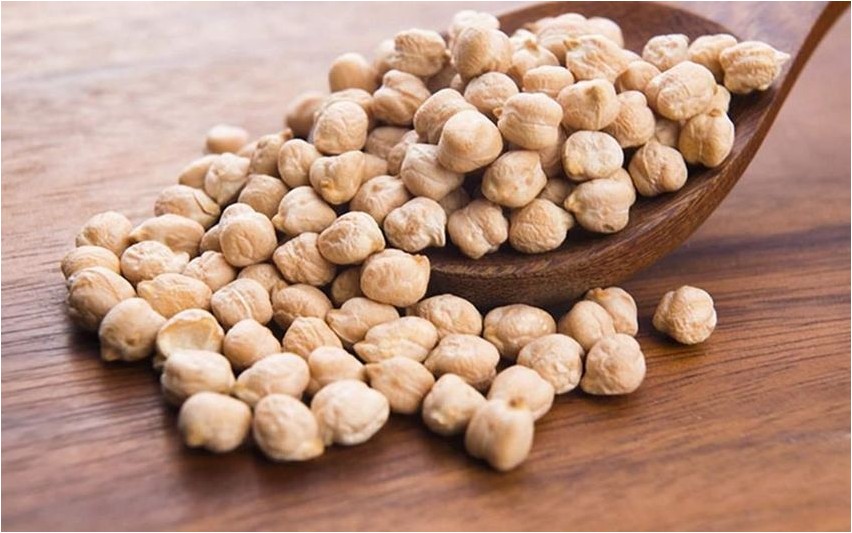
Chickpea (lat. Cicer) is a genus of annual and perennial herbaceous plants and subshrubs of the Legume family. The most common type is Lamb chickpea (lat. Cicer arietinum).
The natural range is Central and Central Asia, the Mediterranean and South America. Widely cultivated in Australia, India, Pakistan, China and Africa.
Characteristics of culture
Chickpea is a herbaceous plant or subshrub with small, oblong, odd-pinnate or pair-pinnate leaves equipped with stipules. Stipules are toothed and leaf-shaped. Flowers are single or collected in groups of 2-5 pieces, formed in the axils of the leaves. The calyx is deeply divided, pubescent. The corolla is elongated. The fruit is a bean, oval-oblong in shape, pubescent with hairs, and when ripe it opens with two valves. The seeds are warty, broadly ovate.
Application
In some countries, chickpeas are a staple food. A wide variety of dishes and snacks are prepared from chickpeas. Chickpeas are especially popular in Mediterranean cuisine. Chickpeas are used to make chickpea flour, which is widely used in Indian cuisine.
Growing conditions
Chickpeas do not have any special requirements for growing conditions. The main condition is low weediness of the site and the absence of rhizomatous perennial weeds. Soils preferred are well-moistened, fertile, loose, light soils. Swampy, saline, heavy clay and highly acidic soils are undesirable.
Soil preparation and sowing
Before sowing, the soil is dug up, mineral and organic fertilizers are applied and ridges are formed. Deep plowing is optimal for chickpeas; it promotes the development of nodule (beneficial) bacteria, which affect yield. Chickpeas are sown in early spring, when the soil warms up to a temperature of 5-6C.

Before sowing, seeds are soaked in water or treated with special preparations containing nodule bacteria; they will increase the yield by 25-30%. Planting depth is 3-6 cm (depending on soil moisture). Chickpeas are sown in a row. With the emergence of seedlings, thinning is carried out as necessary.
Care and harvesting
Care consists of watering, weeding, fertilizing with mineral and organic fertilizers. Loosening is necessary. Treatment against pests and diseases is also necessary.
Chickpeas have a growing season of 90-120 days, but these periods depend on the variety and growing conditions. Chickpea beans ripen evenly; as a rule, the beans do not crack or fall off. Before storing seeds, they are dried and placed in bags.