Raspberry stapeliiformes
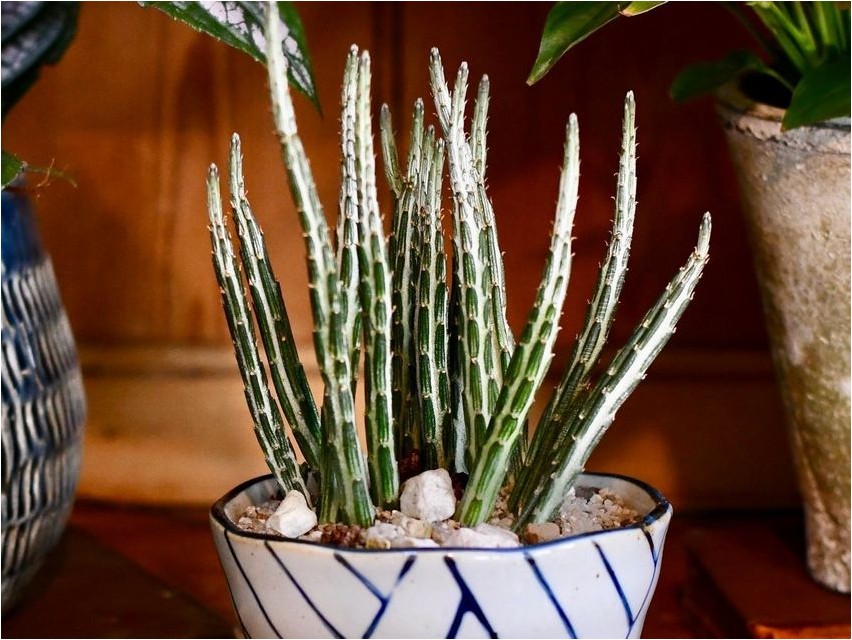
The stapeliaeformis is one of the plants of the family called Asteraceae; in Latin the name of this plant will be as follows: Senecio stapeliaeformis.
As for the name of the ragwort family itself, in Latin it will be like this: Asteraceae.
Description of ragwort stapeliiformes
For the favorable development of this cultivation, it will be necessary to provide it with a sunny light regime. As for watering, throughout the summer it is important to maintain watering at a moderate level, while air humidity should remain average. The life form of ragwort stapeliiformes is a stem succulent. It should be noted that this plant is poisonous, and the juice of the ragwort can cause very significant skin irritation, for this reason it is so important to exercise some caution when handling the plant.
It is worth noting that this plant is quite often found indoors in succulent collections. As for the maximum size in cultivation, the height of the ragwort stapeliiformes can reach twenty centimeters, and the diameter of the plant will be about thirty centimeters.
Description of the features of growing and caring for ragwort stapeliiformes
It is important to remember that for the favorable development of ragwort stapeliiformes, regular replanting is required. Such a transplant will need to be carried out at least once every few years, and wide but shallow pots should be used. As for the soil mixture, this will require mixing turf soil, sand and leaf soil in equal proportions. The acidity of such soil should be slightly acidic.
It is important to note that if the plant grows in a fairly heavily shaded room, then the shoots of the ragwort will be quite elongated. In the case when excessive moisture occurs, the bases of the shoots of the ragwort stapeliiformes will rot. At the same time, one should also take into account the fact that the plant can be affected by aphids, spider mites and mealybugs.

Throughout the entire dormant period, it is necessary to provide the ragwort with a temperature regime of approximately fifteen to seventeen degrees. It is important to provide the plant with rare watering, and the degree of air humidity can remain standard. The dormant period is forced when the plant grows indoors. This period of rest will begin in October and last until February. The reasons for this period are not only insufficient air humidity, but also low light levels.
Reproduction of ragwort stapeliiformes can occur both by rooting cuttings and by dividing the bush. As for the choice of propagation by dividing the bush, this method should be resorted to even during transplantation.
If we talk about the specific requirements of ragwort, it is important to remember that stagnation of water in the soil will have an extremely negative effect on the development of this plant.
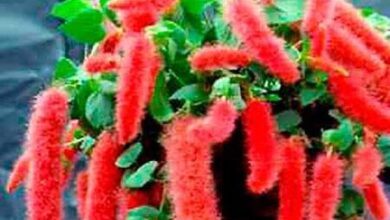
Both the flowers and the stem of this plant have decorative properties. Flowering of the ragwort stapeliiformes occurs in both spring and summer. The flowers of this plant are colored in rich red tones. The inflorescence of this plant is very reminiscent of a carnation; the flowers themselves are quite large. As for the stem, it is painted in dark green tones and has a rather light pattern. The diameter of such a stem can reach up to two centimeters in diameter, and the stem itself is erect.