Asphalt Pavers – Classification and Design
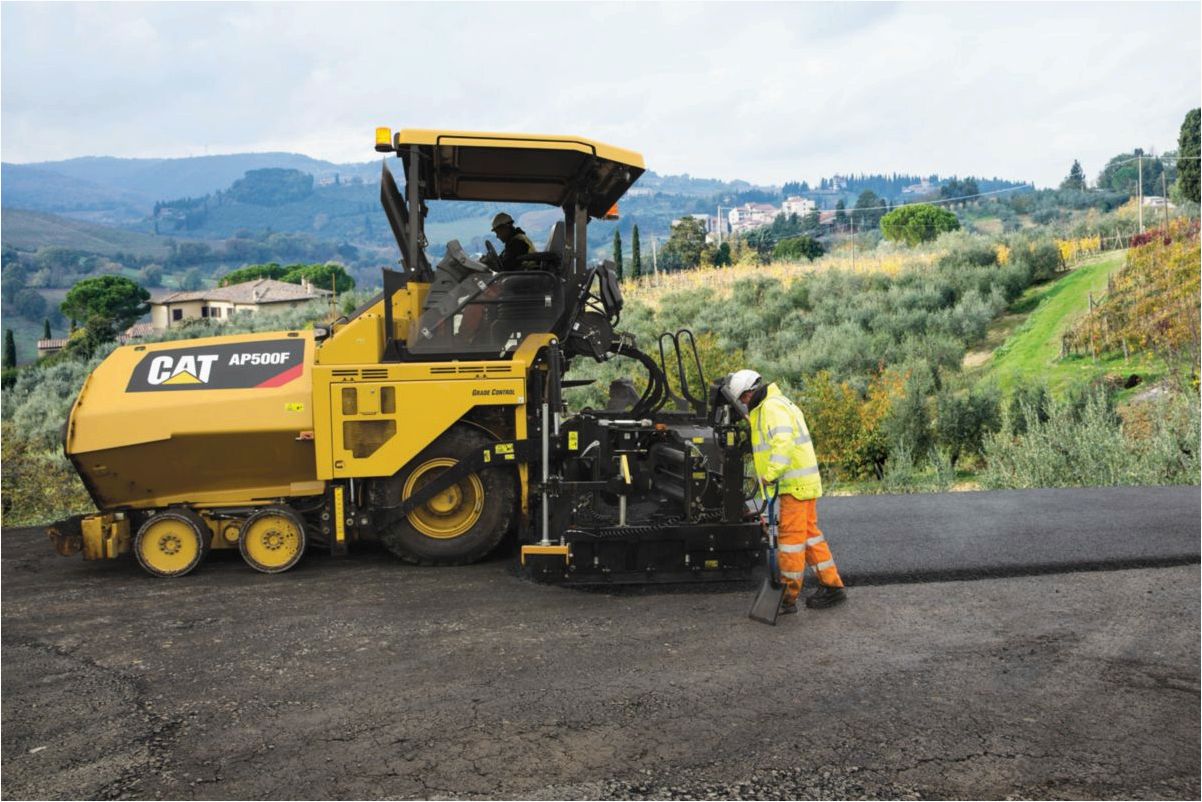
An asphalt paver is a road construction machine designed to distribute and compact asphalt during road construction. Structurally, the machine consists of a cabin, a self-propelled chassis, and a working tool. They are differentiated by chassis type, power, and installation width.
Article Contents:
Operating Principle
The first paving clinkers appeared in 1932, and Barben Green of the USA was the developer. Over nearly 90 years, the technology has been significantly improved, but the operating principle has changed little.
The machine operates in conjunction with rollers and dump trucks. The former are used for final compaction of the underlying layer, while the latter are used to deliver the asphalt mass.
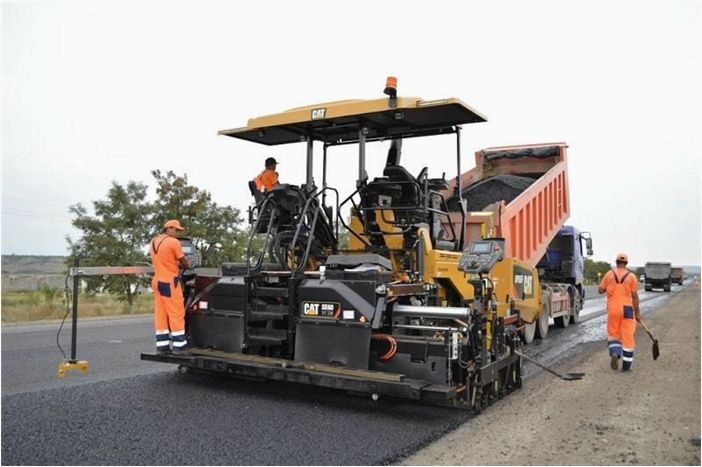
The asphalt paver operates according to the following scheme:
- Receiving the working mixture from a dump truck;
- Transferring the entire mass to the auger video chamber;
- Distributing the asphalt across the width with the auger’s support;
- Pre-compacting and leveling with the help of special belts/vibrators.
The work process is controlled by special detectors that monitor the following parameters:
- Asphalt supply to the auger;
- Horizontal slope of the paving slabs;
- Layer thickness based on the provided data.
The machine is operated by a driver with essential skills. During operation, the driver sits in the cabin or on a special platform. An asphalt paver is a piece of road equipment with complex controls and road paving options. A license to operate it is required, so appropriate training is required. Some people simply try to buy an asphalt paver license without passing the necessary tests, but it’s important to remember that this is not in compliance with our country’s legislation.
Equipment
The asphalt paver consists of a main unit and a working unit. Let’s briefly review the functions of the main components.

Binders and Loaders
In front of the machine is a hopper for asphalt material, which is delivered by a dump truck. The dump truck is equipped with a collection lane for loading, which eliminates the risk of tripping due to varying vehicle speeds and ensures that vehicles are loaded with the required amount of material over a long period of time.
Some machines feature rear decks, which significantly increase the vehicle’s dimensions and improve cleaning performance. Scraper conveyors feed the mixture to the auger section through special gaps. The design of the asphalt paver remains virtually unchanged.
The only notable feature is a hydraulic drive, which ensures uniform delivery and asphalt quantity control via a video camera. The command to add more mixture is transmitted via an ultrasonic locator or a special limit switch.
Asphalt Paver and Screed
The main components of the asphalt paver are the beam and the screed, which are connected by an aqua-block and, supported by a lever mechanism on the frame, are reinforced by hydraulic cylinders and then assembled. Components and functions:
- BARUS – mixes the mixture to a predetermined value;
- Slab – levels the surface and, in addition, expresses the composition of the workpiece.
To increase the plate’s power during operation, it vibrates and heats up. Heating is provided by propane burners or electronic heating. The first option is faster and more environmentally friendly. The second method eliminates numerous inspections and reduces the risk of explosions.
With proper settings, compaction can be so intense that it can be used as a roller without it. The average compaction pressure of asphalt mixes reaches 98%. However, almost all road workers often use more than just asphalt, using rollers.
Snail
They are attached to the sidewalk body, which is considered the last permanent device. It is used for laying low-cost asphalt across the entire width. The device consists of two units, one on the left and one on the right. According to regulations, the screw length and the strip width must be the same.
Depending on the roadway, mechanical augers or hydraulic units can be used. Option 2 is larger than the roadway, but it allows for quick lane width changes in the direction of the change. If the asphalt width is two or more times greater than normal, mechanical sections must be used.
The screw speed is adjusted based on two parameters: orientation and volume. When adjusting the asphalt thickness, the placement of the material in question is also adjusted to optimize the process.
Asphalt Pavers Classification
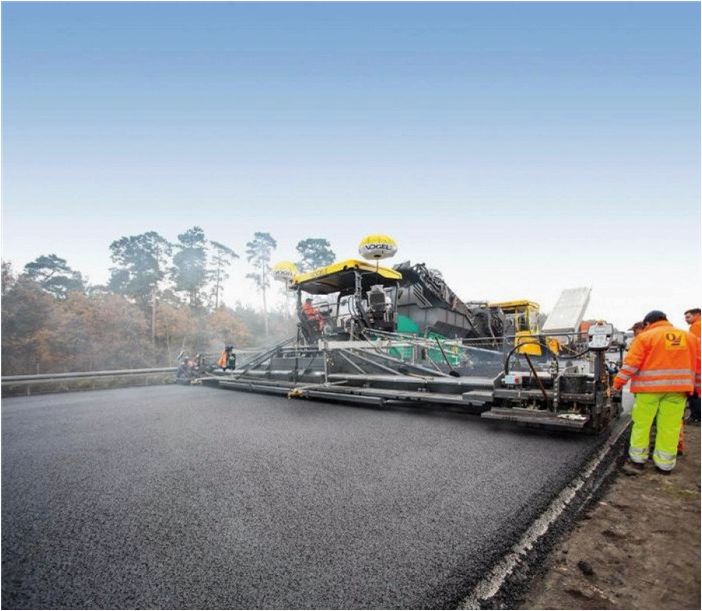
Before you buy a layer of asphalt, you need to create some special equipment that you need. These machines are available in paving widths depending on the appearance of the chassis or power. Let’s look at systematization in more detail.
Installation Width
Based on this indicator, one can judge the relevance of using asphalt and recognize the speed of completing assigned tasks. Symbolically, all cars are divided into a number of categories based on width:
- 1-3 m – small cars for restoration and repair work on a small section of the road, often used on pedestrian paths;
- 2-4. 5 m – concern for creating a lane up to 3-3. 75 m wide, this allows you to keep cars moving in one lane;
- 2. 5-7. 5 m is a suitable option for creating a two-lane section of road up to 6-7. 5 m wide without strange joints;
- 3-9 m – which is used for the construction of routes of the 1st and 2nd categories in 2 lanes at once and without noticeable seams;
- 3-12m – large size and high performance technology suitable for creating 3 stripes with side sections.
Chassis Type
Based on this characteristic of asphalt, one can evaluate the possibility of using it to complete a task and find out the complexity and size of the planned tasks.
The running share of cars comes in 2 types:
Tracked. Crawler-mounted machines have the highest productivity, which is suitable for use on large sites, for example, when constructing a suburban road or a strip at an airport. They have a large laying width. They differ in the number of supports – 2 or 4. They can be equipped with rubber tracks or steel tracks with linings. This individuality increases the speed of movement and makes the movement smoother.
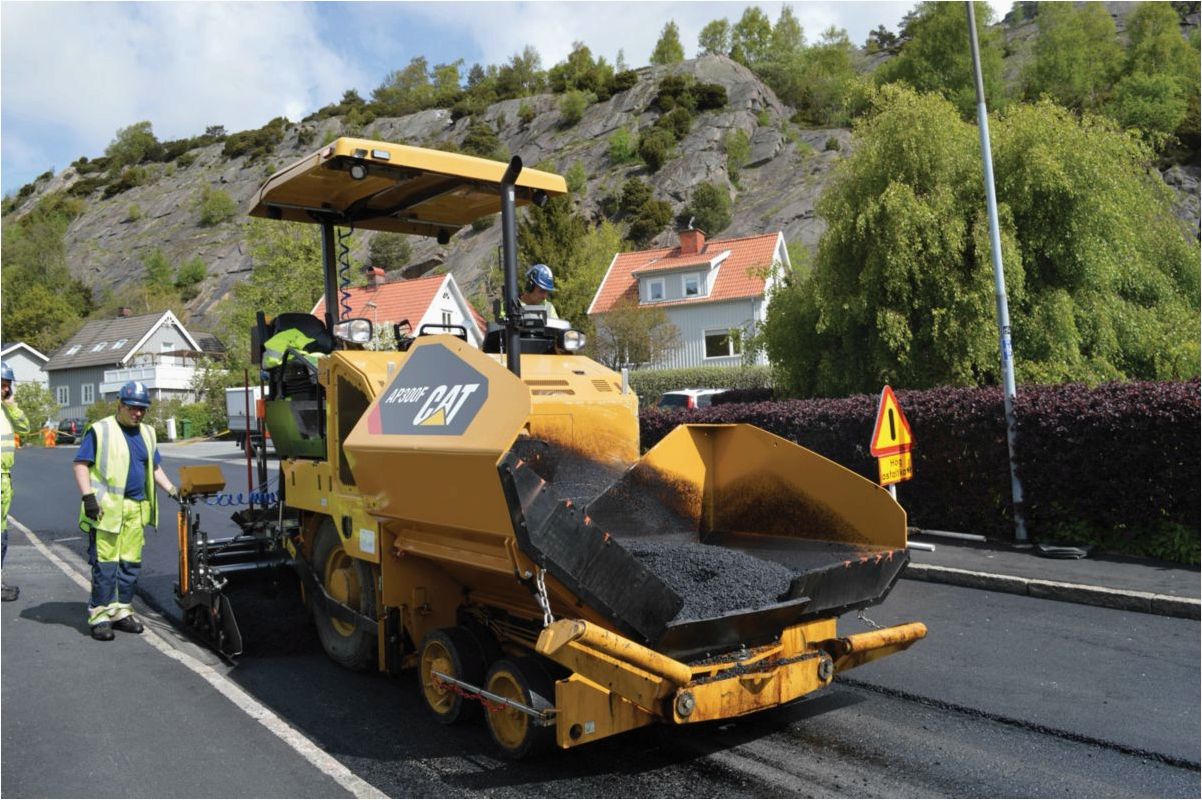
Wheeled. Wheeled paving slabs have low or average efficiency and produce a relatively small pavement width (up to 2 lanes).
For example, when constructing a road surface, a small area within the boundaries of a metropolis, place or yard is used. Radechnik contains a number of advantages: the highest speed of movement, a number of varieties of chassis (from 2 to 4 axles).
Performance
In addition to the size of asphalt stimulators and individuals, performance must be taken into account. This parameter depends on the volume of the machine, engine power, weight, speed, etc.
According to performance, asphalt capsules are found in 2 types:
- Mini. They are characterized by compactness and maneuverability. They are ready to perform small tasks and are convenient for use in a metropolitan area and on a system of sites. They have a load capacity of up to 6000 kg. Operate at speeds up to 250, 000 kg per hour. The width of the block/web is from 1 to 3. 5 m. The cost of asphalt stimulators is decided in the range of $50, 000;
- Means. The universal asphalt paver is used for laying various road surfaces. Weighs from 6, 000 to 10, 000 kg. We are ready to distribute from 250 to 700 tons of road surface per hour. Laying width is up to 5 m. The price of such machines is higher, ranging from 60 to 70 thousand dollars;
- Tough. Large volume pavers with outstanding performance. Suitable for complex tasks. When creating the road surface, the huge width is controlled. Weight 10, 000 kg. They are characterized by productivity at the level of 700-950 T/h. They immediately make 2-3 stripes with a total width of up to 12 m. The purchase of these devices can cost 100, 000 US dollars and more.
What Technical Specifications Should You Consider When Choosing
An essential point to pay attention to when choosing a paver is the characteristics. The current market offers a large selection of models that differ in volume and technical parameters, design features and equipment. The necessary characteristics include Vogele Super 1800-2:
Properties Importance
| Chassis type | Caterpillar |
| Laying width/thickness, cm | 10/30 |
| Power, t/hour | 700 |
| Laying speed, m/min | 24 |
| Bunker capacity, t | 13 |
| Speed, KM/hour | 4,5 |
| Engine power, l. mit. | 173 |
| Weight, t | 20 |
| Dimensions (LxWxH), m | 5. 2×2. 55×3. 8 |
| Price, million rubles | 9 |
Conclusion
It is not easy to overestimate the advantages of this technology, because with its support it is possible to create road surfaces of various types. If the price is very high, then renting an asphalt layer will help during the case. This technique allows you to reduce costs and solve the problem. When choosing, it is important to take into account the type, functions and technical characteristics of the devices.


