Galangal
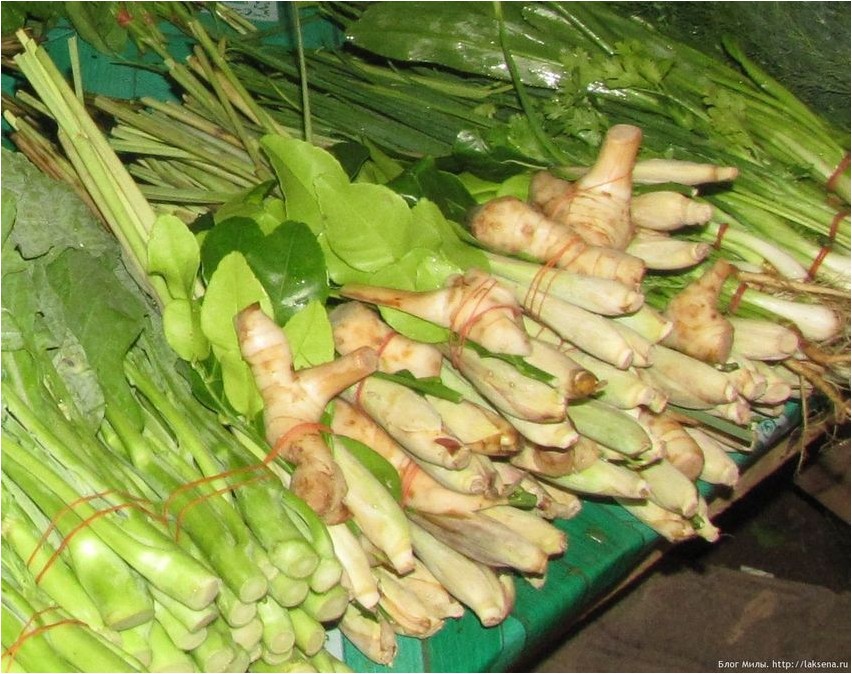
Galangal (lat. Alpinia galanga) is a perennial plant belonging to the Ginger family, popularly called Siamese ginger.
History
Galangal is a plant with which even the ancient Romans and Greeks were very familiar. The main suppliers of this wonderful spice in those days were wealthy Arab merchants. And some time later, this plant gradually penetrated into the territory of Europe — during the Middle Ages it was quite actively used to strengthen the body and to heal from a number of ailments. And only then did it turn into a favorite seasoning.
In Russia, galangal was known back in the seventeenth and eighteenth centuries — many people knew very well that this plant is not only an excellent additive to various tinctures and drinks, but also an excellent flavoring agent. By the way, it was once affectionately called the “Russian root” — such a flattering name was due to the fact that the transportation of galangal from Asia invariably took place through the Russian State.
In addition, galangal has long enjoyed the reputation of a valuable “love remedy” (the so-called aphrodisiac) and has been widely used to freshen breath. And since ancient times, it has served as a very effective medicine for seasickness.
Description
Galangal is a rather pretty perennial, capable of reaching one and a half meters in height (and sometimes more) and on which segments and nodes are quite clearly visible. This wonderful plant blooms with magnificent dark pink or delicate white flowers. On top, galangal is covered with thin light brown or pale pink skin, and its flesh is colored in pleasant creamy-whitish tones.
Ginger is considered to be the closest relative of galangal: they are not only similar in appearance, but also have a very similar taste, although galangal, unlike ginger, boasts an unobtrusive citrus tint and a sharper taste.

Since time immemorial, two varieties of galangal have been used as a spice — galanga greater and galanga lesser. Galanga is a plant native to Southeast Asia, endowed with a wonderful aroma of pine needles when fresh, and a bright cinnamon aroma when dried. And the smaller galanga, which originates from Indonesia, has a spicier taste.
Application
Galangal is actively used in cooking — it is an excellent spice (you can most often find it in Chinese and Japanese dishes), ideally in harmony with beans, rice, as well as meat or fish dishes and all kinds of vegetable snacks. In addition, this plant is often added to various confectionery products and baked goods (it can even be found in honey cakes and wonderful oriental sweets). And galangal root is one of the most important components of the famous exotic soup called “tom yam”. And the famous Chinese roast duck is also prepared with his participation.
This culture has also proven itself well in winemaking — galangal invariably gives any drink a unique and very subtle aroma. Even kvass or cider is prepared with its addition.
Galangal has also found use in folk medicine — excellent vinegar is obtained from it, as well as a medicinal infusion that improves digestion. It is endowed with the ability to strengthen the stomach, stimulate digestion, awaken appetite and even relieve colic. Galangal is also great for treating jaundice, paralysis, as well as heart and headaches. In Chinese medicine, it has gained fame as a means of excellently strengthening the immune system.





