Encyclia
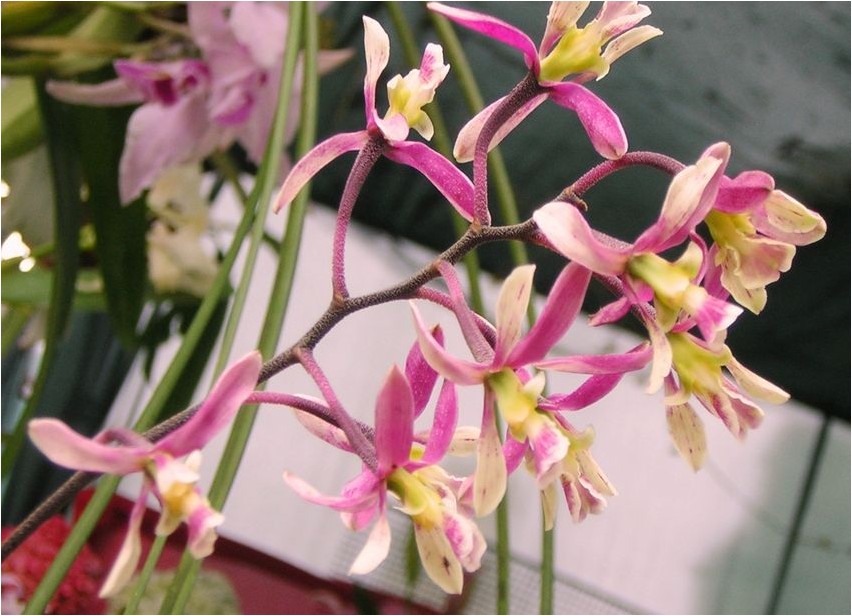
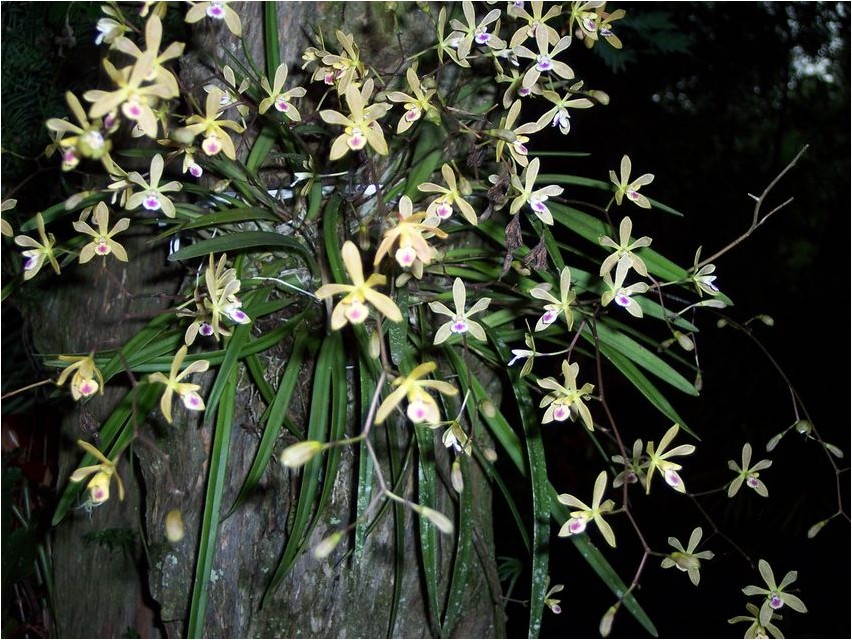
Encyclia (lat. Encyclia) is a genus of herbaceous perennial plants with beautiful flowering, belonging to the Orchid family (lat. Orchidaceae).
Plants of the genus easily adapt to indoor life, and therefore are popular in indoor floriculture.
What’s in your name
The Latin name of the genus is based on a Greek word meaning “circular”. The genus owes this name to the special structure of the flower lip of plants of this genus, which, although it does not merge with the column, more or less covers it with its lateral lobes.
The large number of plants of the Orchidaceae family, with closer study and the application of modern research methods, sometimes leads to a regrouping of plants on classification “shelves”. Thus, plants of the described genus were previously classified by botanists as belonging to the genus Epidendrum (Latin: Epidendrum), which currently contains 1, 435 plant species. A number of species were isolated from it, and the independent genus Encyclia was formed.
The genus Encyclia is also very numerous and, in turn, was a source from which botanists have repeatedly identified new genera of plants through more detailed morphological analysis.
The genus Encyclia was first described by the English botanist Sir William Jackson Hooker (06/07/178 5-12/08/1865).

Description
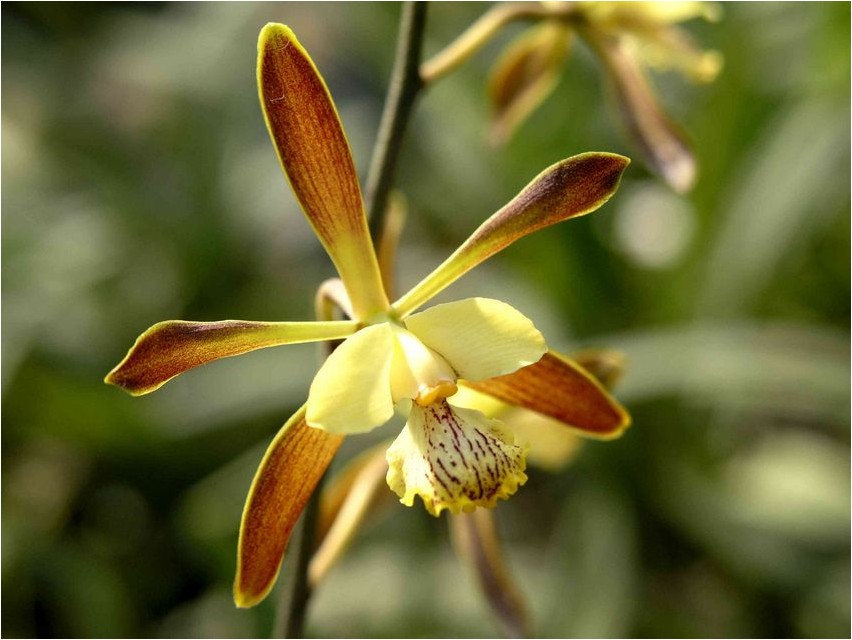
The more numerous a plant genus, the more diverse its representatives. Thus, in the genus Encyclia there are also epiphytes living in tropical rainforests; and lithophytes, spreading their roots and pseudobulbs on rocky mountain slopes at altitudes up to 2700 meters above sea level; as well as terrestrial plants of dry deciduous forests.
Plants of the genus Encyclia belong to the sympodial type of growth, and therefore are plants ranging in height from small (5 centimeters) to medium in size.
Well-developed roots are covered with a multi-layered spongy tissue called “velamen”. It is capable of absorbing moisture and nutrients flowing down tree trunks during rain, and also serves as a protective barrier from mechanical stress and damage.
At the top of the pear-shaped pseudobulbs there are leathery or fleshy leaves, the shape of which varies from oval to lanceolate-oblong.
The peduncle bears a racemose or paniculate inflorescence of numerous, often fragrant, flowers. The sepals are almost indistinguishable from the petals, spreading freely in different directions. The petal coloration is quite varied and striking. A distinctive feature of plants of the genus Encyclia is the shape of the floral lip, which is sometimes partially fused with the column, but more often simply encircles its fleshy body with lateral lobes, hence the genus’s Latin name.
Varieties
The most commonly cultivated species of the genus Encyclia are:
* Encyclia viridiflora is the type species of the genus.
* Encyclia cochleata is a transferred species to the genus “Prosthechea,” separated from the genus being described, hence the current name of the plant, “Prosthechea cochleata.” Plants of the genus “Prosthechea” are distinguished by the presence of an appendage on the posterior side of the column. * Encyclia cordigera — typically has a white lip with red longitudinal stripes down the center, but a cultivar with a uniformly bright lilac-fuchsia lip is more common.
* Encyclia tampense — produces fragrant, relatively large flowers (up to 4 centimeters in diameter) colored yellow, green, or brownish, and decorated with purple veins. The lip is white, sometimes broken by a purple spot in the center.
* Encyclia alata — one of the most fragrant species in the genus with larger flowers. The sepals and petals are dark burgundy with a pale jade-green center. This same color runs in a thin outline along the edges of the petals and sepals. The lip is white and creamy yellow with a bright yellow edge and small purple stripes in the center.
Encyclia description and care.