Herniaria
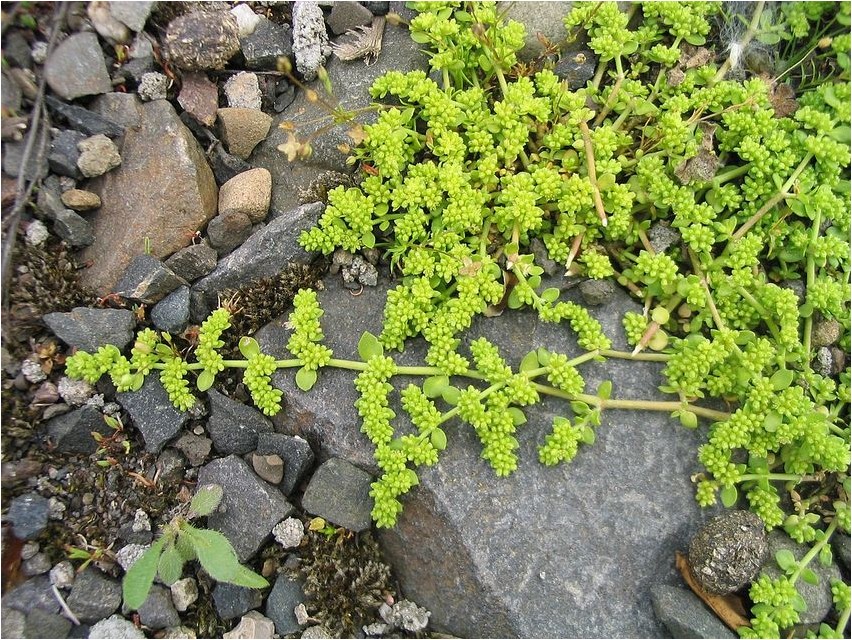
Herniaria (Latin: Herniaria) is a genus of herbaceous plants in the Caryophyllaceae family. Herniaria is a creeping plant with short stems, small leaves, and miniature flowers that form modest clusters of inflorescences in the leaf axils.
The plant’s small size does not prevent it from possessing healing properties, and is therefore widely used by folk healers. The saponins contained in the plant make Herniaria a type of natural cleaning agent that can be used to wash the fur of pets, ridding them of dust, dirt, and insects that love to nest in their natural fur.
What’s in a name
The Latin name of the genus “Herniaria” is derived from the word “Hernia,” meaning “hernia.” The reason for this name comes from the healing properties of plants in this genus, which help people recover from problems such as hernias.
Because the plant is popular among the people, it has many synonyms. Among them are: Hernia grass, Hernia, Keel grass, Chill grass, Fringed grass, Broom, Field soap, and Dog soap.
Description
The genus includes annual and perennial plants. The basis of perennial plants is a taproot with a woody surface surrounded by numerous lateral rootlets.
From the root, numerous short stems emerge from the ground, ranging in length from twenty to twenty-five centimeters. The stems are highly branched and spread along the ground, sheltering it from the sun’s rays with a dense greenish-yellow carpet.

The denseness of the carpet is provided by small, solid leaves arranged oppositely on the stem. The leaf blades are yellowish-green, which is why the living carpet shimmers in these hues in the sunlight. Nature has enhanced the leaves with ciliated, whitish-membranous stipules. The fleshy leaves are oblong-oval in shape, with a pointed or rounded tip.
To match the size of the plant, miniature flowers are born in the axils of small leaves from May to August, the five thread-like petals of which are colored yellowish-green or green. You won’t immediately notice them against the background of greenish-yellow leaves and five sepals, often of unequal sizes. The flowers form small balls – spicate-capitate inflorescences, collected in groups of five to twelve pieces. They can be unisexual or hermaphroditic (bisexual). In the center of the flower there is one column, crowned with two stigmas and surrounded by two to five stamens.
The Hernia fruit is an indehiscent nut of spherical or oblong shape. Since its size is also small, it carries only one smooth and shiny seed, shaped like a lens, colored dark brown. The fruits themselves are filmy and dry, ripening from July to September.
Varieties
The Hernia genus cannot boast of great diversity, currently counting about forty plant species in its ranks. Among them the following can be noted:
* Smooth herniator (lat. Herniaria glabra)
* Caucasian hernia beetle (lat. Herniaria caucasica)
* Grey-haired hernia beetle (lat. Herniaria incana)
* Hairy hernia (lat. Herniaria hirsuta)
* Polygamous hernia (lat. Herniaria polygama).
Usage
The miniature size of the plant is more than compensated by its love of life and ability to cover large areas with a continuous protective carpet, turning Gryzhnika into an excellent living ground cover.
The healing abilities of the plant are expressed in its very name. A number of species of the genus are actively used by folk healers to treat all kinds of hernias.
Substances called “saponins” contained in the tissues of the plant make the plant an assistant to owners who like their pets to be clean and well-groomed. To do this, they wash the animals’ fur with plant grass, which not only makes the pets clean, but also relieves them of annoying insects for a while.
Common hernia beetle
https://www. youtube. com/watch? v=HfI5mLMoECY





