Jib crane design features purpose and scope of application in the industrial and construction sector
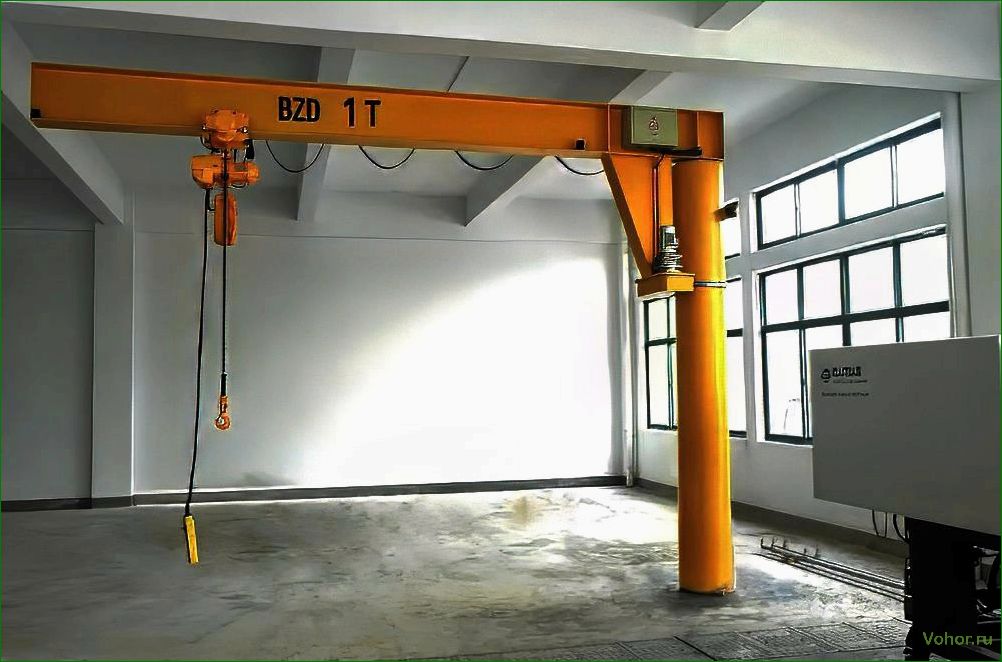
A jib crane is specialized equipment that provides reliable support and lifting of loads on construction sites and industrial sites. Its design includes an inclined boom rigidly mounted on a vertical support, which increases the stability of the mechanism when working with heavy loads.
Contents of the article:
when choosing a jib crane, it is important to consider the maximum lifting capacity and reach of the boom, as these parameters directly affect the safety and productivity of tasks. The design allows you to easily adjust the angle of inclination, which ensures comfortable placement of the load and optimal distribution of forces.
The jib crane has found wide application in installation and repair work, especially in conditions of limited space. It is used for lifting and moving metal structures, equipment and building materials at height. Thanks to its simplicity of design and reliability, the equipment is distinguished by its high strength and durability even in difficult operating conditions.
Jib crane: design, functions and areas of use
Jib crane 5 t is a compact lifting unit specially designed to work in confined spaces and difficult production areas. Its design includes an inclined boom with a jib, which provides additional rigidity and stability of the mechanism when lifting loads.
The jib crane’s features include quick installation and dismantling, high-precision handling of medium-weight loads, and the ability to work with non-standard equipment thanks to adjustable boom parameters. Due to the reduced weight of the structure and reduced dimensions, this crane is ideal for use in workshops with low ceilings and narrow aisles.
The areas of application of the jib crane include the chemical industry, mechanical engineering and warehouse complexes, where stable lifting force is required without loss of mobility of the device. This type of crane is often used to service production lines and carry out repair work in confined spaces, significantly increasing productivity and reducing the risk of equipment damage.
Jib crane design: basic elements and principles of operation
Basic elements
The key parts of a jib crane are the jib, boom, hoist winch, slewing mechanism and counterweight. The jib is fixed at an angle to the frame and is pivotally connected to the boom, which allows you to change the lifting height and working area. The rotating mechanism ensures the rotation of the boom around a vertical axis, expanding the functionality of the crane. The winch is equipped with ropes and a chuck for lifting and lowering loads with the ability to regulate speed.

Operating principles
When lifting a load, the jib transfers part of the force from the boom to the base of the crane, reducing bending moments and reducing the load on the attachment points. This design improves weight distribution, allowing the use of lightweight, durable materials without sacrificing reliability. A counterweight on the reverse side compensates for the weight of the object being lifted, improving balance and preventing tip-over. Maneuvering of the boom is carried out through a rotary mechanism with smooth adjustment, which ensures accurate positioning of the load.
Purpose of jib crane in construction and industrial sector
The jib crane is used to perform precise lifting and transport operations in limited space and when it is necessary to frequently change the direction of movement of goods. It allows you to optimize work processes thanks to its design ability to hold and move loads with a high degree of maneuverability.
The main tasks of a jib crane in construction
- Lifting and installation of metal and concrete structures on construction sites with limited space.
- Installation of technological equipment in multi-storey buildings and industrial facilities.
- Ensuring the safe movement of materials along facades and inside production workshops.
- Support for welding and assembly work at heights with the ability to accurately secure loads.
Application in the industrial sector
- Heavy Equipment Maintenance and Repair: The jib crane provides access to hard-to-reach areas and holds parts weighing up to several tons.
- Logistics and transport of large parts between work areas where the use of traditional cranes is difficult.
- Supporting production lines by quickly shutting down and reconfiguring cargo routes.
- Use in assembly shops with limited space to improve speed and accuracy of operations.
The choice of a jib crane is justified when it is necessary to combine the compactness of equipment with high lifting capacity and control accuracy, which is especially important in industrial facilities with a dense layout and complex movement routes.
Areas of application of jib cranes and criteria for choosing the optimal model
Main Applications
Jib cranes are effective in confined spaces due to their compact design and high maneuverability. In the energy sector, they are used for installation and maintenance of heavy equipment in areas with limited access. In urban construction, they work with building facades and internal floors. These cranes are also in demand for the repair of bridges and transport structures, where precision and safety of operations are required.
Selection criteria
When selecting a jib crane, be guided by the lifting capacity characteristics and boom radius that correspond to the specifics of your work. Pay attention to the maximum lift height and jib length – they must provide the required radius and height for a specific task. The weight and dimensions of the equipment affect mobility and the ability to install in a limited area. Don’t forget to consider the stability of the design and the availability of additional options to improve safety and accuracy of work.


