Eastern Dodarcia
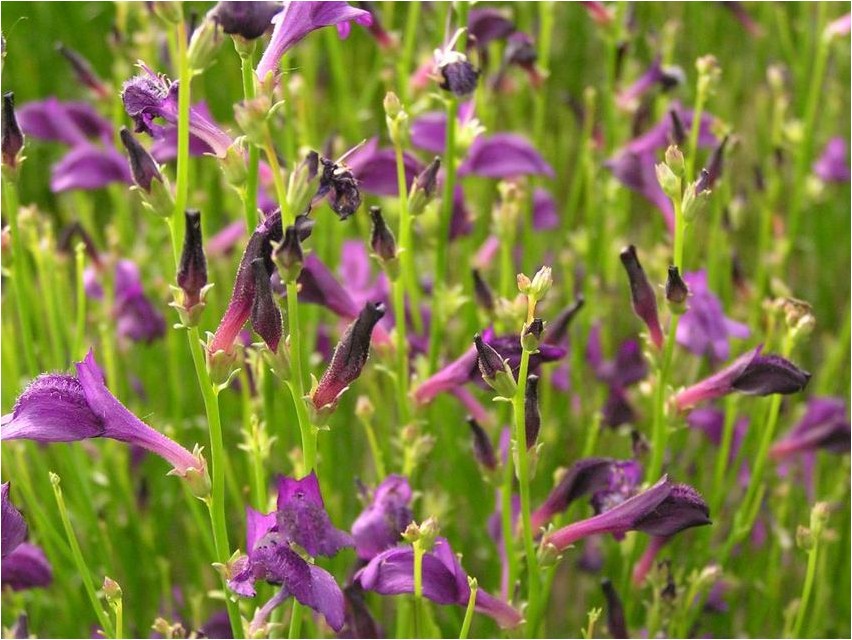
Oriental Dodartia is one of the plants of the family called Noricaceae; in Latin the name of this plant will be as follows: Dodartia orientalis L.
As for the name of the family of Dodartia eastern itself, in Latin it will be like this: Scrophulariaceae Juss.
Description of the eastern dodarcia
Dodarcia eastern is a perennial herbaceous plant, the height of which will vary between fifteen and fifty centimeters. This plant can be either bare or sometimes finely or short pubescent in the lower part. The root of this plant is thick, elongated and straight. The stems will be either single or almost tufted. The stems are straight and branched from the base. The lower leaves are opposite, they are oblong or ovate, and widened at the very base. The remaining leaves are alternate, lanceolate or linear-lanceolate. The flowers of this plant are on short, straight and thick peduncles, which are in racemes, leafless, straight and simple inflorescences.
The corolla of Oriental dodartia is either dark purple or dark purple in color, while rarely the corolla can be white, and when it dries it will turn black. There are only four stamens, and the fruit is a cartilaginous capsule. Oriental dodartia blooms from May to July.
Under natural conditions, this plant can be found on the territory of the European part of Russia: in the Trans-Volga, Black Sea, Lower Don and Lower Volga regions, as well as in the following regions of Western Siberia: Irtysh, Altai and Verkhnetobolsky regions. As for its general distribution, this plant can be found in Afghanistan, Iran, Mongolia and Northwestern China. For growth, this plant prefers steppes, rocky, clayey and sandy slopes, saline steppe meadows, places along lake and river valleys, crops, cotton fields, places along roadsides.
Description of the medicinal properties of eastern dodartia
Oriental dodartia is endowed with very valuable healing properties, and it is recommended to use the grass and roots of this plant for medicinal purposes. The concept of grass includes the stems, flowers and leaves of this plant. The plants contain saponins, alkaloids, vitamin C, coumarins, cardenolides and the flavonoid hyperoside.

An infusion and decoction of the herb dodartia eastern is used as a laxative and as part of various medicinal preparations. Baths made from a decoction of the bark of Oriental dodartia are used for rheumatism. The herb infusion of this plant is endowed with cardiotonic properties.
Traditional medicine recommends drinking a decoction of fifteen to thirty grams of the herb of this plant for upper respiratory tract infections, sore throat, tracheitis, pneumonia, neurasthenia, urinary duct infections and inflammation of the lymph nodes. A decoction prepared from an arbitrary amount of herb is recommended for use in the form of rinses and baths to treat eczema, hives and itchy skin.
For syphilis, it is recommended to use the following remedy: to prepare it you will need to take one teaspoon of dry crushed herb of this plant per glass of boiling water. The resulting mixture should be infused for two hours, after which this mixture is carefully filtered. This remedy is taken one or two tablespoons three times a day.
A remedy is used as a laxative: to prepare it, take two teaspoons of dry crushed herbs in a glass of water, boil this mixture for four minutes, then infuse for two hours and filter thoroughly. Take the resulting product one third of a glass on an empty stomach or once or twice a day for five to seven days.





