Parsnips
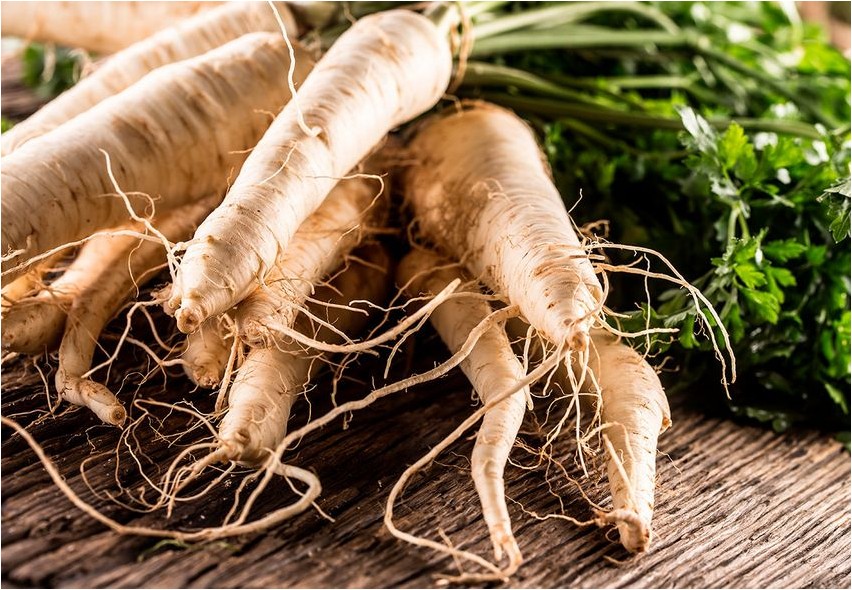
Parsnip is one of the plants of the family called Umbellaceae; in Latin the name of this plant will be as follows: Pastinaca sativa L.
As for the name of the parsnip family itself, in Latin it will be: Apiaceae Lindl. (Umbelliferae Juss.).
Description of parsnips
Parsnip sativum is a biennial herbaceous plant, endowed with a straight stem, which will be ribbed-furrowed and branched at the very top. It should be noted that in the first year of sowing, a weakly branched spindle-shaped root will form, which will be endowed with grayish-white pulp. It is noteworthy that the root of this plant is endowed with a very peculiar strong smell and taste. After wintering in the ground, a flower shoot of parsnips develops in the ground, the height of which will fluctuate between fifty and one hundred and fifty centimeters. The leaves of this plant are separately pinnate, with the basal leaves being long-petiolate and the stem leaves being sessile. The flowers of parsnip are quite small in size, they are colored yellow and are collected in an umbrella inflorescence. The fruits of this plant are round-elliptical two-seeds, colored yellowish-brown. When ground, the seeds will emit a very peculiar smell.
Flowering parsnip occurs during the period from June to July. The birthplace of this plant is considered to be Central Asia and Europe. Under natural conditions, this plant grows in the territory of Ukraine, the Caucasus, Belarus and the central zone of the European part of Russia. Actually, purely outwardly, parsnips will resemble large white carrots, and the taste of this plant is similar to parsley and celery.
Description of the medicinal properties of parsnip
Parsnips are endowed with very valuable healing properties, and it is recommended to use the seeds and roots of this plant for medicinal purposes. Such raw materials should be harvested in the autumn; such raw materials can be stored for about two years.
The presence of valuable healing properties is recommended to be explained by the content of fiber, essential oil, starch, pectin, iodine, magnesium, calcium, uranic acids, potassium mineral salts and the following carbohydrates in the roots of this plant: arabinose, sucrose, manose, fructose and galactose. It is noteworthy that the essential oil contains octine butyl alcohol of butyric acid, which will contribute to the formation of a peculiar odor. Parsnip seeds contain fatty oil, which contains esters of acetic acid, furocoumarins, flavonoid coumarins and glycosides, as well as glycerides of caproic, butyric and heptyl acid.

Preparations created on the basis of this plant are endowed with very valuable diuretic, antispasmodic, expectorant, tonic, analgesic and sexual stimulant effects. In addition, parsnip will help improve metabolism, have a beneficial effect on the course of diabetes mellitus and will have a slight hypoglycemic effect.
It is noteworthy that the roots of this plant have found application in home cooking and are used as a seasoning for soups, and also as a side dish for meat. Quite often, a salad of grated roots of this plant mixed with chopped apples, dill and onions is consumed. It is recommended to add mayonnaise and yogurt to this salad as a dressing. In addition, the roots of parsnip have found application in confectionery production.


