Calamondin
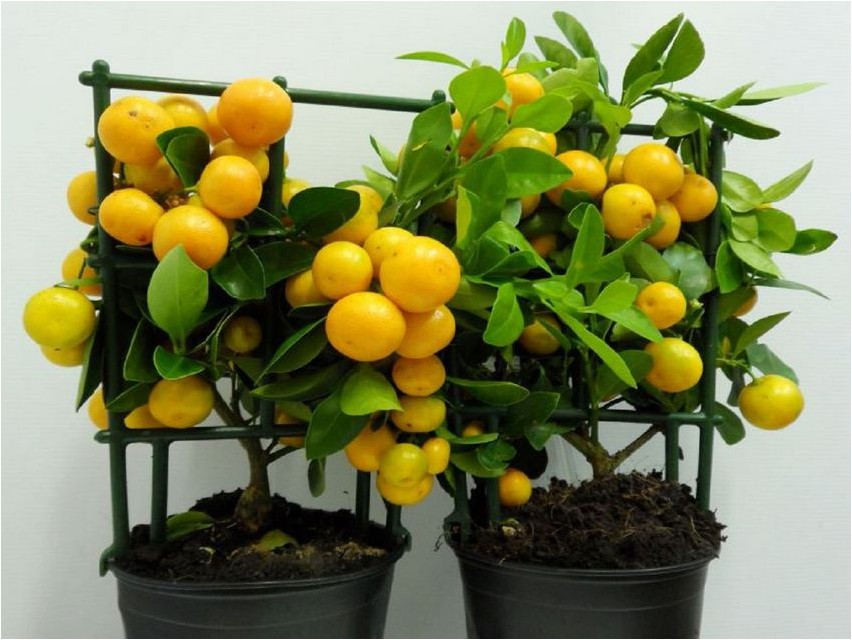
Calamondin is also known as tender citrus and citrofortunella, this plant belongs to the family called rutaceae.
In Latin, the name of this plant will be as follows: Citrofortunella mitis. As for the name of the family itself, in Latin it will be like this: Ruthaceae.
Description of calamondin
It is important for the plant to provide not only abundant watering throughout the summer, but also average air humidity. As for the light mode, both partial shade and sunny mode are suitable. The life form of calamondin is an evergreen tree.
Calamondin can be grown not only indoors, but also in winter gardens. As for indoor conditions, the plant can be grown on any windows, with the exception of northern ones. Under natural conditions, this plant can reach a height of about two meters.
Features of growing and caring for calamondin
For the favorable development of this plant, it will need to be regularly replanted. Young plants require replanting every year, but as calamondins grow older, it is permissible to replant approximately once every two to three years. For replanting, it is recommended to select pots of standard sizes, and you can also use bonsai pots and hanging flowerpots. The choice of container type directly depends on the method of growing calamondin. As for the soil mixture, the following soil should be prepared: one part of turf soil and sand, as well as three parts of leaf soil. The acidity of such soil can be neutral or slightly acidic.
It is important to remember that if the soil is over-moistened, the roots of the plant will rot. If the air humidity is kept at a fairly low level, the leaves of this plant will begin to turn yellow and then begin to fall off. Calamondin is susceptible to mealybugs, spider mites, rust, and also scale insects.

Throughout the rest period, it is important to maintain an optimal temperature of approximately twelve to eighteen degrees Celsius. Such a period of rest when grown indoors is forced. The dormant period occurs because the light and air humidity are much lower than what the plant needs. The resting period of calamondin begins in October and lasts until February.
It is noteworthy that propagation of calamondin can occur through both layering and cuttings. The plant will require pruning: such measures will contribute to the formation of a symmetrical and attractive crown of this plant, and will also cause abundant flowering and proper fruiting. Throughout the year, it is important for calamondin to provide decent lighting, and in the summer it is recommended to keep the plant outdoors.
Not only calamondin flowers are endowed with decorative properties, but also its fruits and leaves. The leaves of this plant are green and leathery, and they will be oval-ovate in shape. Calamondin blooms in both spring and summer.
Calamondin flowers are painted in delicate white tones. The flowers of this plant are small and single. The inflorescences contain about two to four flowers. The fruit of this plant is citrus. The fruits are colored in rich orange tones, with stripes visible on the fruits. The plant produces fruits throughout the summer season. It is important to note that when the fruits ripen, they will hang on the branches for quite a long time.
Calamondin is a hybrid of mandarin and kumquat oval. For this reason, the plant cannot be found in the wild in natural conditions.