Artemisia citvarens
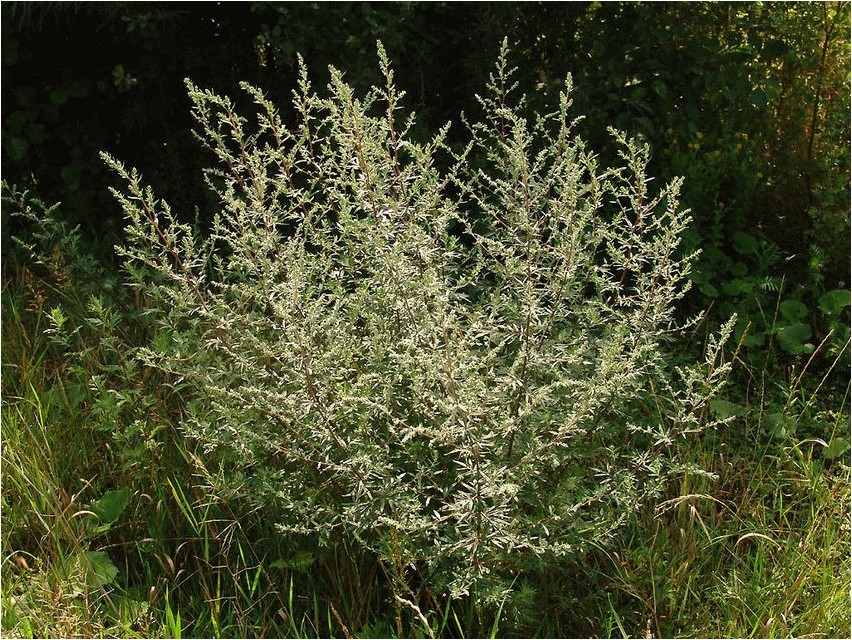
Wormwood is one of the plants of the family called Asteraceae or Asteraceae; in Latin the name of this plant will be as follows: Artemisia cina L.
As for the name of the wormwood family itself, in Latin it will be like this: Asteraceae Dumort. (Compositae Giseke).
Description of Artemisia tsitvarna
Wormwood is a perennial shrub plant whose height will vary between thirty and fifty centimeters. Such a plant will be endowed with a thick woody tap root, as well as adventitious roots. The stems of Artemisia citvarena are erect, and at the very base they will be woody. The upper parts of such stems will first be pubescent, and then smooth and endowed with yellow bark. In this case, the upper half of the stem of wormwood will be branched, and the branches themselves are quite thin and extend from the stem at an acute angle.
The leaves of this plant are pinnately dissected, small in size and alternate, they will be colored in bluish-green tones. In turn, the flowers of this plant are collected in rather small baskets and they will form complex paniculate inflorescences. Unblown flower baskets of Artemisia tsitvarna are endowed with an oblong-ovoid shape, their length will be approximately four millimeters, and their width will be about four and a half millimeters. It is noteworthy that such baskets will be pointed at the top and base. The baskets of this plant consist of ten tiled involucre scales that will cover each other. Such involucre scales consist of three to six small tubular scales and will be strongly convex on the outside.
This plant blooms quite late, starting in August and ending in September. By this time, the leaves will dry out and fall off, and the stems, in turn, will acquire a red-brown color. It is worth noting that wormwood is endowed with a very peculiar smell, and the entire plant is poisonous. For growth, this plant prefers the semi-deserts of Kazakhstan and the high mountainous regions of northern Tajikistan. The plant will grow together with anabasis, various types of wormwood and camel thorn in dry semi-desert steppes. It should be noted that in the spring the thickets of this plant will be painted in emerald green tones. When the onset of summer drought occurs, as well as a lack of water in the soil, the lower leaves of wormwood citvarna crumble and turn yellow. In this case, the youngest part of the Artemisia citvarna stem will still be colored green.
Description of the medicinal properties of wormwood.
Wormwood is endowed with very valuable healing properties, and it is recommended to use the grass and unblown flower baskets of this plant for medicinal purposes. The concept of grass includes stems, leaves and flowers. Harvested medicinal raw materials can be stored for one year.

The presence of such valuable healing properties should be explained by the content of choline, essential oil, tannin, coloring and bitter substances, lactone, santonin, betaine, acetic and malic acid in this plant.
The flower baskets of this plant will be endowed with anthelmintic effects, especially for pinworms and roundworms. Such flower baskets of wormwood should be taken mixed with honey, syrup, sugar and jam.
The essential oil of this plant has analgesic, antiseptic and bactericidal effects. Based on such a substance, a drug is produced that has the ability to enhance regenerative processes in damaged tissues.





