Adonis cuckoo
(cuckoo flower) Coronaria flos-cuculi
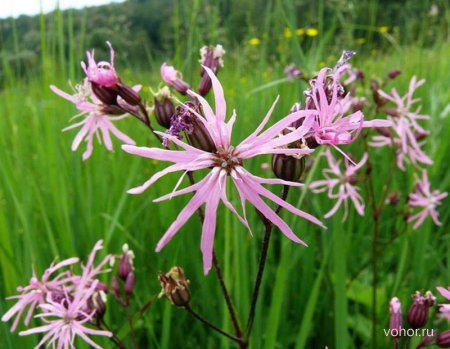
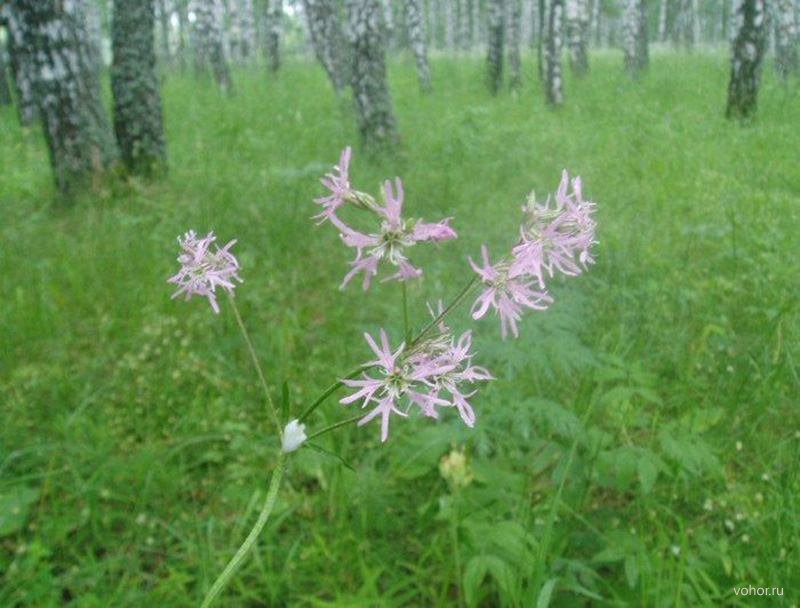
A perennial herbaceous plant with low, appressed pubescence. The stem is furrowed, erect, 30–90 cm tall, branched at the top. Leaves are opposite, single, entire, naked, not smooth; the lower ones are in a basal rosette, broadly lanceolate, tapering into a compressed petiole; the upper ones are narrowly lanceolate, sessile. The flowers are literate, bisexual, six-petalled, in a separate paniculate inflorescence; The petals are pink, sometimes white, with a four-deep, palmately divided plate. The fruit is a capsule. Blooms in early June – August.
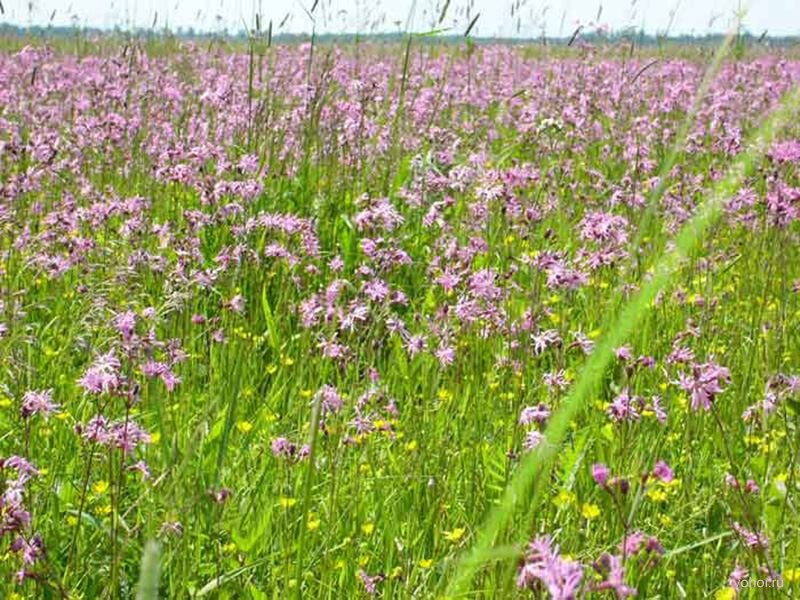
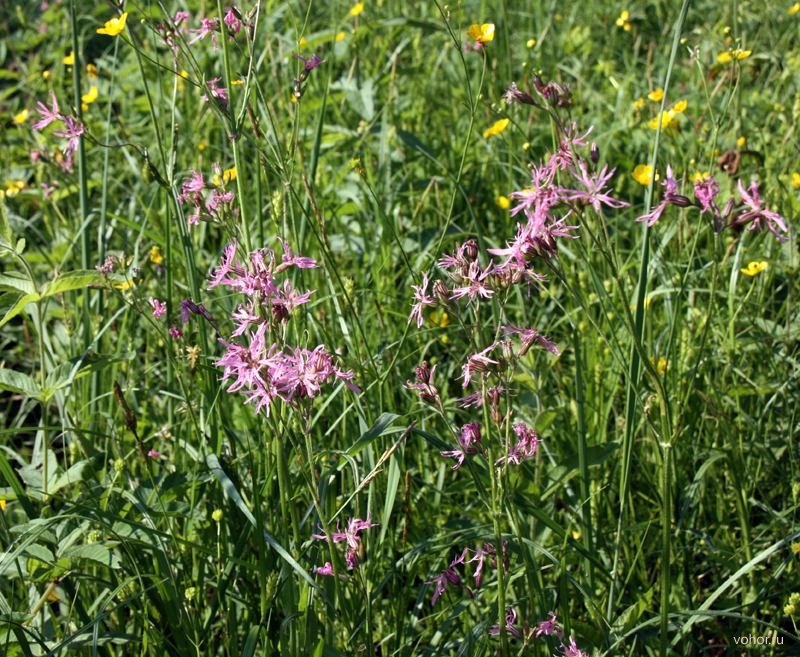
Catch your eye in the European part of the Russian Federation, Western Siberia and the Caucasus; in Ukraine – throughout the entire territory, except Crimea. From time to time it forms thickets, lives in damp meadows, along the edges of swamps, on the edges, among bushes.
the aboveground part of the plant is used for medicinal purposes. The herb includes triterpene saponins (3. 5%), traces of alkaloids, coumarins, phenol carbonic acids, flavonoids (vitexin, saponaretin, isosaponarin, etc.), ascorbic acid (in leaves – 0. 1%).
Raw materials are harvested during the flowering phase of the plant, in June – July. Cut the grass with a knife or sickle and dry it under a canopy or in the attic, spreading it in a flat layer (3-5 cm) on newspaper or cloth. Store in dry, well-ventilated areas. The shelf life has not been established.

the plant has a hemostatic and antiseptic effect. The effectiveness of the influence of fresh herb juice and its infusions on Staphylococcus aureus, Bacillus subtilis and Proteus vulgaris has been experimentally established. In scientific medicine, the plant was used during postpartum hemorrhage as an herbal extract and drug – floculene. In popular medicine, cuckoo-colored grass is used for pain in the kidneys, jaundice, bronchitis with a huge amount of sputum, for uterine and other bleeding, as an antirheumatic and diaphoretic drug. For infertility, the herb is brewed and drunk as tea. Externally, the infusion of the herb is used to wash open wounds, as well as compresses for boils, scabies, ulcers and abscesses.
recipes:
1. infusion: two tablespoons of herb per 200 ml of boiling water. Take 1 tbsp. spoon 3 times a day.
2. infusion: 40 g of herb per liter of boiling water. Use for compresses and rinses.


