Gardenia
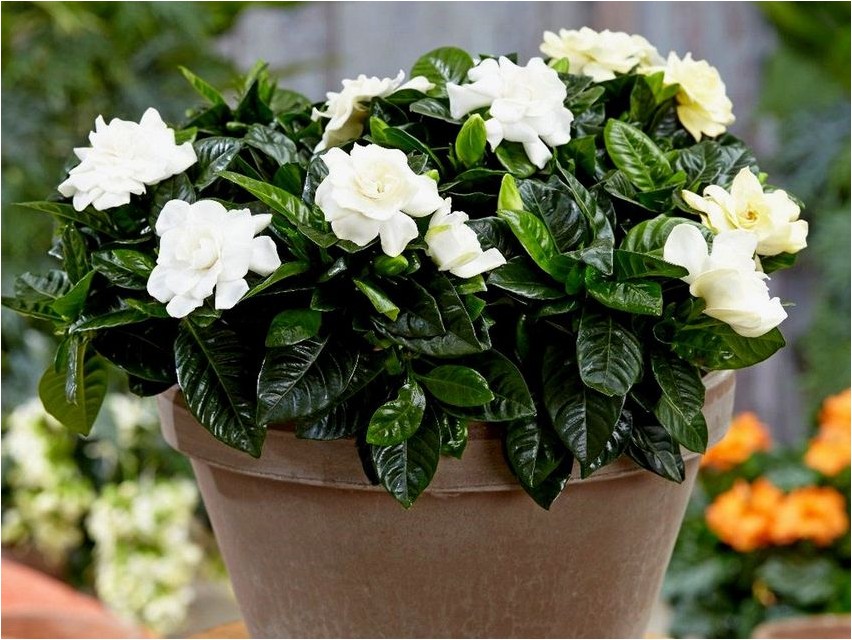
Gardenia should be classified in the family called Rubiaceae. This plant is native to Japan, China, India and South Africa.
In natural conditions, the plant is a shrub whose height reaches one and a half meters. This tree is endowed with either bare or pubescent shoots. The leaves are approximately eight centimeters long, the flowers are single and colored white or yellow. Gardenias bloom from May to August. However, the plant can then bloom at the beginning of winter. There are about three hundred species of gardenia. The main difference between gardenia species is whether its flowers are double or not.
The most common varieties of gardenias used at home and in gardening are: Pleno, Veitchii and Fortunei. The first variety is characterized by double white flowers, the second variety also has double flowers, and the last one also has double flowers, which are quite large in size.
Gardenia is a wonderful flower that can be grown at home. As for indoor species, gardenia jasmine is most often preferred.
Gardenia care
Gardenia is a rather capricious plant that will require a lot of attention and constant care. The optimal solution would be to keep the pot with the plant on the southern or southwestern windows. Gardenia loves both sunlight and warmth. In summer, it is recommended to take the pot with the plant into fresh air. However, the plant will need a little shade; from direct exposure to sunlight, the gardenia may lose the color of its leaves, and small brown spots may form on them. In winter, you should carefully ensure that the plant receives a sufficient amount of lighting.

Gardenia will require a fairly high degree of air humidity; the plant should be sprayed regularly. For this, only warm water is suitable, which should not get on either the buds or the gardenia flowers. Many experts prefer to spray only the air on top of the gardenia flower itself. You can also place the pot in a container filled with gravel and water. However, the pot itself should not touch the water. This method will help ensure the necessary air humidity, and in addition will protect the roots of the plant from possible rotting.
For gardenia, the best solution is a temperature of about twenty-five degrees, but this temperature should not be lower than fifteen degrees. Cold can have an extremely negative effect on the roots of a plant, so in winter you should be especially careful and carefully monitor the temperature in the room. The optimal solution would be to install the plants on a stand made of polystyrene foam. Gardenias and sudden temperature changes are also contraindicated.
For watering, you will need soft and warm water, which is especially important for gardenias. Filtered water is an excellent choice; you can also use rainwater that has previously been boiled. The soil should always be slightly moist. Of course, in spring and summer, watering should be more intense and plentiful, and in winter, watering should be slightly reduced.
As for the soil, slightly acidic soil should be used. This soil should consist of humus, peat, sand and turf soil, taken in equal proportions.
In the period from March to August, you will need to apply potassium fertilizers twice a month, but you should take exactly half the amount indicated on the package. You should also periodically feed gardenia with preparations that contain iron.
Actually, these are all the secrets of caring for gardenia and general recommendations. If you follow them, you will get a very beautiful plant that will delight you with its beautiful appearance.